
Houseplant
Dragon Tail
Epipremnum pinnatum
Also known as Epipremnum pinnatum
How to grow Epipremnum pinnatum, the dragon tail, a vigorous climbing aroid whose leaves split into fingers as it climbs. It is toxic.
At a glance
- Difficulty
- Easy
- Water
- When the top few centimetres of mix have dried
- Light
- Bright indirect light to light shade
- Temperature
- Warm; keep above about 13 deg C
- Humidity
- Average to high
- Hardiness
- USDA 10-12, RHS H1b, hardy to 13 C
- Type
- Perennial
- Height
- 5-15 m
- Native to
- Southeast Asia and the western Pacific
A tender tropical foliage plant from Southeast Asia and the western Pacific, growing in warm, humid, shaded to filtered light. It needs warmth, humidity and bright indirect light, and it cannot take frost or chill. It is safest above about 13 deg C, and cold, wet compost or dry air causes problems.
Hardiness zones describe winter cold alone. Summer heat, humidity, rainfall and the length of the growing season decide as much, so treat the range as the outer limit rather than as a recommendation.
Toxic if eaten
- Do not eat
- All parts, which contain calcium oxalate crystals
- Harm from
- Eating it and handling it
- Affects
- People, cats and dogs
Like other members of the arum family, Epipremnum pinnatum contains tiny calcium oxalate needles in every part. Chewing a leaf or stem can cause burning, swelling and heavy salivation, and a pet that swallows any may vomit. The sap can irritate skin and eyes. The ASPCA lists this group among the plants that harm cats and dogs, which includes the related pothos (Epipremnum aureum). No entry exists for Epipremnum pinnatum itself, so the rating follows the genus. Keep the dragon tail away from anything that chews, and wash off any sap.
Sources: ASPCA toxic and non-toxic plants, RHS potentially harmful garden plants
About
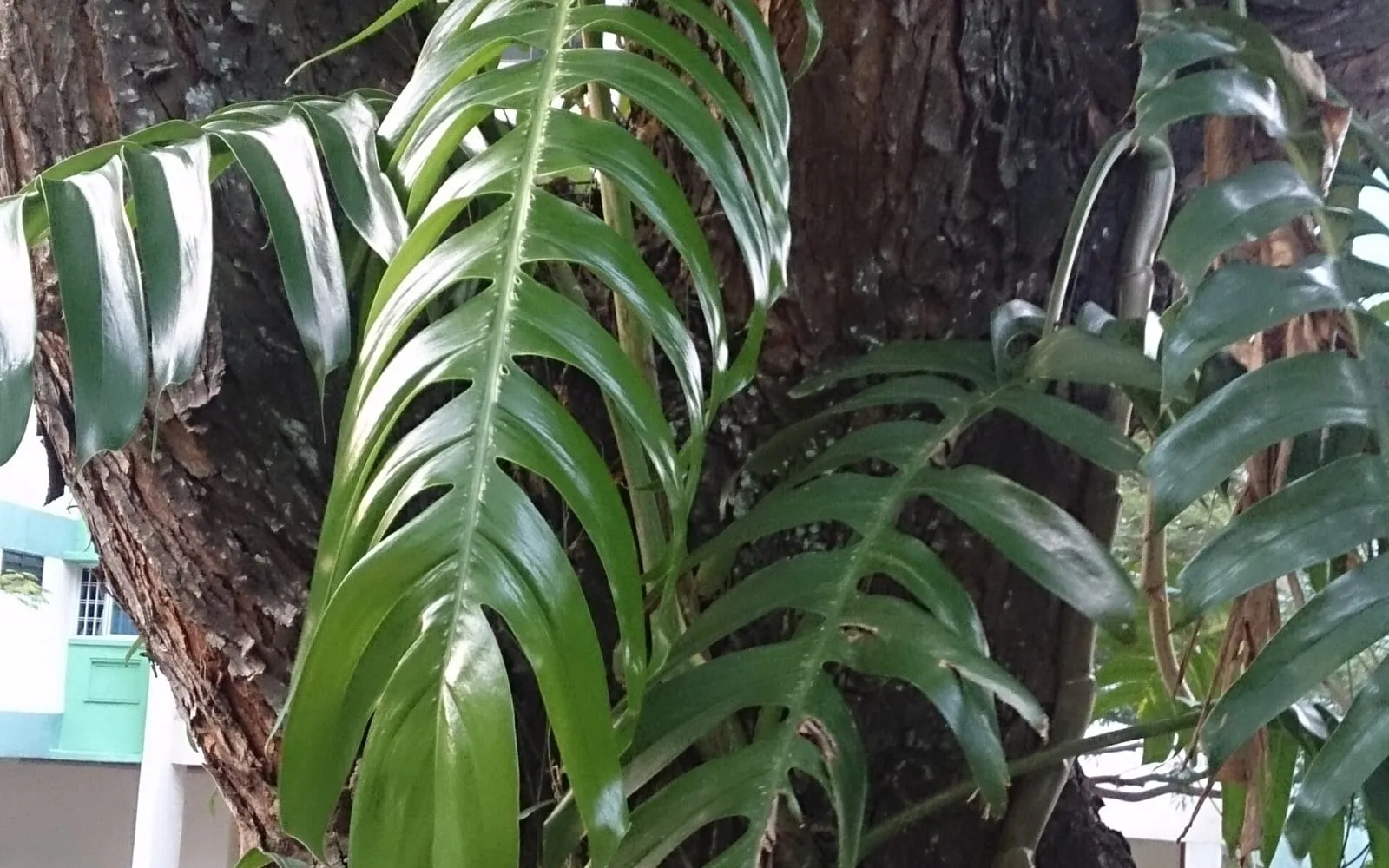
Young Epipremnum pinnatum is a trailing plant with whole, narrow, pointed leaves, and it can look much like a glossy pothos on a shelf. Once it has something tall to climb, the new leaves begin to split along the veins. Mature leaves form a fan of long, ragged, finger-like segments. That divided adult leaf is recorded in the name pinnatum, which means feather-like.
It is a fast climber and a close relation of the common pothos, though it grows much larger when it has support. Set it against a tall support in decent light and it climbs quickly, producing more divided leaves as it rises. Leave it to hang from a shelf and it stays in the plain, undivided juvenile form. Whether it makes adult foliage depends on whether it has a support to climb.
Warmth and a position out of scorching sun are enough. Every part contains the arum family’s irritating sap, so keep it where inquisitive pets and small children cannot reach a leaf to chew.
Appearance and character
Young foliage consists of whole lance-shaped to oval leaves, glossy and often bluish in selected forms, spaced along a thin stem that grows across a surface until it reaches a wall or pole. At this stage the plant looks tidy and modest, with no split leaves yet.
Climbing changes the foliage. As the stem gains height, its leaves grow larger and start to divide. Deep notches cut in from the edge towards the central rib, so an established, well-supported plant can produce big, slashed leaves quite unlike the neat blades it started with. The finger-like lobes give the plant its reptilian common name.
Along the stem, clusters of aerial roots grow from each node and attach the plant to bark or a damp pole. Indoor flowering is rare and takes the plain form of an arum spathe, so the leaves and their change from juvenile to adult form are the main attraction.
Where it is from
Epipremnum pinnatum is spread across tropical Southeast Asia and out through the western Pacific islands, reaching as far as the tropical north of Australia. It germinates on the forest floor, then climbs the nearest trunk into the canopy. Its leaves divide more deeply as the plant climbs higher into brighter light.
Those forests stay warm and moist all year, with filtered light under the trees and no cold season to interrupt growth. A plant from that habitat thrives in a warm, humid room but suffers in a chill. Because leaf-splitting is triggered by climbing towards stronger light, an indoor plant given height and brightness develops adult foliage, while one kept low and dim can keep its plain juvenile leaves indefinitely.
How it grows
In warmth the vine grows quickly, producing long shoots, rooting at each node and making larger leaves as it climbs. Growth accelerates through the warm months and slows in winter, though a heated room keeps it growing slowly for most of the year.
Plant it in an open, bark-enriched potting mix that lets water run through freely. Stand a tall moss pole in the pot if you want divided leaves, since the plant needs both height and something to grip before it will make them. Grow it as a hanging trailer instead and it remains juvenile, with whole leaves. Move it to a larger pot in spring once its roots have filled the current one.
Propagation is easy. Cut a shoot into pieces that each carry a node, stand them in water or a tray of moist compost until roots form, then pot the rooted pieces individually. Wash your hands after handling cut stems, since the sap irritates the skin.
Through the seasons
Spring brings faster growth. Move a pot-bound specimen up a size, install or steady its climbing support, and start a weak feed every few weeks once the days lengthen and light improves.
Summer is its strongest growing season. Keep the compost consistently moist, shield the foliage from direct sun through glass, and tie the lengthening shoots to their pole as they climb so the plant does not sprawl.
Growth slows in autumn as daylight shortens. Scale back feeding and watering in step, and shorten any weak or overreaching stems while you can still see the plant clearly.
Winter is slower. Keep it warm and out of draughts, water just enough to keep the roots faintly moist instead of chilled and sodden, and save any serious pruning for spring.
Care difficulty
Among climbing houseplants this is one of the easier ones. Dragon tail grows quickly in warmth, roots from short stem cuttings and tolerates a hard cutback, so it is a forgiving plant for a first-time grower.
Where it does fail, the cause is usually cold, waterlogged compost rotting the roots, or dry air browning the leaf edges. Keep it warm, keep some moisture around the leaves, and keep it clear of blazing sun. The lasting caution is the irritant sap, especially around pets and children.
Watering
Give it a drink once the top few centimetres of compost have dried, saturating the whole rootball and letting the excess run clear before the pot goes back. It takes up water quickly in summer, so inspect it frequently in the heat, but never leave the roots sitting in a saucer of standing water.
Pull watering back hard over winter, allowing the mix to dry deeper between drinks, because cold and sodden compost quickly causes rot. Leaves yellowing across the plant point to roots that are too wet, while crisp, browned margins point to air that is too dry.
Warning signs, diseases and pests
A wilting, yellowing plant with a soft base usually has root rot from cold, saturated compost. Improve the drainage, move it somewhere warmer, and withhold water until it shows signs of recovery.
Warm, dry air encourages spider mites, which fleck the leaves and spin fine webbing in the axils, and mealybugs, which settle as little cottony blobs where the leaves join the stem. Raise the humidity, sponge the foliage down, and treat any established colony promptly with an insecticidal soap.
Leaves that stay small and unsplit usually mean the plant has no tall support or too little light. Give it a higher moss pole in brighter, filtered daylight, and adult foliage should develop as it climbs.
Growing environment
Bright, filtered daylight helps the plant make divided leaves. It needs enough light to support mature growth, but not the direct sun that scorches the blades. It endures fairly dim positions, but there it keeps its juvenile, thin-leaved state, and deep shade keeps the leaves whole.
Warmth well up in the teens Celsius and humidity a little above average keep it growing. Avoid cold draughts and chilly rooms. Where the household air runs dry, group it with other plants or stand the pot on a tray of wet pebbles to raise the moisture around its leaves.
Feeding
Through spring and summer, feed with a balanced liquid fertiliser diluted to half strength every three or four weeks to support the vigorous growth. Once autumn slows the plant, stop feeding until spring.
Now and then, drench the pot with plain water to rinse out accumulated feed salts, and give nothing to a freshly potted or newly rooted plant until it is clearly in growth.
Troubleshooting
Why won’t the leaves split into fingers? It lacks height and light. Stand a tall moss pole in the pot and shift it into brighter, filtered daylight. The divided adult leaves should emerge as the plant climbs.
The plant is wilting and going yellow. What is wrong? Root rot from cold, wet compost. Improve the drainage, warm it up, and water less.
The leaf edges are turning brown. How do I stop it? Lift the humidity around the plant and keep it well away from the dry heat of a radiator.
How do I propagate it? Cut the stem into node-bearing pieces and root them in water or moist compost, working with clean hands because the sap stings.
Is it safe around pets and children? No. Chewing any part burns the mouth, so keep it out of reach, rinse off any sap, and read the toxicity note above.
Dragon Tail problem guides
Not sure what is wrong? See the common houseplant pests guide.