
Houseplant
Wandering Selenicereus
Selenicereus vagans
Also known as Selenicereus vagans
How to grow Selenicereus vagans, a wandering night-blooming cactus that creeps and roots across the ground as readily as it climbs.
At a glance
- Difficulty
- Easy
- Water
- When the top few centimetres have dried
- Light
- Bright light with some direct sun
- Temperature
- Warm; keep above about 10 deg C
- Humidity
- Average to high
- Hardiness
- USDA 10-12, RHS H1c, hardy to 10 C
- Type
- Evergreen creeping and climbing epiphytic cactus
- Height
- Stems to 2 m or more, creeping or climbing
- Native to
- Mexico
A wandering night-blooming cactus from the warm country of Mexico, creeping over the ground and climbing where it can by rooting stems. It needs warmth, bright light and an open root run, with more water than a desert cactus in growth. It has no frost tolerance and slows below about 10 deg C, rotting in cold, wet compost.
Hardiness zones describe winter cold alone. Summer heat, humidity, rainfall and the length of the growing season decide as much, so treat the range as the outer limit rather than as a recommendation.
Not known to be toxic
A safe plant to keep around pets and children. Selenicereus is not listed as toxic by the ASPCA or the RHS, and holds no harmful compound. Its stems carry short spines that can prick, so the caution is physical not chemical, and it is best sited out of a pet's way. There is no poison in it.
Sources: ASPCA toxic and non-toxic plants, RHS potentially harmful garden plants
Stems that root as they spread
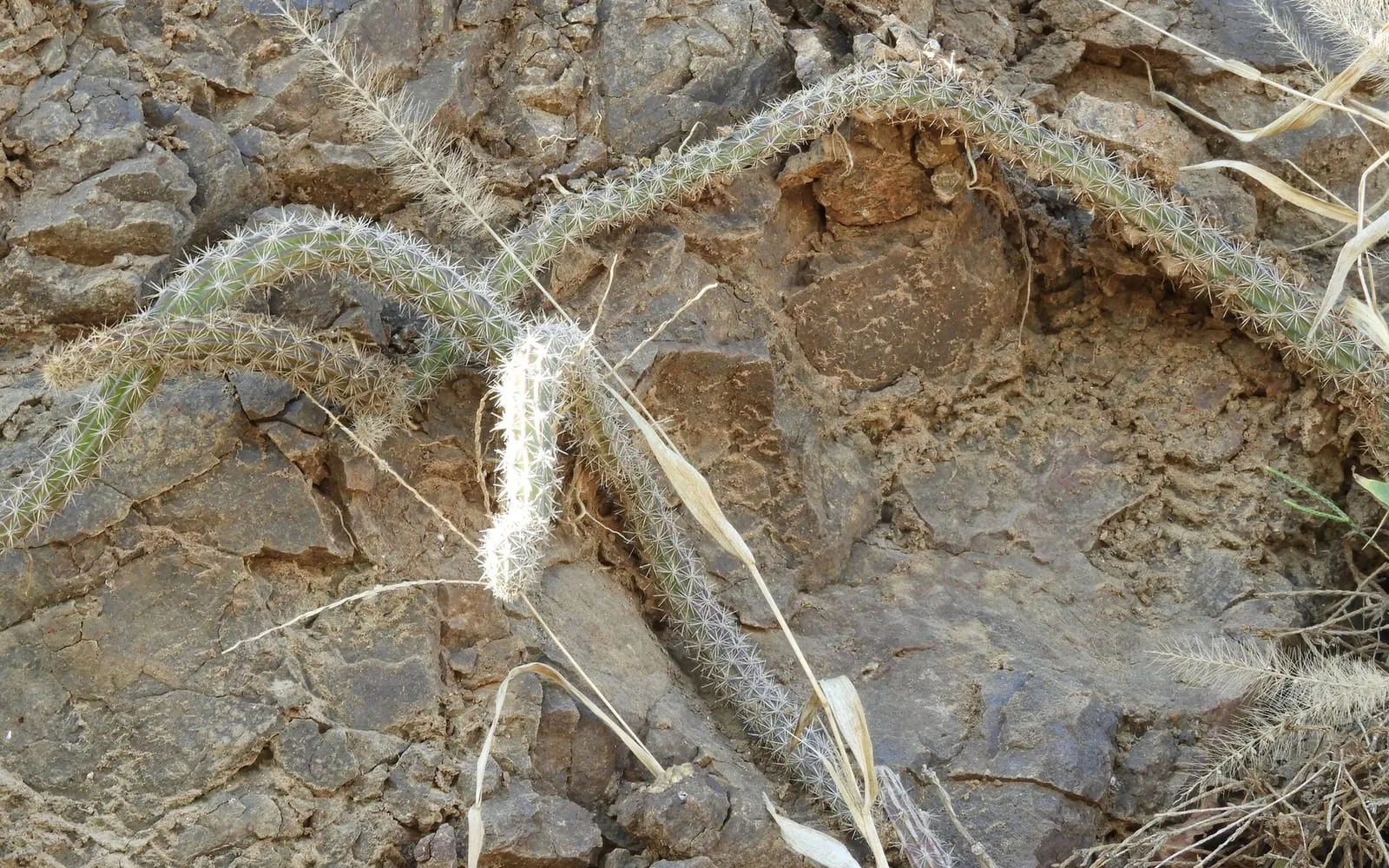
The species name vagans means wandering, and it suits the plant. Instead of climbing straight up like its taller cousins, Selenicereus vagans sends long, ribbed stems creeping outward across the ground. The stems root wherever a joint touches soil, so a single plant can slowly spread away from where it started. Where a rock, a wall or a tree gives support, it can also climb, using the aerial roots that line the stems. The stems themselves are slender to medium, several-angled and green, carrying short spines along the ridges.
It comes from the warm coastal country of Mexico, where it scrambles over rocks and low scrub in bright, lightly broken light. Like the rest of its group, it opens large, pale, sweetly scented funnel flowers at night. They are usually finished by the next morning. The self-rooting habit makes it as much a trailing or ground-covering plant as a climber, and it suits a wide, low pot or a hanging basket where the stems can spill over the edge.
Warm, bright and clear of scorching sun
This is a warm lowland cactus with no frost tolerance. Keep it above about 10 deg C through the year, and keep cold damp away from the roots. Bright light with a little soft morning or evening sun keeps the stems firm and green and helps a mature plant flower. Strong all-day sun through glass can scald the stems, while deep shade leaves them thin and weak.
How to water it
Give it steadier moisture than a desert cactus, without ever letting it stand sodden. Through the warm growing months, water when the top few centimetres of the mix have dried, allow the excess to drain away, and keep the plant evenly moist. As the year cools, ease off and let it rest drier and a little cooler, which encourages the buds for the following season. A humid atmosphere about the stems suits it, so mist it through hot, dry weather to keep the growth fresh.
Compost and containers
Use an open, fast-draining medium that holds some air, such as a loam-based or peat-free compost loosened with bark, perlite and grit. Because the plant creeps and roots along its stems, a broad, shallow pot or a basket suits it better than a tall narrow one. The extra surface area gives the stems room to root as they spread. Repot in spring once it has filled its container, and where it has climbed up a support, ease the rooted stems free with care. It usually transplants easily because many stems already carry roots.
Feeding
A high-potassium feed of the tomato kind, or a diluted cactus feed, once a month through the growing season supports stem growth and flowering. Keep the dilution weak, and pause feeding through the cooler winter rest while growth slows. A newly potted plant needs none for its first few weeks while it settles.
Propagation
It is easy to increase. Lift a stem that has already rooted where it touched the mix, cut it from the parent, and pot it up. An unrooted stem cutting also roots readily once the cut has dried for a day or two and the stem is laid on a moist, open mix. Seed is possible, but stem cuttings are quicker and simpler.
Keeping it in bounds
This cactus can sprawl further than a small space allows, so decide early how you want to grow it. For a full, low mound, let the runners root into a broad pan and form a mat. For a trailing plant on a high shelf, cut off the runners that reach the floor and root them elsewhere. You can also train it onto a low trellis or hoop. Cutting a stem back does not weaken the plant; it usually branches below the cut. Prune in warm weather, and let cut pieces dry for a day or two before rooting them.
Use soft ties if you train it upward. The stems are not heavy, but they mark easily where a tight wire or hard clip presses into a rib. Check ties every few months and loosen them as the stem thickens.
Night flowers
A settled, well-fed plant that has had a cooler, drier winter can flower in the warm months. Each flower opens after dusk as a wide pale funnel, gives off a sweet scent through the evening, and is finished by morning. A single plant may open several flowers across a season, though rarely all on one night, so check it in the evening through summer.
Do not expect flowers from every cutting straight away. Young plants often spend their first seasons making length and roots before they settle into flowering size.
Problems
Soft, blackening stretches of stem or a mushy base are rot from cold, wet compost, most likely through a cold winter. Cut away the spoilt parts, dry the plant off and keep it warmer and drier. Mealybugs settle as white woolly dots along the ribs and in the areoles, and can be cleared with a swab of dilute alcohol. Thin, weak, over-long stems that never bud point to too little light, or to a plant kept too young and too warm to flower.
Why does it creep instead of climb? Its wandering habit is natural: the stems run across the ground and root as they go, though they will climb a support where one is to hand.
Can I grow it in a hanging basket? Yes. The creeping, rooting stems trail and spill well from a basket or a broad, shallow pot, which suits the plant’s rambling nature.
When does it flower? On a mature plant, on summer nights, opening large scented white flowers that are gone by morning, helped along by a cooler, drier winter rest.
Is it safe with pets? It carries no poison; only the short spines can prick, so site it where a pet will not push through the stems.
Wandering Selenicereus problem guides
Not sure what is wrong? See the common houseplant pests guide.