
Houseplant
Disa Tripetaloides
Disa tripetaloides
Also known as Disa tripetaloides
How to grow Disa tripetaloides, a streamside terrestrial orchid with sprays of white to pink flowers that needs pure running water and cool conditions.
At a glance
- Difficulty
- Difficult
- Water
- Keep the roots constantly wet with pure water
- Light
- Bright indirect light to light shade
- Temperature
- Cool; dislikes heat
- Humidity
- High
- Hardiness
- USDA 9-10, RHS H2, hardy to 4 C
- Type
- Evergreen to semi-evergreen terrestrial orchid
- Height
- 20 to 45 cm
- Native to
- South Africa
A streamside terrestrial orchid from South Africa, growing on wet banks and in seeps beside running mountain water in cool, humid, airy conditions. It needs pure, low-mineral water, cool temperatures and a constantly wet but airy root run, and it cannot take heat, mineral-rich water or stagnant wet. It is safest above about 4 deg C and grows year round instead of taking a hard dry rest.
Hardiness zones describe winter cold alone. Summer heat, humidity, rainfall and the length of the growing season decide as much, so treat the range as the outer limit rather than as a recommendation.
Not known to be toxic
A safe plant to keep around pets and children. Disas, like other orchids, are not listed as toxic by the ASPCA or the RHS, and no harmful compound is recorded in them. A pet or child that chewed a leaf would be unlikely to have more than a mild stomach upset. Its difficulty lies in giving it pure, constantly refreshed water and cool conditions, not in any poisoning risk.
Sources: ASPCA toxic and non-toxic plants, RHS potentially harmful garden plants
About
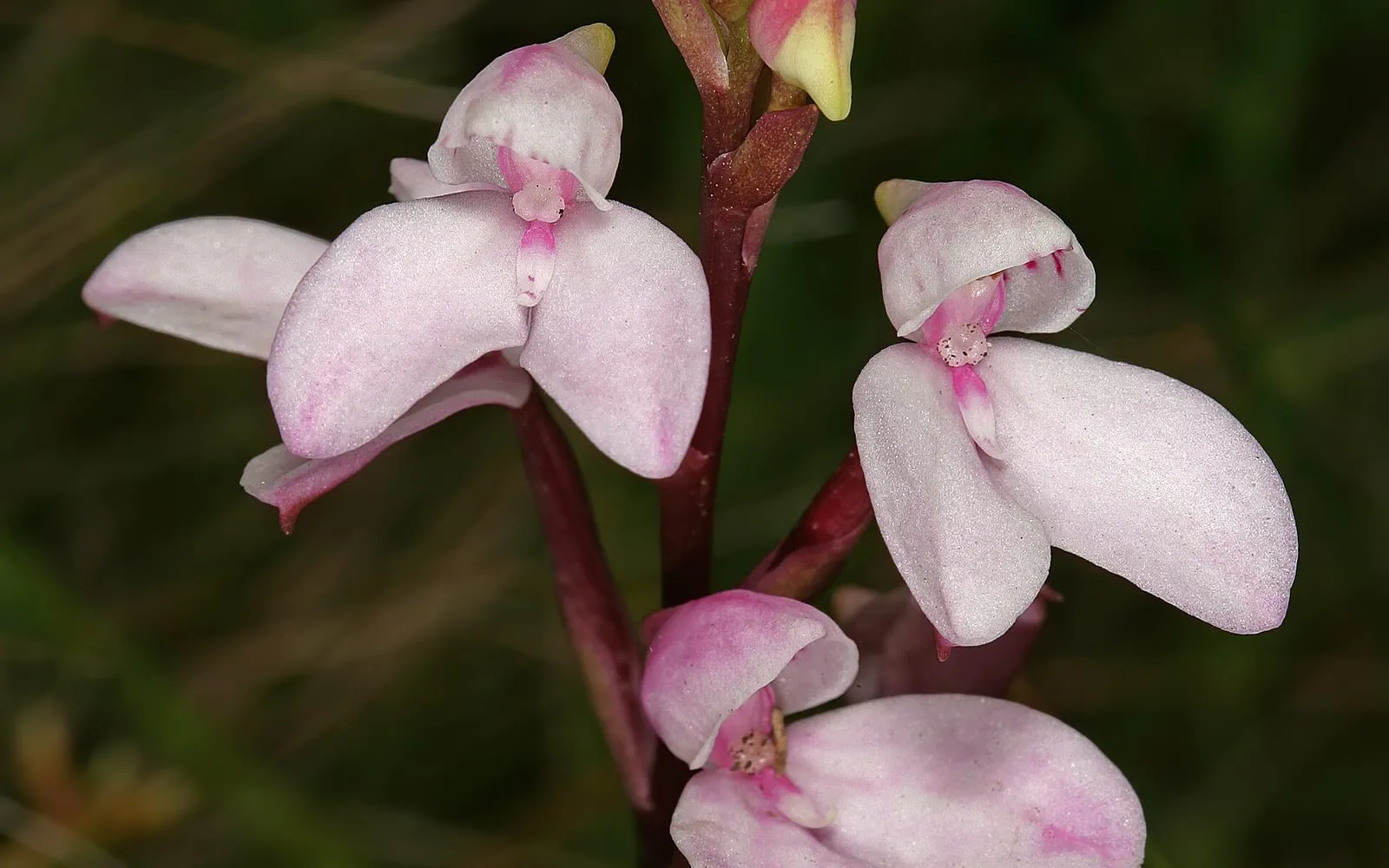
Disa tripetaloides is a streamside orchid, and one of the more approachable of the South African disas. From a leafy rosette it sends up airy sprays of many small, delicate flowers in white to pale pink, often finely spotted, a softer, more abundant bloom than the bold single spikes of some of its relatives. It has been much used to breed showy Disa hybrids, and it shares their need for pure water and cool, wet conditions.
In the wild it grows on wet banks and in seeps right beside running mountain streams, its roots washed constantly by cool, pure, moving water. That is the main care requirement. It needs pure, low-mineral water such as rainwater, kept constantly wet but airy at the root, and cool temperatures with good air movement. Heat, hard water and stagnant wet all kill it.
Grown by a specialist in a cool, humid greenhouse or frame, in an acidic, sandy, constantly wet but airy mix watered only with rainwater, and ideally stood in a tray of pure water in growth, it can be kept and flowered freely. It is easier than some disas but still a pure-water, cool-growing plant, not one for a warm room or tap water.
Appearance and character
The flowers are small, delicate and abundant, in white to pale pink, often finely spotted, borne in airy sprays above the foliage, a softer look than the bold heads of some disas.
The leaves form a leafy rosette, and the plant is evergreen to semi-evergreen, growing year round instead of taking a hard dry rest, and multiplying by offsets.
It grows on wet stream banks in the wild, its roots washed by cool, pure, running water, which is the key to its care.
It is a parent of many showy Disa hybrids and is among the more tolerant of the group, though still a pure-water, cool-growing specialist.
Where it is from
Disa tripetaloides grows in South Africa, on wet banks and in seeps beside running mountain streams, in cool, humid, airy, brightly shaded conditions, its roots constantly washed by pure, moving water. It is a plant of cool, clean-water streamsides.
Give it pure, low-mineral water, cool temperatures, high humidity and a constantly wet but airy root run, in bright indirect light to light shade. It cannot take heat, mineral-rich water or stagnant wet, and it grows year round instead of resting hard.
How it grows
It grows more or less year round in cool, wet conditions, producing its flower sprays in the warmer months and multiplying by offsets, without the strict dry rest of some orchids. Pure, running or refreshed water, cool air and good drainage through a constantly wet mix keep it healthy.
Grow it in an acidic, sandy, constantly wet but airy mix in a pot stood in a tray of pure rainwater during growth, in a cool, humid, airy greenhouse or frame. Refresh the water often so it never goes stagnant, and never use tap water.
Hold it cool, bright but out of hot sun, and in moving air, above about 4 deg C, and never let the standing water warm up or turn stale and limy. This is a plant for a cool frame, not a windowsill.
Propagation is easy for a disa, by separating the offsets that form around the plant, or from seed by specialists.
Through the seasons
Spring and summer are the main growing and flowering season. Keep the roots constantly wet with pure water, cool and airy, and feed very sparingly.
Autumn growth slows. Keep the roots wet with pure water and cool, easing feeding.
Winter is a slight cool rest, but the plant must not dry out hard. Keep the roots moist to wet with pure water, cool and airy, above about 4 deg C.
Care difficulty
Difficult, though among the more tolerant disas, demanding pure, low-mineral water, cool temperatures, high humidity and a constantly wet but airy root run. It cannot take heat, hard or salty water, or stagnant wet. Given a cool, airy greenhouse, a rainwater supply and a constantly wet but airy mix, it grows and flowers freely, but it is not a plant for a warm room or tap water.
Watering
Keep the roots constantly wet through the growing season, using pure, low-mineral water such as rainwater, ideally standing the pot in a tray of that water and refreshing it often so it never goes stagnant. It grows beside running water and must not dry out.
It does not take a hard dry rest, so keep it moist to wet even in winter, only a little less, and always cool and airy. Tap water, with its salts and lime, quickly kills it, so use rainwater only.
Warning signs, diseases and pests
Warm, stagnant or mineral-rich water rots the roots, the usual way it fails. Since it stands in water almost constantly, the tray must be pure rainwater, refreshed often so it never warms or turns stagnant, with the roots kept cool and airy throughout.
A sudden collapse in warm weather generally means the plant has overheated or drunk hard water; cool it down and switch to pure water only. Aphids sometimes cluster on the delicate flower sprays and rinse off with a jet of water.
Yellowing and a slow decline usually follow salt building up in a constantly wet mix, so flush it through with rainwater regularly and keep tap water well away.
Growing environment
Bright indirect light to light shade suits it, out of hot, direct sun, with cool air. It flowers well in good light but scorches and overheats in strong sun.
Cool temperatures, high humidity and good air movement are essential, since it cannot take heat. It is a plant for a cool, humid, airy greenhouse or frame, above about 4 deg C, not a warm room.
Grow it in an acidic, sandy, constantly wet but airy mix, stood in a tray of pure rainwater in growth, in a cool, humid, brightly shaded, airy spot.
Feeding
Through the growing season, a very dilute, low-salt orchid feed given rarely is as much as it will take, because it is acutely sensitive to salts. Overfeeding, or watering with salty water, can kill it.
Flush regularly with pure rainwater to keep salts from building up, and give little or no feed in the cooler months.
Troubleshooting
The roots rotted. Warm, stagnant or mineral-rich water. Use pure rainwater, refresh it often, keep the roots cool and airy, and never let the water overheat or go stagnant.
It collapsed in the heat. It has overheated, or taken hard water. Move it somewhere cool and airy and refresh its tray with pure rainwater only.
Can I use tap water? No. The salts and lime in tap water quickly kill disas. Use pure rainwater only, and refresh it regularly to prevent salt build-up.
How is it different from the cluster disa? It grows beside running water year round, with airy sprays of white to pink flowers, where the cluster disa has bold rusty-orange spikes and a more seasonal cycle. Both are pure-water, cool-growing South African orchids.
Is it safe around pets? Yes. No disa is listed as toxic, so it is not considered a poisoning risk to cats or dogs. The challenge with this orchid is meeting its need for cool, constantly refreshed pure water.
Disa Tripetaloides problem guides
Not sure what is wrong? See the common houseplant pests guide.