
Houseplant
Cluster Disa
Disa ferruginea
Also known as Disa ferruginea, Rusty Disa
How to grow Disa ferruginea, the cluster disa, a terrestrial orchid with rusty-orange flower spikes that needs pure water and cool, airy conditions.
At a glance
- Difficulty
- Difficult
- Water
- Constant pure water in growth; drier as it dies back
- Light
- Bright light with some direct sun
- Temperature
- Cool; dislikes heat
- Humidity
- Average to high
- Hardiness
- USDA 9-10, RHS H2, hardy to 4 C
- Type
- Deciduous terrestrial orchid with a dormant tuber
- Height
- 30 to 60 cm
- Native to
- South Africa
A specialist terrestrial orchid from the fynbos of South Africa, growing in acidic, sandy, seasonally moist ground in cool, bright, airy conditions. It needs pure, low-mineral water, cool temperatures and good air movement, and it cannot take heat, mineral-rich water or stagnant wet. It is safest above about 4 deg C and grows and rests by a strict wet-and-dry seasonal cycle.
Hardiness zones describe winter cold alone. Summer heat, humidity, rainfall and the length of the growing season decide as much, so treat the range as the outer limit rather than as a recommendation.
Not known to be toxic
This is a safe plant to keep around pets and children. Disas, like other orchids, are not listed as toxic by the ASPCA or the RHS, and no harmful compound is recorded. A pet or child that chewed a leaf is unlikely to be badly harmed. The difficulty is cultivation, not poisoning risk.
Sources: ASPCA toxic and non-toxic plants, RHS potentially harmful garden plants
About
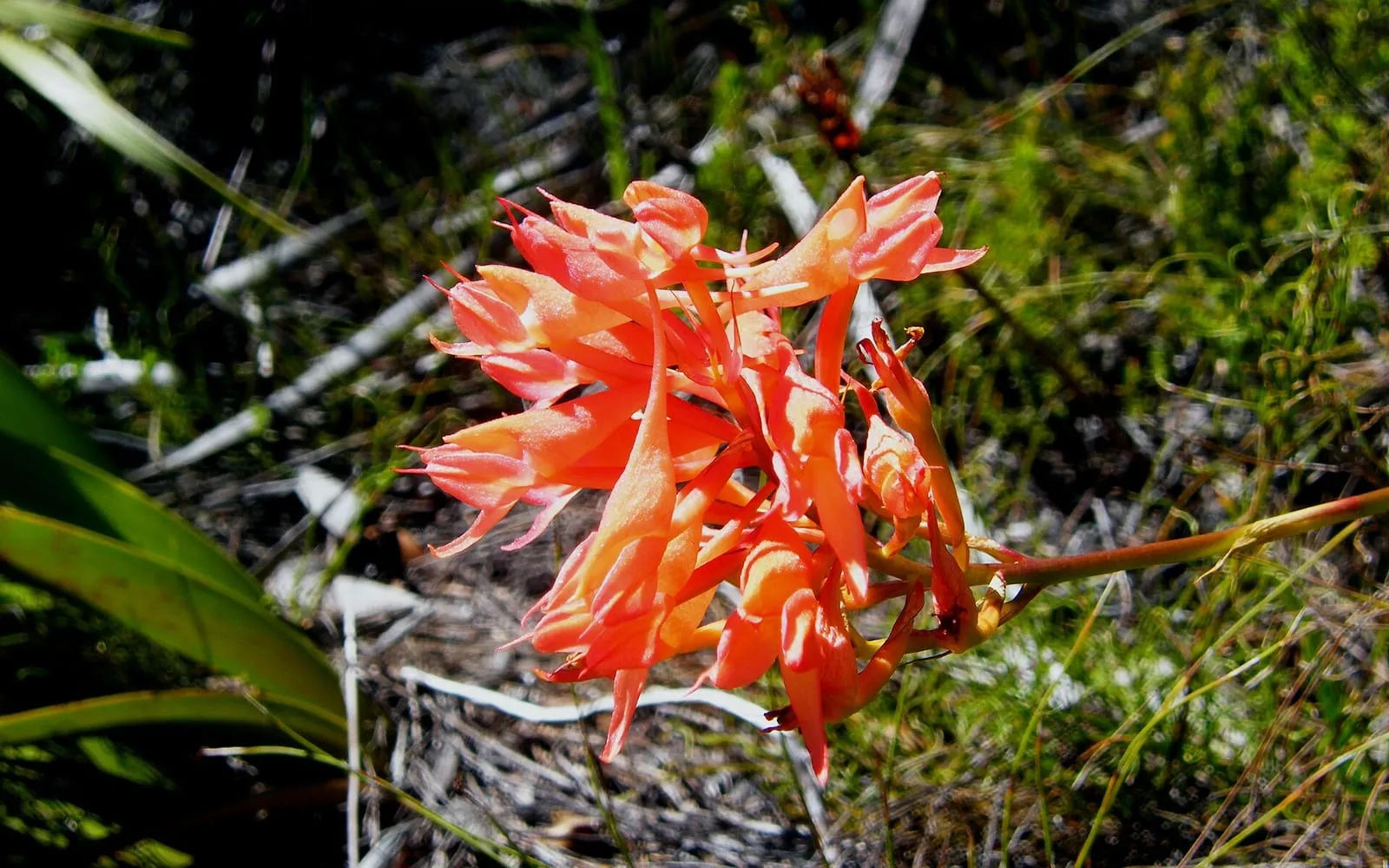
Cluster disa is a specialist terrestrial orchid from the South African fynbos, grown for its spikes of rusty-orange to red flowers held in a dense head atop a slender leafy stem. It is famous among botanists for flowering by deception: it offers no nectar, but mimics the colour of nectar-rich fynbos flowers such as Tritoniopsis and Kniphofia so closely that the mountain pride butterfly pollinates it for nothing. That trick aside, it is a plant of cool, bright, airy mountain slopes.
It grows in acidic, sandy, seasonally moist fynbos ground, and its care is exacting. Like other disas it needs pure, low-mineral water, such as rainwater, since it cannot cope with the salts and lime in tap water, and it needs cool temperatures, good air movement and a strict seasonal cycle of moist growth and a drier rest. Heat, hard water and stagnant wet all kill it quickly.
In a cool, bright, airy greenhouse or frame, in an acidic, sandy, free-draining but constantly moist mix watered only with rainwater, it can be kept and flowered. It is not a plant for a warm living room or for tap water.
Appearance and character
The flowers are borne in a dense, rounded head of rusty-orange to red blooms atop a slender stem, the cluster that names the plant.
The leaves are slim and grassy up the flowering stem, and the plant grows from a small tuber, dying back after flowering to rest dormant.
It is a deception-pollinated orchid, offering no nectar but mimicking nectar-rich fynbos flowers such as Tritoniopsis and Kniphofia to attract its butterfly pollinator.
It is a cool-growing, pure-water specialist, quite unlike the tropical epiphytic orchids, and it keeps a strict seasonal cycle of moist growth and a drier rest.
Where it is from
Disa ferruginea grows in the fynbos of South Africa, on cool, bright, airy mountain slopes in acidic, sandy, seasonally moist ground. It needs pure mountain water, cool air and lean, acidic soil.
Give it pure, low-mineral water, cool temperatures, bright light, good air movement and an acidic, sandy, free-draining but constantly moist root run in growth, with a drier rest as it dies back. It cannot take heat, mineral-rich water or stagnant wet.
How it grows
It grows from a tuber through the cool, moist season, producing its leafy flowering stem, then dies back and rests dormant, drier, through its dry season. That strict wet-and-dry cycle, with pure water and cool air, governs its growth.
Grow it in an acidic, sandy, free-draining but constantly moist mix, in a cool, bright, airy greenhouse or frame, and water only with pure rainwater, never tap water, keeping the roots constantly moist and airy in growth. Reduce water sharply as it dies back for its rest.
Keep it cool, bright and very airy, above about 4 deg C, and never let it overheat or sit in stagnant, mineral-rich water.
Propagation is by separating the tubers when dormant, or from seed by specialists.
Through the seasons
Cool growing season brings the leafy stem and the rusty flower head. Keep the roots constantly moist with pure rainwater, cool and airy, and feed very sparingly.
After flowering the plant dies back towards dormancy. Reduce watering as the foliage fades.
Dormant season the tuber rests, drier and cool. Keep it barely moist and cool, out of heat.
Return is when the cool, moist season comes round and growth restarts; resume pure-water watering.
Care difficulty
Difficult, and a specialist plant, needing pure, low-mineral water, cool temperatures, good air movement and an acidic, sandy, constantly moist root run in growth, with a drier rest. It cannot take heat, hard or salty water, or stagnant wet, all of which kill it. It is a plant for a cool, airy greenhouse and a rainwater supply, not a warm room.
Watering
Water only with pure, low-mineral water such as rainwater, since the salts and lime in tap water quickly kill it, and keep the roots constantly moist but airy through the growing season, never letting them dry out or go stagnant.
Reduce watering sharply as the plant dies back for its rest, keeping the dormant tuber only barely moist and cool. Pure water in growth and a drier dormancy are the main care requirements.
Warning signs, diseases and pests
Warm, stagnant or mineral-rich water rots the roots and tuber, the most common cause of failure. Water only with pure rainwater, keep the roots cool, moist and airy, and never let them overheat or sit stagnant.
Collapse in warm weather usually means the plant has overheated or been given hard water; keep it cool and use pure water only. Aphids may gather on the flower spikes and can be washed off.
Yellowing and decline often follow salt build-up from unsuitable water, so flush with pure rainwater and never use tap water.
Growing environment
Bright light with some direct sun suits it, matching its open fynbos slopes, though it needs cool air with that light. Deep shade prevents flowering.
Cool temperatures and good air movement are essential, since it cannot take heat, and it needs average to high humidity. It is a plant for a cool, bright, airy greenhouse or frame, above about 4 deg C, not a warm room.
Grow it in an acidic, sandy, free-draining but constantly moist mix, watered only with pure rainwater, in a cool, bright, very airy spot.
Feeding
Feed very sparingly in the growing season with a very dilute, low-salt orchid feed, since it is highly sensitive to salts and adapted to lean fynbos soil. Too much feed, or salty water, kills it.
Give nothing in dormancy, and flush regularly with pure rainwater to keep salts from building up.
Troubleshooting
It collapsed in warm weather. It has overheated, or been given hard water. Keep it cool and airy, and water only with pure rainwater, since heat and salts both kill it.
The roots and tuber rotted. Warm, stagnant or mineral-rich water. Water only with pure rainwater, keep the roots cool, moist and airy, and never let them go stagnant.
Can I use tap water? No. The salts and lime in tap water quickly kill disas. Use pure, low-mineral rainwater only, and flush regularly to prevent salt build-up.
Why does it have no nectar? It flowers by deception, mimicking nectar-rich fynbos flowers such as Tritoniopsis and Kniphofia to attract its butterfly pollinator without offering a reward.
Is it safe around pets? Yes. Orchids, including disas, are not listed as toxic, so it is safe with cats and dogs; its difficulty is cultivation, not poisoning risk.
Cluster Disa problem guides
Not sure what is wrong? See the common houseplant pests guide.