
Houseplant
Cockleshell Orchid
Encyclia cochleata
Also known as Clamshell Orchid, Black Orchid, Prosthechea cochleata
How to grow cockleshell orchid, Encyclia cochleata, including its upside-down flower shape, near-continuous blooming, and status as the national flower of Belize.
At a glance
- Difficulty
- Easy
- Water
- Water once the surface of the mix has dried, typically weekly in warm weather
- Light
- Bright indirect light, tolerating some direct morning sun
- Temperature
- 15-30 deg C
- Humidity
- 50-70 percent
- Hardiness
- USDA 10-11, RHS H1c, hardy to 8 C
- Type
- Evergreen epiphytic perennial orchid
- Height
- 30-45 cm
- Native to
- Florida, Caribbean, Central America, South America
Native across a wide swathe of the Caribbean basin and Central America, from coastal scrub up into humid lowland forest, which gives it a broader tolerance of temperature and light than many single- habitat orchid species. It has essentially no cold tolerance below about 8 deg C, and the zone figure alone says nothing about the almost continuous flowering this species is capable of once established, which is closer to its defining trait than its winter hardiness.
Hardiness zones describe winter cold alone. Summer heat, humidity, rainfall and the length of the growing season decide as much, so treat the range as the outer limit rather than as a recommendation.
Not known to be toxic
Cockleshell orchid has no toxicity listing from the RHS or the ASPCA, and orchids of this kind carry an unusually clean safety record among houseplants sold widely. No part of the plant is documented as harmful to cats, dogs or people if chewed, and there is no recorded history of poisoning associated with this species.
Source: ASPCA
About
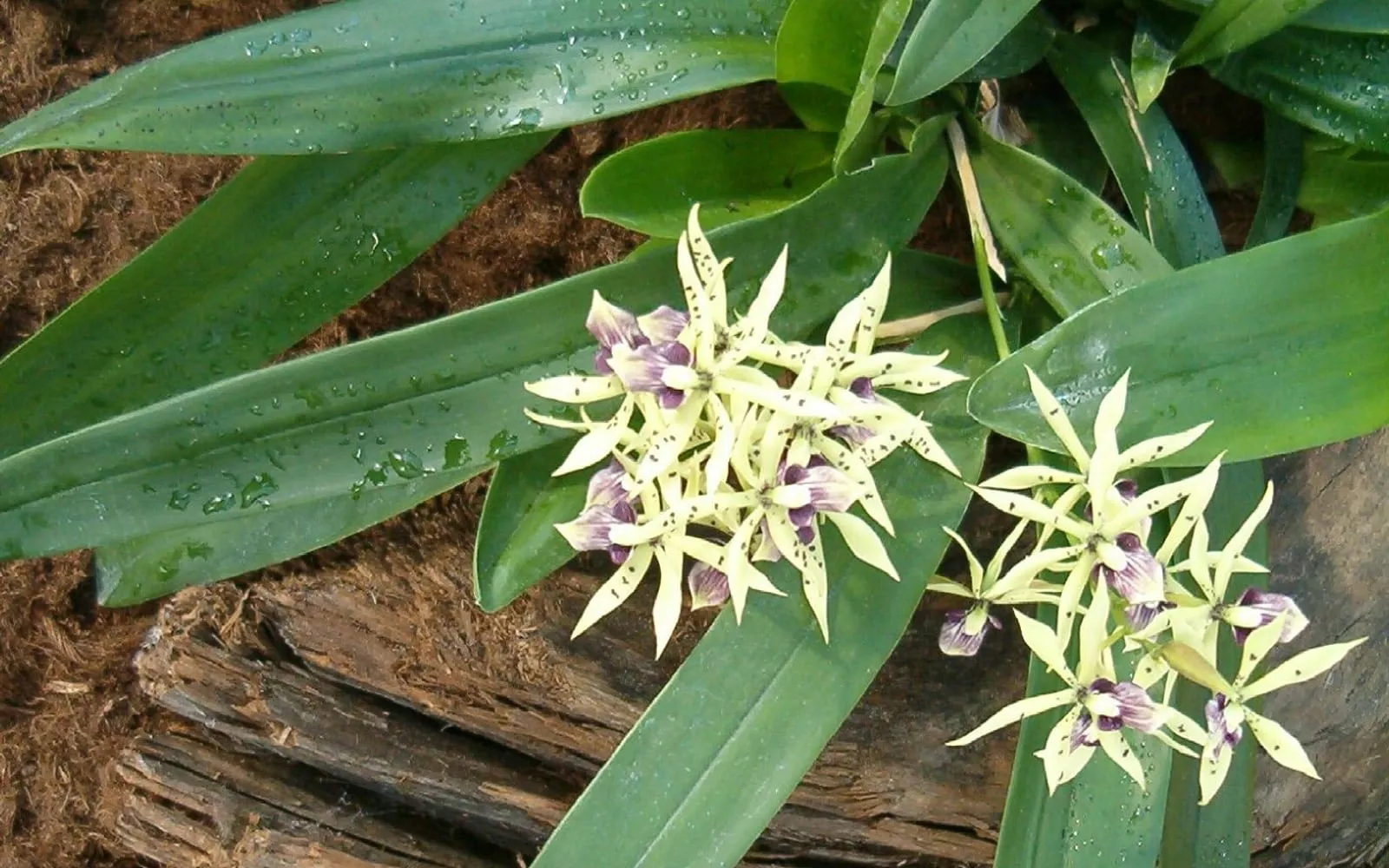
The cockleshell orchid flowers upside down compared with almost every other orchid grown as a houseplant. In most orchids the flower rotates through 180 degrees as the bud develops, a process called resupination, so the lip ends up lowest, forming a landing platform for a pollinating insect. In this species that rotation never happens, and the dark, ruffled, shell-shaped lip stays uppermost, arching over a cluster of narrow, twisted, yellow-green petals below it.
Flowering is close to continuous once a plant is established. A single spike keeps producing new flowers from its growing tip over many months, sometimes years, rather than opening a fixed set of blooms and finishing, which is unusual even among orchids known for long-lasting individual flowers.
This species is the national flower of Belize, where it is known locally as the black orchid for the deep, almost blackish purple of its lip, and it is protected across the country’s forests.
Appearance and character
Growth comes from clustered, pear-shaped pseudobulbs, each carrying two or three broad, leathery leaves at the top. The pseudobulbs pack together fairly tightly as the clump expands, giving the plant a compact, upright habit compared with some of its more sprawling relatives.
Flowers emerge from a spike at the top of a mature pseudobulb, held in a loose cluster rather than a dense spray. The narrow sepals and petals twist gently and are coloured a muted yellow-green flushed with brown, while the flared, heart-shaped lip sits above them, deep maroon-purple to almost black, with a texture and shine like polished shell. The flowers carry a light, sweet fragrance, most noticeable during the day.
Where it is from
Encyclia cochleata has one of the widest natural ranges of any commonly grown orchid, spanning southern Florida, the wider Caribbean, and much of Central and South America down into Venezuela and Colombia. Across that range it grows in habitats from dry coastal scrub to humid lowland forest, usually on tree trunks and branches in bright, well-ventilated positions rather than deep shade.
That breadth of native habitat is part of why this species tolerates a wider range of indoor conditions than many other orchids, and why it is often recommended as a first orchid for a grower moving on from Phalaenopsis. It has little tolerance for cold, but within a typical warm indoor range it adapts more readily than most.
How it grows
Pot it in a medium-grade bark mix, or mount it on bark or cork once the plant is established enough to tolerate the more frequent watering a mount requires. Either approach works well for this species, which is more forgiving of its growing medium than many showier orchids.
New pseudobulbs form at the edge of the expanding clump through the warmer months, and because a single flower spike can keep producing new blooms for a long stretch, the plant often carries flowers continuously across several growth cycles rather than in one discrete flush per year. Older, spent pseudobulbs are usually left in place rather than removed, since they continue to support the rest of the clump.
Repot only when the mix has broken down or the clump has outgrown its pot, typically every two to three years, and choose a container only slightly larger than the current root mass, since this species, like most epiphytic orchids, prefers a snug fit over a spacious one.
Through the seasons
Spring brings a burst of new pseudobulb growth as the plant enters its main growing period. Resume regular feeding as new growth firms up.
Summer is the peak growing season, and flower spikes commonly appear from pseudobulbs that matured the previous year, continuing to open new blooms for weeks or months at a stretch.
Autumn growth slows only gradually, since this species has no sharp seasonal rest built into its cycle across most of its native range. Continue watering at a similar pace to summer.
Winter many plants continue to flower intermittently even through the cooler months indoors, though growth itself slows. Ease back on feeding while keeping watering fairly steady.
Care difficulty
Easy, and one of the more forgiving orchids in this collection. It tolerates a wider range of light and humidity than most epiphytic species, has no demanding seasonal dry rest to time correctly, and recovers well from an occasional missed watering thanks to its firm, well-stocked pseudobulbs.
Watering
Water once the surface of the mix has dried, typically around once a week in warm weather, less often as temperatures drop. A thorough soak with rapid drainage suits this species well, and it tolerates a slightly wider margin either side of ideal than many other orchids without visible stress.
Because flowering can continue across most of the year, watering rarely needs the sharp seasonal adjustment that a strongly rested species requires, though easing off somewhat during any cooler winter spell is still sensible.
Warning signs, diseases and pests
Scale insects and mealybugs can settle among the tightly packed pseudobulbs, appearing as small brown bumps or cottony white tufts that are easy to overlook in a dense clump. Check regularly and treat with horticultural soap at the first sign, paying particular attention to the crevices between pseudobulbs.
Spider mites occasionally appear in warm, dry indoor air, showing as fine speckling across the leaves. Raising humidity around the plant discourages them without requiring any change to its otherwise easy-going care.
Shrivelled pseudobulbs indicate the plant has gone too long without water, more likely during a hot, dry stretch than through an ordinary week. Soft, discoloured pseudobulbs point the other way, to rot from a mix that has stayed wet for too long; cut away affected tissue and repot into fresh bark, adjusting the watering routine afterward.
Growing environment
Bright indirect light suits this species well, and it tolerates some direct morning sun better than many other epiphytic orchids, a reflection of its wide native range across both shaded forest and open coastal scrub. Too little light produces healthy pseudobulbs but few flower spikes.
Moderate to high humidity, in the 50 to 70 percent range, supports steady growth, though this species copes with drier indoor air better than most orchids in this collection. A pebble tray beneath the pot raises local humidity without wetting the roots.
Feeding
A balanced orchid fertiliser at quarter strength, applied every second or third watering through the growing season, supports steady pseudobulb production and the near-continuous flowering this species is capable of.
Feeding can continue at a reduced rate through the cooler months, since the plant often carries flower spikes even during a period of slower growth, rather than stopping outright the way a strongly seasonal orchid’s feeding schedule would.
Troubleshooting
Why do the flowers look upside down compared with my other orchids? This is normal for the species. Unlike most orchids, the flower never rotates during development, so the shell-shaped lip stays uppermost instead of dropping to form the usual lower landing platform.
A single flower spike has been blooming for months. Also normal. This species produces new flowers continuously from the tip of an established spike rather than opening a fixed set and finishing, so a long-blooming spike is a sign of a healthy, well-established plant.
The plant produces healthy pseudobulbs but few flower spikes. Usually too little light. Move it to a brighter spot, including some gentle direct morning sun if the current position is fully shaded, and expect improved flowering within a season.
A pseudobulb has shrivelled and gone soft. Check whether it is dry shrivelling from underwatering, more common in a hot, dry stretch, or soft rot from a mix kept too wet. Adjust watering accordingly and cut away any clearly rotted tissue with a clean blade.
Can this orchid be grown mounted rather than potted? Yes, and many growers prefer it once the plant is established, since a mount suits the compact pseudobulb habit well. A newly divided or young plant does better potted at first, moving to a mount once its root system is more developed.
Old, leafless pseudobulbs remain at the back of the clump. Leave them in place. They continue supporting the rest of the plant as a water and nutrient reserve and can stay indefinitely, or be removed once clearly spent for a tidier appearance.
Cockleshell Orchid problem guides
Not sure what is wrong? See the common houseplant pests guide.