
Houseplant
Dancing Bones
Hatiora salicornioides
Also known as Drunkard's Dream, Bottle Cactus, Spice Cactus, Hatiora salicornioides
How to grow Hatiora salicornioides, dancing bones or drunkard's dream, a small Brazilian jungle cactus with bottle-shaped joints and yellow flowers.
At a glance
- Difficulty
- Easy
- Water
- When the top of the mix has dried; steady in growth
- Light
- Bright indirect light with a little direct sun
- Temperature
- Warm to cool; keep above about 7 deg C
- Humidity
- Average to high
- Hardiness
- USDA 10-11, RHS H2, hardy to 5 C
- Type
- Evergreen epiphytic cactus
- Height
- 30 to 60 cm
- Native to
- Brazil
A small jungle cactus from the forests of south-east Brazil, growing perched on trees and rocks rather than in dry ground. It needs bright but filtered light, an open root run and more moisture than a desert cactus, with a cooler, drier winter rest to set its flowers. It has little frost tolerance and is safest above about 5 deg C.
Hardiness zones describe winter cold alone. Summer heat, humidity, rainfall and the length of the growing season decide as much, so treat the range as the outer limit rather than as a recommendation.
Not known to be toxic
A safe plant to keep around pets and children. Hatiora, like the other jungle cacti, is not listed as toxic by the ASPCA or the RHS, and no harmful compound is recorded in it. Its soft, spineless joints are unlikely to cause more than a mild stomach upset if a pet chews them, so this little bottle-jointed cactus can be grown in a home with animals.
Sources: ASPCA toxic and non-toxic plants, RHS potentially harmful garden plants
About
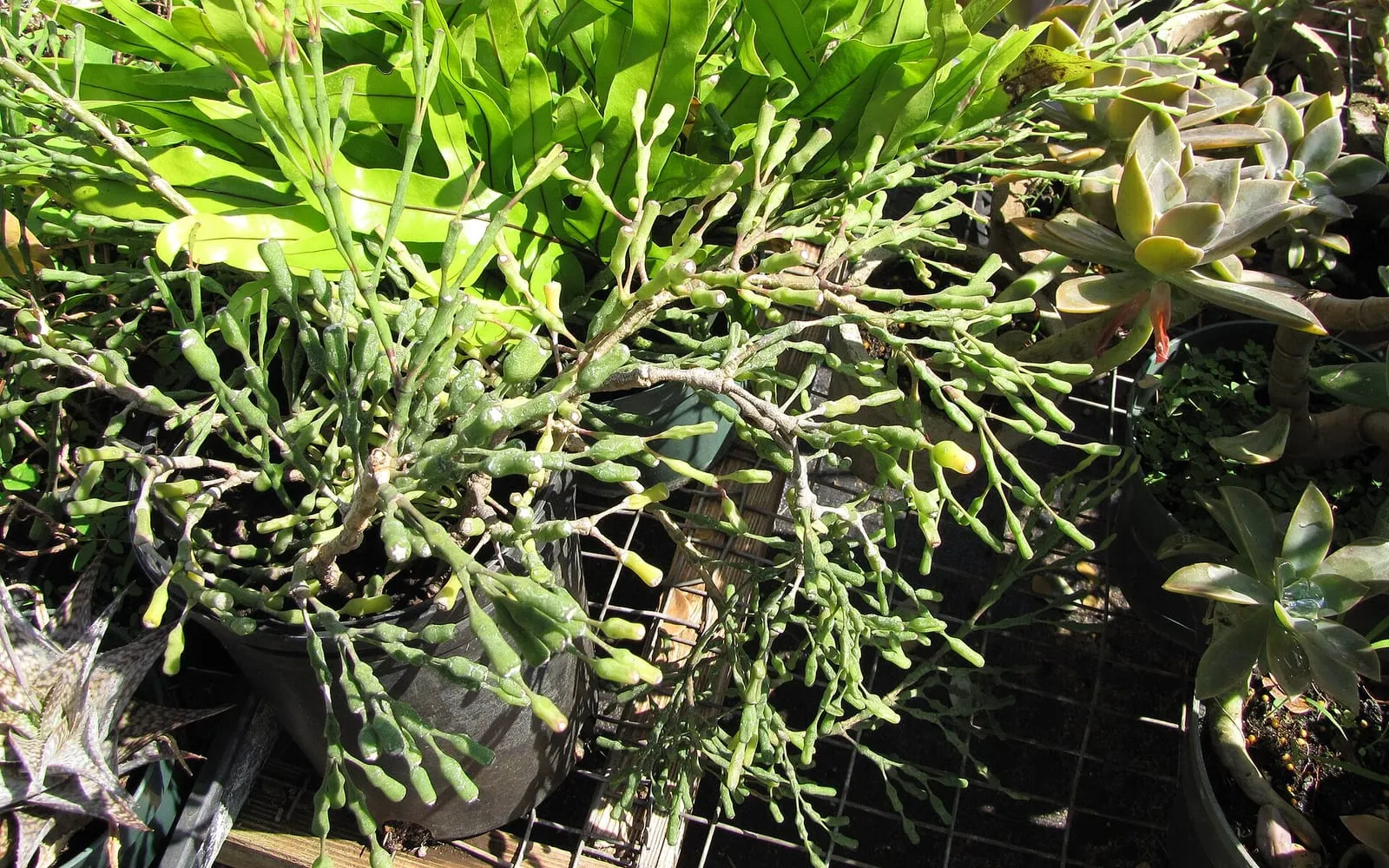
Dancing bones is a small jungle cactus made from slim, club-shaped joints. Each joint is fattened at its free end like a miniature bottle or a knuckle of bone, and the joints link end to end and branch repeatedly into a soft, green shrublet on thin stems. The jointed, irregular shape explains the name dancing bones, while the bottle-stacked look gives it its other name, drunkard’s dream. Among the small jungle cacti it is one of the easiest to recognise.
It is not a desert cactus in cultivation. It is an epiphyte from the forests of south-east Brazil, at home wedged in tree forks and mossy rock, so it needs dappled light and even moisture instead of sun and drought. In that it follows the same rules as the Christmas cactus and Russell’s cactus. It needs warmth, filtered light, a loose open mix, a modest but reliable drink, and a cool, dry spell in winter to trigger the bloom.
Come late winter and spring, small yellow flowers open at the joint tips, bright pinpricks against the green, and a healthy plant flowers generously. Soft, arching and eventually trailing, it suits a hanging pot or a bright shelf, and it needs little beyond filtered light, drainage that clears fast, and a cool rest to flower.
Appearance and character
Every joint is small, slender and shaped like a club or a bottle, swollen at the tip and pinched at the base, a clean green, and the joints link end to end and branch into a dense, arching little bush.
No spines arm it. The joints are smooth and soft to the touch, so it is safe to handle and to set within reach, unlike the bristly rat’s tail cactus.
As it lengthens it arches and finally trails from a hanging pot, and it keeps branching freely from joint to joint to thicken as it goes.
Its bloom is a scatter of small yellow bells at the joint tips in late winter and spring. The flowers are small, but freely produced once the plant has had a cool, dry winter.
Where it is from
Hatiora salicornioides grows in the forests of south-east Brazil, perched high on tree branches and mossy rocks in broken, filtered light, its roots threaded through leaf litter instead of soil. It is a plant of the canopy, not the desert floor.
Its forest habitat explains its care. It needs filtered light, an airy and open root run, and steadier moisture than a desert cactus, with a cool, drier winter to set its buds. A cold, sodden pot rots it, and a dark corner keeps it from flowering.
How it grows
Growth comes through spring and summer, the bottle-jointed stems branching and lengthening, and then it moves into a cooler, drier winter rest, which is what primes the buds for late winter and spring. Keep it warm and wet through winter and you get plenty of joints but hardly any flowers.
Pot it in a loose, quick-draining epiphytic mix in a pot or hanging basket, and water when the surface dries, keeping the joints plump and evenly but modestly moist through the growing months. Every watering should drain straight through.
Stand it in bright, filtered light, perhaps with a touch of gentle sun, warm while growing, then move it somewhere cooler and drier for winter, no colder than about 7 deg C. Once buds have formed, leave it undisturbed, since a sudden change drops them.
New plants come from joint cuttings. Twist off a short chain of joints, let the break dry for a day, then set it into gritty, open mix, where it roots with ease.
Through the seasons
Spring opens the yellow flowers and starts the strong growth. Bring watering and feeding back up.
Summer is the main growth period. Hold it in bright, filtered light, evenly but modestly moist, and feed monthly to build the bottle-joints that carry next year’s flowers.
Autumn slows the branching as the light drops. Ease back the feeding and watering, and start the cooler, drier spell.
Winter should be cool and drier, no colder than about 7 deg C, which is what sets the yellow buds. Water only sparingly and keep it on the cool side.
Care difficulty
Easy, and one of the simpler jungle cacti to keep. It grows readily, roots from a snapped-off chain of joints, and flowers well after a cool, dry winter. It disappoints only when kept warm and wet through winter, which trades flowers for lush growth, or when left in a cold, wet pot, which rots it. Its soft, spineless joints make it a pleasure to handle, and its needs are simple.
Watering
Water when the top of the open mix has dried, keeping the club-jointed stems evenly but modestly moist across spring and summer. As a forest epiphyte, it takes steadier moisture than a desert cactus, yet the mix has to drain fast and never stay wet.
Through the cool winter rest, water only occasionally, which suits the dormancy and helps the buds form. When buds are present, keep the watering even, because a sharp swing between dry and wet makes them fall.
Warning signs, diseases and pests
Sparse flowering is the usual problem, and it nearly always traces to a winter spent too warm, too wet or too dark. Give the plant a distinctly cooler, drier winter in bright filtered light, feed it with a high-potassium feed, and the bloom returns.
A cold, wet pot rots the joints and roots, the bottle-shaped segments going soft, sallow or black over a mushy base. Repot into airier mix, water less, warm it up, and strike a few sound joint-chains if the base has gone.
Mealybugs settle among the joints as white fluff; lift them off with dilute alcohol on a cotton bud, and look between the joints often, since they hide there well.
Growing environment
Bright, filtered light gives firm joints and the best flowering, matching the broken light under its forest canopy. Harsh midday sun scorches the joints, and a dim corner stops it blooming, so aim for brightness without direct glare.
Warmth while it grows and a cooler, drier rest in winter suit it, above about 7 deg C, with average to high humidity. Keep it clear of cold draughts and the dry blast of a radiator.
Grow it in a loose, free-draining epiphytic mix in a pot or hanging basket where the arching joints can spill, in a bright, filtered, humid spot.
Feeding
Feed monthly through spring and summer with a diluted balanced or high-potassium feed, to support the joints and the flowers. Reduce feeding in autumn and stop over the winter rest.
Flush the pot with plain water now and then to clear salts. A freshly potted plant needs no feed for its first few weeks.
Troubleshooting
It hardly flowers. The winter was too warm, too wet or too dark. Give it a cooler, drier winter in bright filtered light and a high-potassium feed to bring the bloom on.
The buds fell before opening. Something changed once they had set. Keep the plant in one place, evenly watered and warm, from bud to flower.
The joints have gone soft and yellow. Rot from a cold, wet pot. Shift it to airier mix, water less, warm it up, and re-root healthy joint-chains if the base has failed.
How is it different from a Christmas cactus? Its joints are small and club or bottle-shaped, strung into an arching bush, where the Christmas cactus carries flat, scalloped pads. Both are Brazilian jungle cacti and take the same growing.
Is it safe around pets? Yes. Hatiora has no listed toxin, and its soft, spineless bottle-joints are unlikely to cause more than mild stomach upset if chewed, so it is safe around cats and dogs.
Dancing Bones problem guides
Not sure what is wrong? See the common houseplant pests guide.