
Houseplant
Rat's Tail Cactus
Disocactus flagelliformis
Also known as Disocactus flagelliformis, Aporocactus flagelliformis
How to grow Disocactus flagelliformis, the rat's tail cactus, an easy hanging-basket jungle cactus with long trailing stems and pink spring flowers.
At a glance
- Difficulty
- Easy
- Water
- When the top of the mix has dried; steady in growth
- Light
- Bright light with some direct sun
- Temperature
- Warm to cool; keep above about 7 deg C
- Humidity
- Average
- Hardiness
- USDA 10-11, RHS H2, hardy to 5 C
- Type
- Evergreen trailing epiphytic cactus
- Height
- Stems trail to 1 m or more
- Native to
- Mexico
A trailing jungle cactus from the forests of Mexico, where it hangs from tree branches and rock ledges instead of growing in dry ground. It needs bright light, an open root run and more moisture than a desert cactus, with a cool, drier winter rest to set its flowers. It has little frost tolerance and is safest above about 5 deg C.
Hardiness zones describe winter cold alone. Summer heat, humidity, rainfall and the length of the growing season decide as much, so treat the range as the outer limit rather than as a recommendation.
Not known to be toxic
The rat's tail cactus is not listed as toxic by the ASPCA or the RHS. Its trailing stems are covered in fine, bristly spines that can prick and lodge in skin, so the main caution is physical rather than chemical: handle it carefully and hang it out of a pet's reach.
Sources: ASPCA toxic and non-toxic plants, RHS potentially harmful garden plants
About
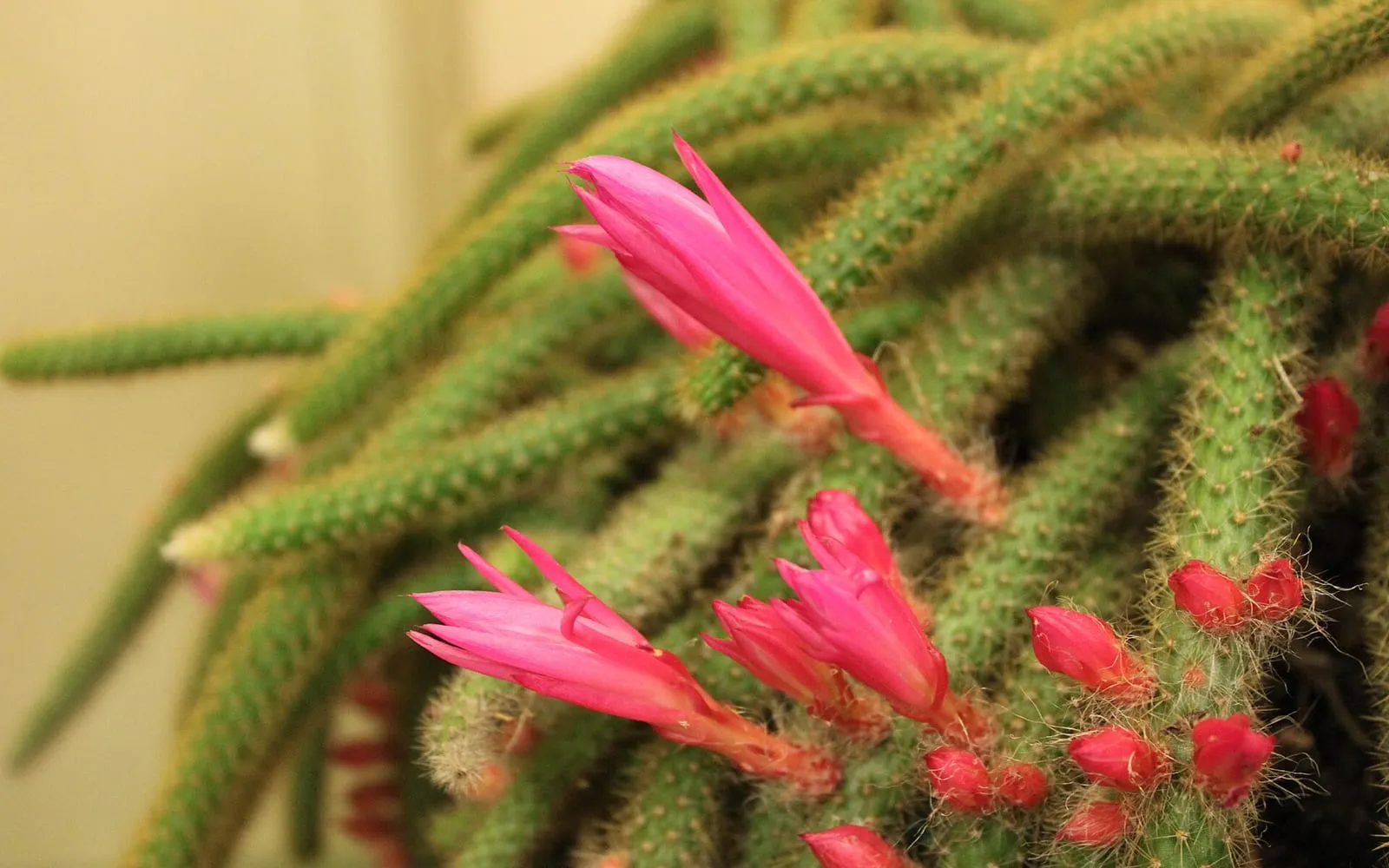
Rat’s tail cactus is named for its long, thin, rope-like green stems, which spill from the pot, each about as thick as a finger and covered all over in fine, bristly golden spines, trailing down a metre or more. Left to hang from a basket or a high shelf, it makes one of the most striking trailing cacti there is.
The flowers come in spring, when the length of every stem can carry large, vivid pink to magenta flowers, tubular and slightly lopsided, that last for a few days each and cover the plant in colour. Few cacti flower so freely or so brightly, so this old-fashioned hanging-basket plant has stayed popular for generations.
It is a jungle cactus, an epiphyte that in the wild hangs from trees and rock ledges in Mexican forest, so it needs more water and less baking than a desert cactus. Bright light, an open mix and a cool, drier winter rest to set the flowers are enough. Easy, fast and free-flowering, it is a good cactus for a beginner, spines aside.
Appearance and character
The stems are long, thin and cylindrical, about a centimetre thick, a fresh green, trailing and pendent, and clothed all over in fine, bristly, golden-brown spines that give them a soft, furry look at a distance and a prickly feel up close.
They branch and lengthen freely, trailing to a metre or more, so an established plant becomes a thick mass of hanging stems, best shown off in a hanging basket or from a high shelf.
Its flowers are the main feature, large, tubular and vivid pink to magenta, slightly asymmetric, opening all along the stems in spring and lasting a few days each, covering the plant in colour.
New stems arise from the base and along the older stems, so the plant thickens as well as lengthens with age, and it is quick to fill a basket.
Where it is from
Disocactus flagelliformis grows in the forests of Mexico, hanging as an epiphyte from tree branches and rock ledges in bright but dappled light, its roots in pockets of moss and leaf litter instead of in dry ground. It is a forest epiphyte, not a desert-floor cactus.
Give it bright light, an open and airy root run, and more even moisture than a desert cactus, with a cool, drier winter rest to trigger its spring flowers. Cold, wet compost rots it, and deep shade stops it flowering.
How it grows
It grows fast through spring and summer, lengthening and branching its trailing stems, and rests over a cooler, drier winter, which is what sets the flower buds for spring. A warm, wet winter can produce lush stems but few flowers.
Grow it in an open, free-draining epiphytic or cactus mix in a hanging basket or raised pot where the stems can trail. Water when the top of the mix has dried, keeping it steadily but modestly moist in growth, and let it drain freely.
Give it bright light with some direct sun, warmth in the growing season and a cool, drier spell in winter, above about 5 deg C. Once buds have set in late winter, keep conditions steady, since a sharp change can make them drop.
Propagate from stem cuttings. Cut a length of stem, let the end dry for a day or two, then root it in gritty, open mix, where it takes readily.
Through the seasons
Spring is the flowering season, when the stems carry pink blooms, and the start of strong growth. Resume steady watering and feeding.
Summer carries the main growth. Keep it bright, steadily but modestly moist, and feed regularly to build strong stems for next year’s flowers.
Autumn slows growth as light fades. Ease off feeding and watering, and begin the cooler, drier rest.
Winter is a cool, drier rest above about 5 deg C, which sets the flower buds. Water sparingly, and keep it bright and cool instead of warm.
Care difficulty
Easy, and one of the more forgiving and free-flowering cacti. It grows fast, roots readily from cuttings, and flowers generously given a cool, drier winter rest. It goes wrong when kept warm and wet in winter, which gives lush growth but few flowers, or when left in cold, wet compost, which rots it. Its bristly spines make it a little awkward to handle, but its care is straightforward.
Watering
Water when the top of the open mix has dried, keeping the plant steadily but modestly moist through spring and summer. As a forest cactus it needs more even moisture than a desert one, but the mix must drain freely and never stay sodden.
Cut back over the cool winter rest to occasional sips, which both suits its dormancy and helps set the flower buds. Once buds appear in late winter, keep the watering even, since a sudden dry spell or soaking can make them drop.
Warning signs, diseases and pests
The commonest disappointment is few flowers, which usually means the plant had no cool, drier winter rest, or was kept too dark. Give it a cooler, drier winter and bright light, and feed with a high-potassium feed, to bring on the spring bloom.
Cold, wet compost rots the stems and roots, shown by soft, yellowing or blackening stems and a mushy base. Move it to an airier mix, water less, keep it warmer, and root healthy stems if the base is lost.
Mealybugs hide among the bristly spines and stems as white fluff; treat them with dilute alcohol or oil and inspect closely, since the spines make them hard to spot.
Growing environment
Bright light with some direct sun gives strong stems and the best flowering. In deep shade the stems grow thin and the plant flowers poorly. A bright window or a spot with gentle direct sun suits it.
Warmth in the growing season and a cool, drier rest in winter suit it, above about 5 deg C. It takes ordinary humidity and dislikes cold, wet, stagnant conditions.
Grow it in an open, free-draining epiphytic or cactus mix in a hanging basket or raised pot where the stems can trail freely, in a bright spot, and hang it out of a pet’s reach because of its spines.
Feeding
Feed fortnightly to monthly through spring and summer with a high-potassium or cactus feed, which favours flowers over soft growth. Ease off in autumn and stop over the winter rest.
The regular feed in summer builds the stems that carry next year’s flowers, while a plain-water flush now and then clears any salts. A newly potted plant needs no feed for its first few weeks.
Troubleshooting
It has few or no flowers. The usual cause is no cool, drier winter rest, or too little light. Give it a cooler, drier winter and bright light, and feed with a high-potassium feed, to bring on the spring bloom.
The buds dropped before opening. A sudden change once buds had set. Keep the plant in one place with steady, even watering and warmth from bud to flower.
The stems have gone soft and yellow at the base. Rot from cold, wet compost. Move it to an airier mix, water less, keep it warmer, and root healthy stems if the base has gone.
The stems are thin and the plant looks sparse. Too little light, or a lack of feeding in summer. Give it brighter light and feed regularly through the growing season.
Is it safe around pets? No toxicity is recorded, but the fine bristly spines can prick and lodge in skin, so hang it out of a pet’s reach and handle it with care.
Rat's Tail Cactus problem guides
Not sure what is wrong? See the common houseplant pests guide.