
Houseplant
Campos-Portoana Rhipsalis
Rhipsalis campos-portoana
Also known as Rhipsalis campos-portoana
How to grow Rhipsalis campos-portoana, a fine-stemmed trailing jungle cactus with a soft feathery cascade and tiny white flowers.
At a glance
- Difficulty
- Easy
- Water
- When the top has dried; keep just moist, never wet, in growth
- Light
- Bright indirect light
- Temperature
- Warm to cool; keep above about 7 deg C
- Humidity
- Average to high
- Hardiness
- USDA 10-11, RHS H2, hardy to 5 C
- Type
- Evergreen epiphytic cactus
- Height
- Stems trail to 1 m
- Native to
- Brazil
A fine-stemmed jungle cactus from the humid forests of south-east Brazil, perched on trees instead of in dry ground. It needs bright but filtered light, a loose free-draining medium and even, modest moisture, tolerating shade well. It has little frost tolerance and is safest above about 7 deg C.
Hardiness zones describe winter cold alone. Summer heat, humidity, rainfall and the length of the growing season decide as much, so treat the range as the outer limit rather than as a recommendation.
Not known to be toxic
This is a safe plant to keep around pets and children. Rhipsalis, like the other jungle cacti, is not listed as toxic by the ASPCA or the RHS, and no harmful compound is recorded. Its fine, spineless stems carry no hazard beyond a possible mild stomach upset if a pet chews them.
Sources: ASPCA toxic and non-toxic plants, RHS potentially harmful garden plants
About
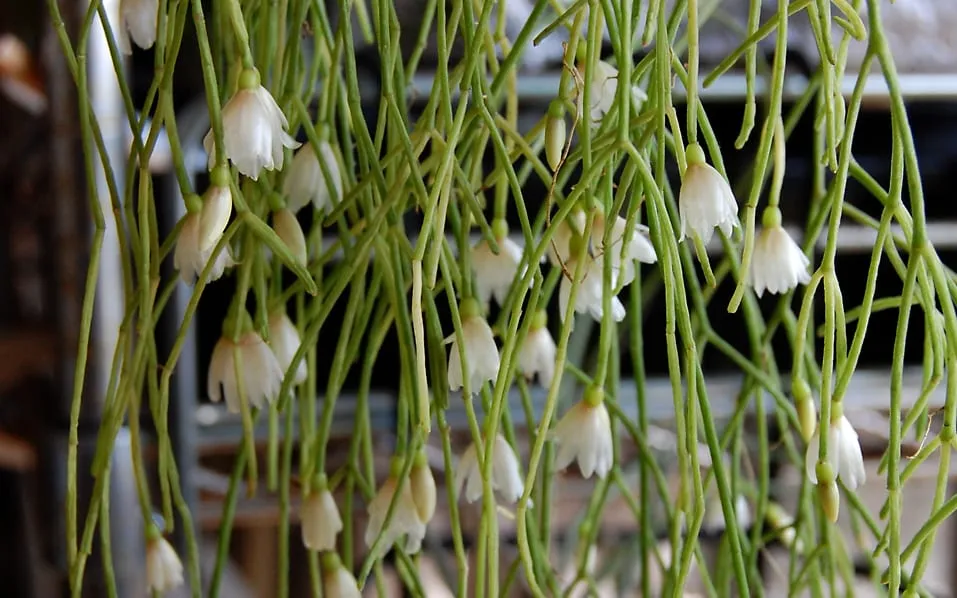
The fine stems are the main thing to notice. They are exceptionally thin and slender, splitting over and over into a soft, feathery tangle that hangs from the pot and moves in the slightest draught. Set beside it, even the mistletoe cactus looks coarse. A settled plant looks like a green mist rather than a set of hanging strands.
It comes from the humid forest of south-east Brazil, where it grows high in the branches as an epiphyte, never in the soil. It needs the shade and even dampness of the canopy and will not stand desert cactus treatment. Pinpoint white flowers appear along the fine stems through the cool months, followed by small white berries.
Fast, soft and content in shade, it needs only dappled light, a loose free-draining medium and an even, gentle dampness. It is one of the more delicate-looking trailing rhipsalis in a hanging pot, but it is no trickier than its coarser relatives.
Appearance and character
The stems are strikingly thin and fine, far more slender than most rhipsalis, dividing again and again into a soft, feathery green veil that spills and sways over the pot.
Spineless and soft, they are safe to handle, and the fine, much-divided growth lends the plant a hair-like, misty texture found in none of its stouter kin.
Fresh stems break out all along the old ones, so it thickens into a dense, soft cloud instead of dangling as separate strands.
The flowers are pinpoint white to greenish, dotted along the fine stems in the cool months, and the small white berries after them are just as tiny against the feathery green.
Where it is from
Rhipsalis campos-portoana grows in the humid forests of south-east Brazil, an epiphyte set high on tree branches in dappled light, its roots woven through bark, moss and leaf litter above the ground.
That branch-top habitat shows how to grow it. Give it dappled light, even on the shadier side, a loose medium that drains straight through, and even, gentle dampness. A cold, sodden pot is the main serious risk.
How it grows
It grows quickly through spring and summer, the fine stems dividing into an ever thicker veil, and eases off through a cooler winter, when the tiny flowers appear. Warmth, dappled light and even dampness keep the plant full.
Pot it in a loose, free-draining epiphytic medium in a hanging pot where the fine stems can fall, and water once the top has dried, holding it just moist and never wet. It must drain straight through.
Keep it in dappled light or a little shade, both of which it takes, and warm above about 7 deg C. Steer it clear of fierce direct sun, which scorches the fine stems, and of cold draughts.
Cuttings are effortless. Snip a few stems, press them into a gritty, open medium, and they root.
Through the seasons
Spring starts strong growth. Resume watering and monthly feeding as the fine stems divide and lengthen.
Summer is the peak. Hold it in dappled light, keep it just moist, and feed monthly for full, feathery growth.
Autumn slows growth, and the tiny flowers may show. Ease the feeding back.
Winter is a cooler, drier lull above about 7 deg C. Water a shade less and keep cold draughts off it.
Care difficulty
Easy for a trailing rhipsalis. It grows fast, strikes from a snipped stem, and takes shade and a little neglect. It fails in a cold, sodden pot, which rots it, or when baked dry or placed in fierce sun, which shrivels or scorches the fine stems.
Watering
Water once the top of the loose medium has dried, holding the plant just moist and never wet through the growing months. As a forest plant it likes a more even dampness than a desert cactus, but the medium must drain straight through and never stand sodden.
Ease off a little through the cooler winter lull, though never to a hard drought, since the very fine stems shrivel fast when parched. Empty whatever pools beneath a hanging pot, as cold, wet stems rot.
Warning signs, diseases and pests
A cold, sodden pot rots the fine stems and roots, seen as soft, sallow or blackened stems over a mushy base. Shift it to a coarser, more open medium, water more sparingly, warm it, and root sound stems if the base is gone.
Wrinkled, slack stems say it has gone too dry; the fine stems parch faster than thicker ones, so soak it and hold it just moist thereafter.
Mealybugs hide in the dense fine growth as white fluff; lift them off with dilute alcohol and search the stems closely, since the fine growth screens them.
Growing environment
Dappled light fills out the softest growth, and it takes light shade well. Fierce direct sun scorches the fine stems. A bright spot screened from direct sun, or gentle shade, suits it best.
It prefers conditions between warm and cool, above about 7 deg C, in humid air. Keep it back from cold draughts and the dry heat of a radiator.
Grow it in a loose, free-draining epiphytic medium in a hanging pot where the fine, feathery stems can cascade, somewhere bright, screened from direct sun, and humid.
Feeding
Through spring and summer, a diluted balanced feed once a month supports the fast, fine growth. Reduce feeding in autumn and feed little over winter.
Run plain water through the pot occasionally to flush salts. A freshly potted plant needs nothing for its first weeks.
Troubleshooting
The fine stems have shrivelled. Gone too dry. The fine stems parch faster than thicker ones, so soak it and hold it just moist.
The stems are soft and sallow. Rot from a cold, sodden pot. Shift it to a coarser, open medium, water less, warm it, and root sound stems if the base has failed.
How is it different from the mistletoe cactus? Its stems are far finer and more densely divided, giving a soft, feathery veil, where the mistletoe cactus has thicker, thread-like stems. Both take much the same care.
Will it grow in shade? Yes; like most rhipsalis it takes light shade, though it fills out best in dappled light. Only fierce sun does it harm.
Is it safe around pets? Yes. Rhipsalis carries no listed toxin, and its stems are soft and spineless, so it is safe with cats and dogs.
Campos-Portoana Rhipsalis problem guides
Not sure what is wrong? See the common houseplant pests guide.