
Houseplant
Russell's Cactus
Schlumbergera russelliana
Also known as Schlumbergera russelliana, Wild Christmas Cactus
How to grow Schlumbergera russelliana, the wild species behind the Christmas cactus, a Brazilian cloud forest epiphyte with magenta flowers.
At a glance
- Difficulty
- Moderate
- Water
- When the top of the mix has dried
- Light
- Bright indirect light
- Temperature
- Warm to cool; keep above about 10 deg C
- Humidity
- Average to high
- Hardiness
- USDA 10-12, RHS H1c, hardy to 10 C
- Type
- Evergreen epiphytic cactus
- Height
- Stems to 40 cm, trailing
- Native to
- Brazil
A forest cactus from the humid Organ Mountains of south-east Brazil, where it grows perched on mossy branches and rocks in cool, misty cloud forest instead of in dry ground. It needs warmth, bright filtered light and steady moisture in an open mix, cannot take frost, and slows below about 10 deg C. It never wants the baking a desert cactus enjoys.
Hardiness zones describe winter cold alone. Summer heat, humidity, rainfall and the length of the growing season decide as much, so treat the range as the outer limit rather than as a recommendation.
Not known to be toxic
Safe to keep around pets and children. The ASPCA lists Schlumbergera, the Christmas cactus group, as non-toxic to cats and dogs, and no harmful compound is recorded in it. A pet that chews a stem might have a brief stomach upset from the fibrous tissue, nothing more, so this species and its hybrids can be grown without concern.
Sources: ASPCA toxic and non-toxic plants, RHS potentially harmful garden plants
About
Russell’s cactus is the wild Brazilian species that gardeners rarely meet by name, though its descendants are on windowsills everywhere. Crossed with a sister species in the nineteenth century, it gave rise to the Christmas cactus. The true species is a plant in its own right: arching stems of flat green segments that hang from mossy branches in cloud forest and carry rich magenta flowers in spring instead of at midwinter.
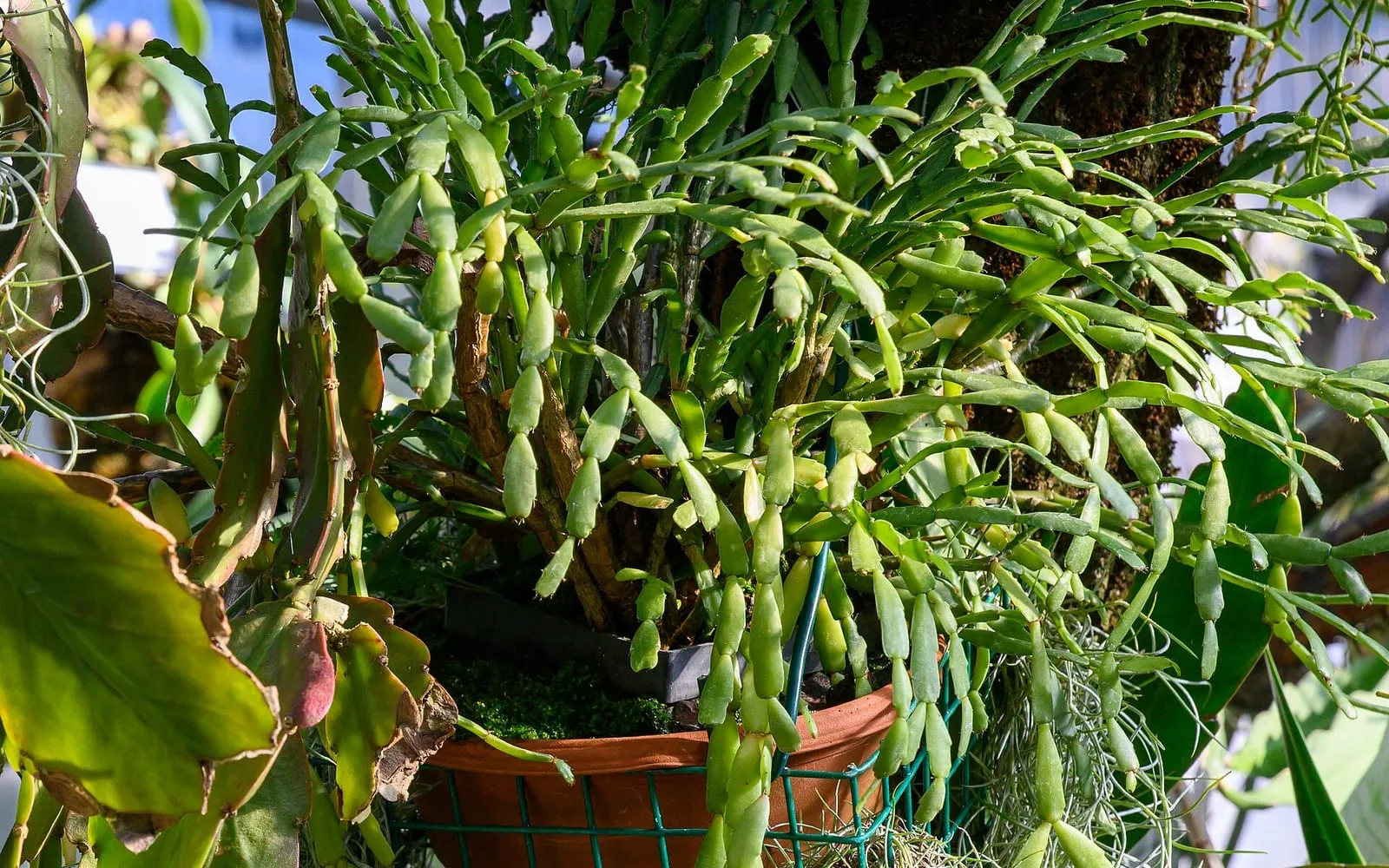
Its segments are flatter and more scalloped than those of the desert cacti, and it is an epiphyte, growing perched on trees and rocks with its roots in moss and leaf litter. It does not need sand or baking sun.
It is grown much as the familiar hybrid is, with bright filtered light, an open mix and steady moisture, but a purist keeps the species for its natural, slightly wilder form and its later, spring-borne bloom. Its needs come from the cool, misty Brazilian mountains where it grows.
Appearance and character
The stems are flat and segmented, each joint a small green paddle with scalloped, rounded edges, and they arch out and then trail as they lengthen, so the plant is best shown off in a hanging pot or on a high shelf.
Flowers open from the stem tips, tubular and swept back, a strong magenta-pink, and appear in spring in its native season instead of at Christmas, distinguishing the species from the winter-flowering hybrids bred from it.
As a true species, it comes fairly uniform from seed, while the shop hybrids are named clones in many colours.
Out of flower it is a neat, arching green plant of flattened stems, and it flowers reliably once settled and given a cue to bud.
Where it is from
Schlumbergera russelliana grows in the Organ Mountains of south-east Brazil, in cool, humid cloud forest, perched as an epiphyte on mossy tree branches and shaded rock faces where mist keeps the air damp and the light is filtered through canopy.
Give it an open, airy, moisture-holding root run, bright but filtered light, cool to warm temperatures and humid air. It should not bake dry or sit in full sun, so it behaves nothing like a desert cactus.
How it grows
It grows through spring and summer, extending its arching stems joint by joint, and flowering is triggered by the shortening days and cooler nights of the changing season. Cool nights and long dark evenings are the cue to set buds.
Grow it in an open, free-draining epiphytic mix in a snug pot or hanging basket, and keep it steadily but modestly moist while in growth, letting the surface dry between waterings. It never wants to dry out hard, nor to stand wet.
Give it bright, indirect light, warmth above about 10 deg C, and humid air. To bring on flowers, give it cool nights and uninterrupted long darkness in autumn, away from artificial evening light, then keep it steady once buds form.
Propagation is easy. Twist off a two or three segment piece, let the break dry for a day, then root it in gritty mix.
Through the seasons
Spring is the natural flowering season for the species, and the start of active growth. Water and feed as new segments appear.
Summer is the main growth period. Keep it steadily moist, feed regularly, and stand it in bright, filtered light, perhaps outdoors in shade in warm weather.
Autumn is when cool nights and lengthening darkness set buds. Give it cool, dark evenings, ease the watering, and stop feeding.
Winter is a cooler, drier rest. Keep it above about 10 deg C, water sparingly, and hold it steady if buds are present.
Care difficulty
Moderate. The plant grows and roots easily, but like all the Schlumbergera it drops its buds at the slightest upset, so the difficulty is in flowering it reliably and holding the buds once set. Give it a cool, dark autumn to bud, then leave it undisturbed. Kept warm and lit late into the evening, it grows well but flowers poorly.
Watering
Water when the surface of the open mix has dried, keeping it steadily but modestly moist through spring and summer. As a cloud-forest epiphyte it likes more even moisture than a desert cactus, but the mix must drain freely and never stay waterlogged.
Reduce watering over the cooler autumn and winter rest, without letting the plant dry out completely. Once buds have set, keep the watering even, since a sudden dry spell or soaking is a common trigger for bud drop.
Warning signs, diseases and pests
Bud drop is the usual problem, brought on by moving the plant, a change in light or temperature, a draught, or an irregular water supply once buds have formed. Settle it in one spot and keep conditions steady from bud to bloom.
Mealybugs lodge among the stem joints as white fluff; wipe them off with dilute alcohol and check often. Root and stem rot follow heavy, wet compost, shown by soft, shrivelled or blackening segments at the base, so keep the mix open and the pot well drained.
A plant that will not flower has usually been kept too warm and too brightly lit in the evenings through autumn. Give it cool nights and true darkness.
Growing environment
Bright, indirect light suits it, like the filtered light of cloud forest. Direct summer sun scorches and reddens the flat stems, and deep shade prevents flowering.
It takes cooler temperatures than many houseplants, which helps it bud, but keep it above about 10 deg C and give it humid air, since it comes from misty mountains. Avoid hot, dry draughts.
Grow it in an open, free-draining epiphytic mix in a hanging pot or on a shelf where the stems can arch, in a bright, humid, draught-free spot with cool autumn nights.
Feeding
Feed fortnightly to monthly through spring and summer with a balanced or high-potassium feed to support growth and flowering. Ease off as autumn approaches.
Stop feeding over the autumn bud-setting period and the winter rest, resuming only when growth restarts in spring.
Troubleshooting
The buds dropped before opening. The plant was moved, chilled, draughted or watered unevenly. Keep it in one place with steady warmth and moisture from bud to flower.
It will not flower. It has been too warm and lit too late in the evening through autumn. Give it cool nights and uninterrupted darkness to set buds.
How is it different from a Christmas cactus? This is the wild species, flowering in spring with magenta blooms, while the Christmas cactus is a winter-flowering hybrid bred from it in many colours. Care is much the same.
The stem segments look shrivelled and soft at the base. Rot from wet, heavy compost. Move it to an open mix, water more sparingly, and root healthy segments as cuttings.
Is it safe around pets? Yes. Schlumbergera is on the ASPCA’s non-toxic list, so the species and its hybrids are safe with cats and dogs.
Russell's Cactus problem guides
Not sure what is wrong? See the common houseplant pests guide.