
Houseplant
Coral Cactus
Rhipsalis cereuscula
Also known as Rice Cactus, Rhipsalis cereuscula
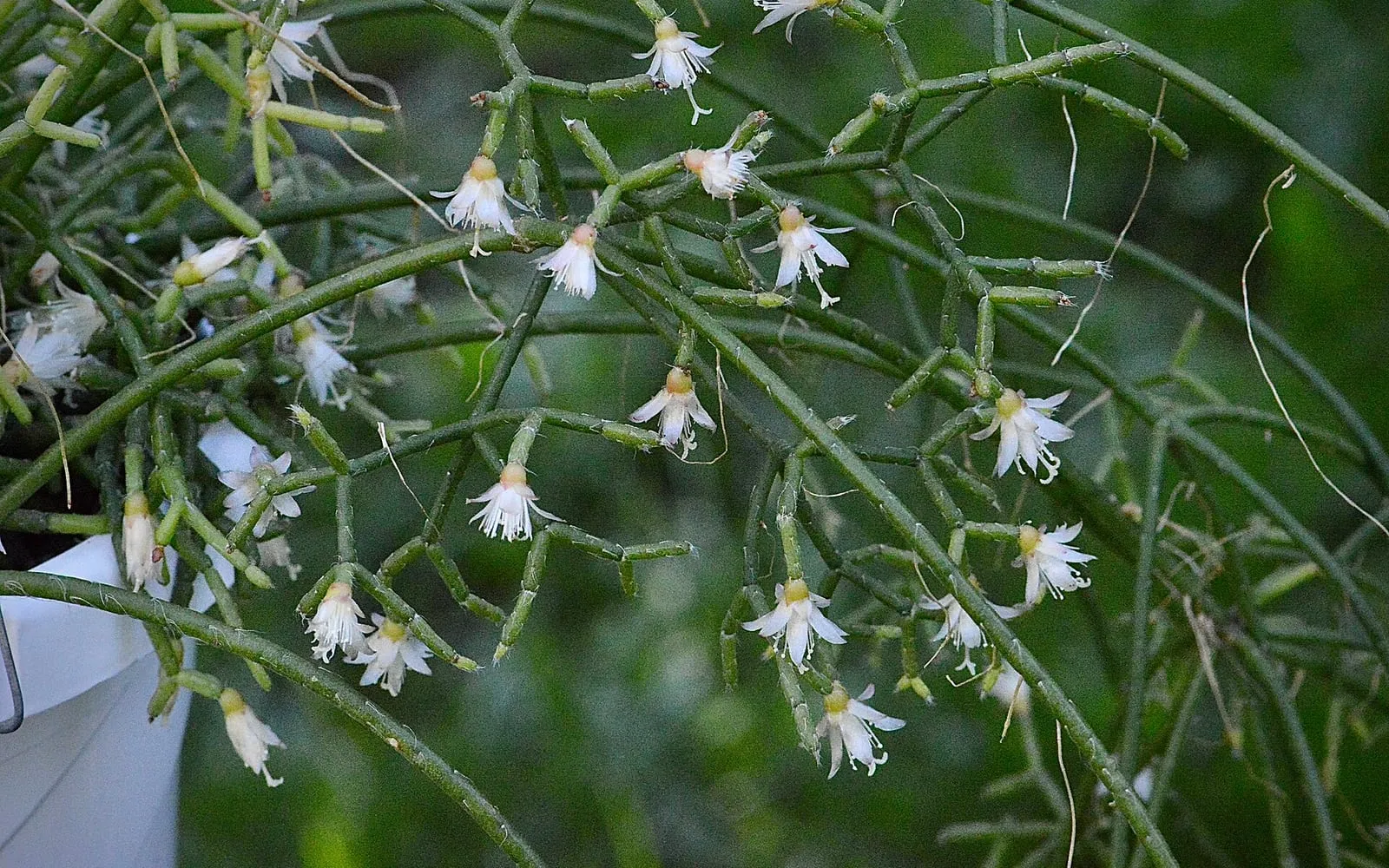
How to grow Rhipsalis cereuscula, the coral or rice cactus, a bushy trailing jungle cactus with short stem segments clustered into coral-like tufts.
At a glance
- Difficulty
- Easy
- Water
- When the top of the mix has dried; steady in growth
- Light
- Bright indirect light
- Temperature
- Warm to cool; keep above about 7 deg C
- Humidity
- Average to high
- Hardiness
- USDA 10-11, RHS H2, hardy to 5 C
- Type
- Evergreen epiphytic cactus
- Height
- 30 to 60 cm
- Native to
- South America
A tufted jungle cactus from the forests of south-east South America, perched on trees and rocks rather than in dry ground. It needs bright but filtered light, an open root run and steady, modest moisture, with a cooler, drier winter rest to flower. It has little frost tolerance and is safest above about 7 deg C.
Hardiness zones describe winter cold alone. Summer heat, humidity, rainfall and the length of the growing season decide as much, so treat the range as the outer limit rather than as a recommendation.
Not known to be toxic
A safe plant to keep around pets and children. Rhipsalis, like the other jungle cacti, is not listed as toxic by the ASPCA or the RHS, and no harmful compound is recorded in it. Its soft, spineless stems are unlikely to cause more than a mild stomach upset if a pet chews them, so this tufted cactus can be kept in a home with animals without concern. The name coral cactus is also given to the crested form of Euphorbia lactea, a grafted succulent with caustic milky latex that is toxic to people and pets. This page covers Rhipsalis cereuscula only, so check the plant has soft, thin green stems and no milky sap before relying on it.
Sources: ASPCA toxic and non-toxic plants, RHS potentially harmful garden plants
A soft, tufted cactus with no spines
Rhipsalis cereuscula is a cactus, but it does not behave like a desert cactus. It is soft, spineless and harmless to the touch, a bushy plant of thin, cylindrical green stems that branch repeatedly and end in dense little clusters of short segments. Those clusters look like coral or scattered grains of rice, which is where both common names come from. Young plants sit upright and neat, then the weight of the growing stems arches them over and they trail, making the species useful for a hanging pot or a high shelf.
It is a jungle cactus, an epiphyte from the humid forests of south-eastern South America, where it grows on tree branches and mossy rocks instead of rooting in open, sunbaked ground. Rooted in leaf litter and its own aerial roots, it grows in the dappled shade beneath the canopy in warm, moist, airy conditions. It belongs to the same tribe as the mistletoe cactus, and it shares that group’s habit of producing tiny cream-white flowers at the stem tips in the cooler months, followed sometimes by small, translucent, berry-like fruit. Its care should follow that forest habitat rather than desert cactus care.
The light of a forest floor
Where a desert cactus needs full sun, this one needs the softened, broken light that filters through leaves. An east or north window suits it, or a spot a little back from a brighter one behind a thin curtain, giving it brightness without direct sun. Hard midday sun bleaches the soft green stems yellow and can scorch the fine tips, while a dark corner leaves the growth sparse and thin and the flowers absent. Turn the pot now and then so the bushy head fills out evenly instead of leaning towards the glass. Ordinary room warmth suits it, and it tolerates a cooler winter than most jungle climbers, down to around 7 deg C.
Watering like a leafy houseplant
Treat it more like a fern or a foliage plant than a desert cactus. Through spring and summer keep the mix lightly and evenly moist, letting the surface dry between waterings but not allowing the whole pot to dry hard, and never letting it stand in a saucer of water. The fine roots are damaged by both drought and sodden compost. Ease right back over the cool winter weeks and let it rest a little drier, which helps set the following season’s flowers. Because it comes from damp forest air, it benefits from humidity, so mist it, group it with other plants, or keep it in a naturally moist room.
Potting in an airy, open medium
Give it a light, spongy mix that holds a trace of moisture yet drains at once, closer to an orchid medium than to gritty desert soil. A peat-free houseplant compost loosened with orchid bark, coco coir and perlite works well, and a hanging pot or a raised container shows off the arching, tufted stems while keeping them clear of a wet surface. Repot in spring only once the plant has filled its pot, and handle the brittle stems gently, since they snap cleanly at the joints. Those snapped pieces are normal.
Feeding
A dilute balanced feed, or a high-potassium one, given about once a month through spring and summer keeps the tufts full and green and supports flowering. Keep it weak, because an epiphyte in the wild lives on the scant nourishment that rain and rotting debris deliver, not on a rich root run. Stop feeding through the cooler winter rest, and let a freshly potted plant settle into its new mix for a few weeks before feeding.
Propagation
Few plants are easier to propagate. Break or snip off a healthy tuft, let the cut end dry for a day, then push it into a moist, open mix, where it roots in a matter of weeks. Set several pieces together in one pot and a full, bushy plant forms faster. Even the segments that break off in ordinary handling will root if you pot them instead of throwing them away.
Showing off the tumbling stems
The arching, self-branching habit is what this plant is grown for, so give it room to trail. A hanging pot, a tall plant stand or a high shelf lets the stems cascade, and the longer they get the fuller the plant looks. Pinch out a few tips on a young plant if you want it bushier at the crown before it starts to trail, since each pinched stem branches into two. An older plant that has grown bare in the middle can be cut back hard in spring, with the trimmings rooted back into the same pot to thicken it again.
Problems
Yellow, scorched or shrivelled stems mean too much direct sun or a plant left too dry; move it to softer light and water more evenly. A soft, browning base is rot from cold, wet compost; cut back to sound stem, dry the plant off and water less. Mealybugs lodge as white woolly specks deep among the crowded tufts, where they hide well, so check the clusters and dab any with a swab of dilute alcohol. Sparse growth and a flowerless plant usually come from too little light or the lack of a cooler, drier spell over winter.
Is it really a cactus? Yes, a jungle epiphyte in the cactus family, though its soft, spineless, tufted stems look nothing like a desert cactus.
Why are the stem tips clustered like coral? The branching stems end in dense knots of short segments, giving the coral or rice look that names the plant, and it is normal, healthy growth.
How much light does it want? Bright but filtered light, like that under a forest canopy, and shelter from any direct midday sun, which scorches the soft stems.
Is it safe around pets? Yes. It has no recorded poison and bears no spines, so it can share a home with animals.
Coral Cactus problem guides
Not sure what is wrong? See the common houseplant pests guide.