
Outdoor plant
Crested Dog's-Tail
Cynosurus cristatus
Also known as Dog's-tail grass
How to grow crested dog's-tail in a wildflower lawn or meadow. Its wiry, one-sided flower spike, and why it thrives on poor soil that defeats richer lawn grasses.
At a glance
- Difficulty
- Easy
- Water
- Naturally rain-fed once established
- Light
- Full sun to light shade
- Hardiness
- USDA 4-9, RHS H7, hardy to -30 C
- Type
- Hardy perennial grass
- Height
- 20-60 cm
- Native to
- Europe
Fully hardy through ordinary temperate winters and well adapted to poor, unimproved soil, where it competes better than many richer pasture and lawn grasses. It is not a species suited to a heavily fertilised lawn, where more vigorous grasses outcompete it easily, and its natural niche is lean, traditionally managed grassland rather than a conventional feed-and-water lawn regime.
Hardiness zones describe winter cold alone. Summer heat, humidity, rainfall and the length of the growing season decide as much, so treat the range as the outer limit rather than as a recommendation.
Not known to be toxic
Crested dog's-tail has no toxicity listing from the RHS or the ASPCA and is considered safe around pets and children. It has a long history as a component of traditional grazing pasture, further evidence of its general safety.
Source: RHS
About
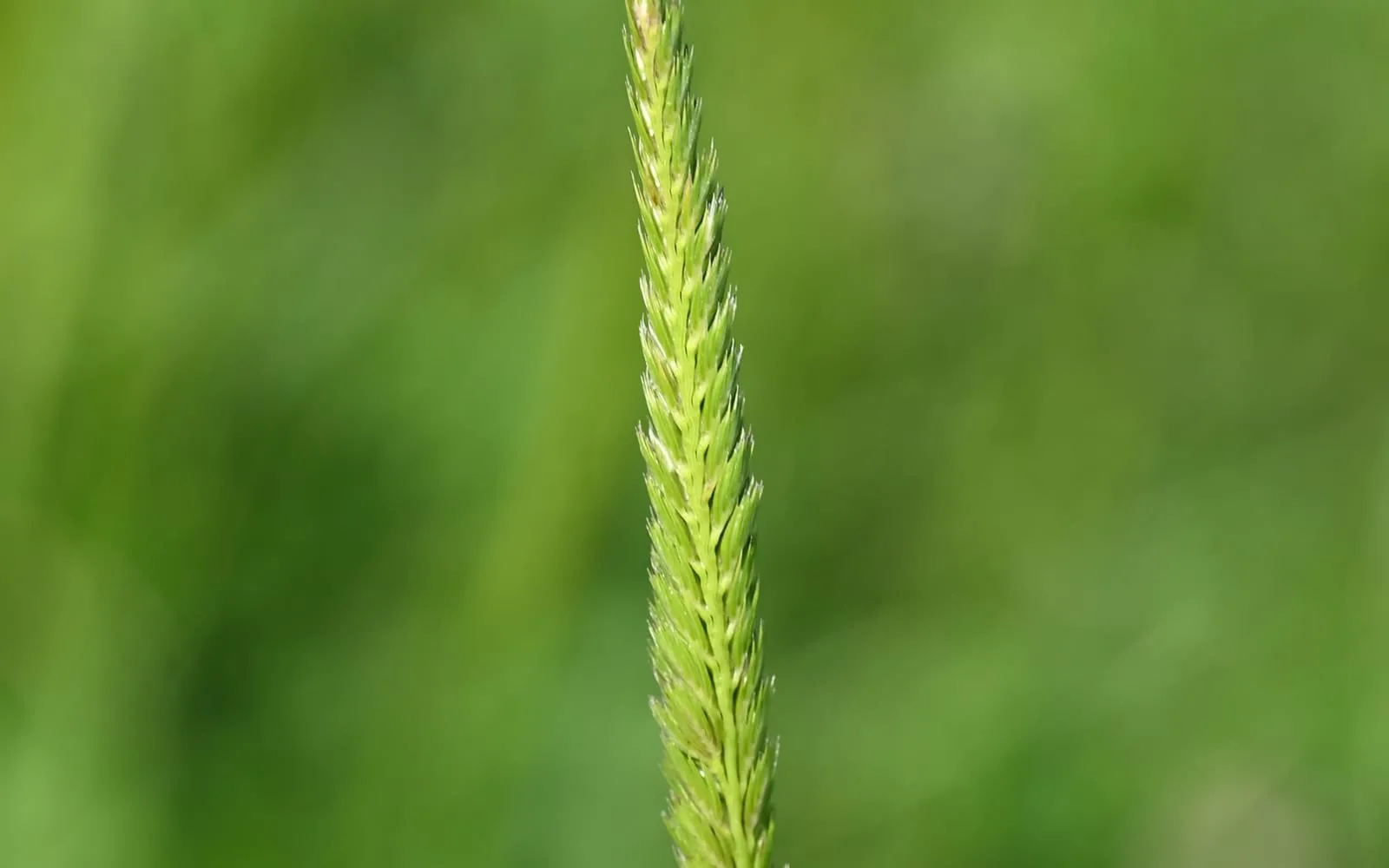
Crested dog’s-tail is a fine, wiry grass of traditional unimproved pasture and old meadow lawns, valued in a wildflower or naturalistic garden setting for thriving on the poor, low-fertility soil that defeats richer, more demanding lawn grasses and lets wildflowers compete successfully alongside it. Its distinctive flower spike, narrow, stiff and distinctly one-sided, with all the spikelets arranged along one edge of the stem, makes it easy to identify once flowering, standing apart clearly from the more symmetrical flower heads of most other common grasses.
Historically an important component of traditional hay meadows and grazing pasture, valued for its resilience under grazing and its tolerance of poor soil rather than for high forage yield, it has become something of an indicator species for old, unimproved grassland, turning up reliably wherever soil has not been enriched by modern fertiliser regimes.
Appearance and character
Fine, narrow leaves form a low, tufted clump close to the ground, with wiry, upright flower stems rising well above the foliage from late spring. The flower spike itself is narrow and stiffly one-sided, all its small spikelets crowded along a single edge, giving the whole spike a comb-like or bottlebrush appearance that persists as a useful identification feature even after the flowers themselves have faded.
Unlike some taller, coarser pasture grasses, this species keeps a relatively fine, low foliage base, which is part of why it blends well into a wildflower lawn without dominating the overall texture as a coarser grass like cocksfoot tends to.
Where it is from
Unimproved grassland, old pasture and traditional hay meadows across Europe, typically on poor to moderately fertile, free-draining soil that has not been heavily fertilised.
That preference for lean, unimproved ground places it in good company with several other wildflower-friendly grasses and forbs, and it is often specifically included in wildflower meadow seed mixes precisely because it does not overwhelm more delicate flowering species as a richer, more vigorous grass would.
How it grows
A hardy perennial forming a fine, low tuft that spreads gradually rather than aggressively, staying well-behaved enough to share space readily with wildflowers and other meadow grasses in a mixed planting. Flower stems rise from established tufts each late spring and summer, adding height and the plant’s distinctive one-sided spikes to an otherwise low sward.
Because it performs comparatively poorly on rich, well-fertilised soil, where more vigorous grasses crowd it out readily, its presence in a lawn or meadow is itself often a useful sign that the soil has not been heavily improved or fed over the years.
Through the seasons
Spring fresh growth resumes, with flower stems beginning to develop from established tufts.
Summer is the main flowering period, with the distinctive one-sided spikes visible above the fine foliage.
Autumn growth slows as flowering finishes and seed disperses.
Winter the low foliage persists through the colder months, fully hardy with no need for protection.
Care difficulty
Easy, and the main requirement is restraint rather than active care: avoid fertilising the area, and mow or cut at a frequency and timing that suits the wider wildflower meadow or naturalistic lawn this species typically forms part of, generally an infrequent cut after flowering and seeding have finished rather than regular close mowing.
Watering
This species relies on natural rainfall once established and rarely needs supplemental watering except during initial establishment or a unusually severe drought, reflecting its adaptation to lean, often free-draining unimproved grassland.
Warning signs, diseases and pests
Few pests or diseases trouble this species in a typical wildflower meadow or lawn setting. Leatherjackets, the larvae of crane flies, can occasionally damage roots in a lawn setting generally, though this species is no more susceptible than other common grasses and rarely needs specific treatment.
A declining presence of this species within an established wildflower lawn or meadow often signals that the soil has become more fertile over time, whether from fertiliser use, mowing and leaving clippings to rot down, or nutrient runoff from elsewhere in the garden, since richer conditions favour more vigorous competing grasses over this lean-ground specialist.
Growing environment
Full sun to light shade both suit it, and poor to moderately fertile, free-draining soil is the ideal setting, in keeping with its origin in traditional unimproved pasture. Avoiding fertiliser and removing mown clippings rather than leaving them to rot down both help keep soil fertility low enough for this species to compete successfully.
Feeding
None at all. As with several other wildflower-friendly meadow grasses, feeding actively works against this species by favouring more vigorous competitors, so the best approach is to leave an area unfertilised where it is wanted.
Troubleshooting
This species seems to be disappearing from an established wildflower lawn. Check whether soil fertility has increased over time, whether from fertiliser, left clippings or nutrient runoff, since richer soil favours more vigorous competing grasses over this lean-ground species.
You want to encourage more of this species in a new meadow area. Sow it as part of a wildflower meadow seed mix on soil that has not been recently fertilised, ideally soil that has had fertility reduced over a season or two if it was previously an ordinary lawn or border.
A mixed meadow area looks patchy with this species dominant in some spots and absent in others. This often reflects real variation in soil fertility across the site, since this species naturally concentrates on the poorer patches while richer areas favour other grasses and plants instead.
You are trying to identify an unfamiliar grass with a narrow, one-sided flower spike. The stiff, comb-like, distinctly one-sided arrangement of spikelets is the clearest identifying feature of this species, setting it apart from grasses with a more rounded or symmetrical flower head.
You are including this species in a wildflower seed mix for the first time. Sow it alongside a good range of wildflower species rather than other vigorous grasses, since its real value in a mixed meadow is letting more delicate flowering plants compete successfully, a role it fills far better on lean soil than on ground enriched for a conventional lawn or border.