
Outdoor plant
Purple Moor Grass
Molinia caerulea
Also known as Blue moor grass
How to grow purple moor grass, Molinia caerulea, a see-through, airy grass from European bogs that wants damp, acidic soil rather than a dry border.
At a glance
- Difficulty
- Moderate
- Water
- Consistent watering; the soil should never fully dry out
- Light
- Full sun to light shade
- Hardiness
- USDA 4-9, RHS H7, hardy to -30 C
- Type
- Hardy deciduous perennial grass
- Height
- 40 cm to 2 m depending on subspecies, taller in flower
- Native to
- Europe, Western Asia
Extremely hardy to cold, reflecting a native range that reaches deep into Scandinavia and Russia. The winter zone number, though, tells a reader almost nothing about whether this species will thrive, because the deciding factor is soil chemistry and moisture rather than temperature. It comes from acidic bog, heath and wet moorland, and a plant set into ordinary alkaline garden loam, however mild the local winter, grows weakly and never develops the airy, floriferous habit it shows on the damp, acid ground it needs.
Hardiness zones describe winter cold alone. Summer heat, humidity, rainfall and the length of the growing season decide as much, so treat the range as the outer limit rather than as a recommendation.
Not known to be toxic
Purple moor grass has no toxicity listing from the RHS or the ASPCA and is not known to cause harm to people or animals that come into contact with or chew on it. It has a long history as rough grazing on damp heath and moorland across its native range, which is further evidence of its general safety.
Sources: RHS potentially harmful garden plants, ASPCA toxic and non-toxic plants
About
Almost every other ornamental grass in this collection wants sharp drainage and shrugs off drought once established. Purple moor grass runs the other way. It comes from bog, heath and wet moorland across Europe and needs consistently damp, acidic soil to perform well, closer in its requirements to a moisture-loving perennial than to the prairie and steppe grasses that dominate the ornamental grass trade, and a gardener treating it like a typical drought-tolerant grass usually ends up disappointed with a thin, sparse plant.
Its other defining trait is transparency. The flowering stems rise on widely spaced, wiry stalks well above the low tuft of foliage, so open and uncrowded that a border planted with it lets light and the shapes of plants behind it show through, an effect German garden designers described as durchsichtig, see-through, and used deliberately to soften the front of a planting without blocking the view of what stands behind it.
Appearance and character
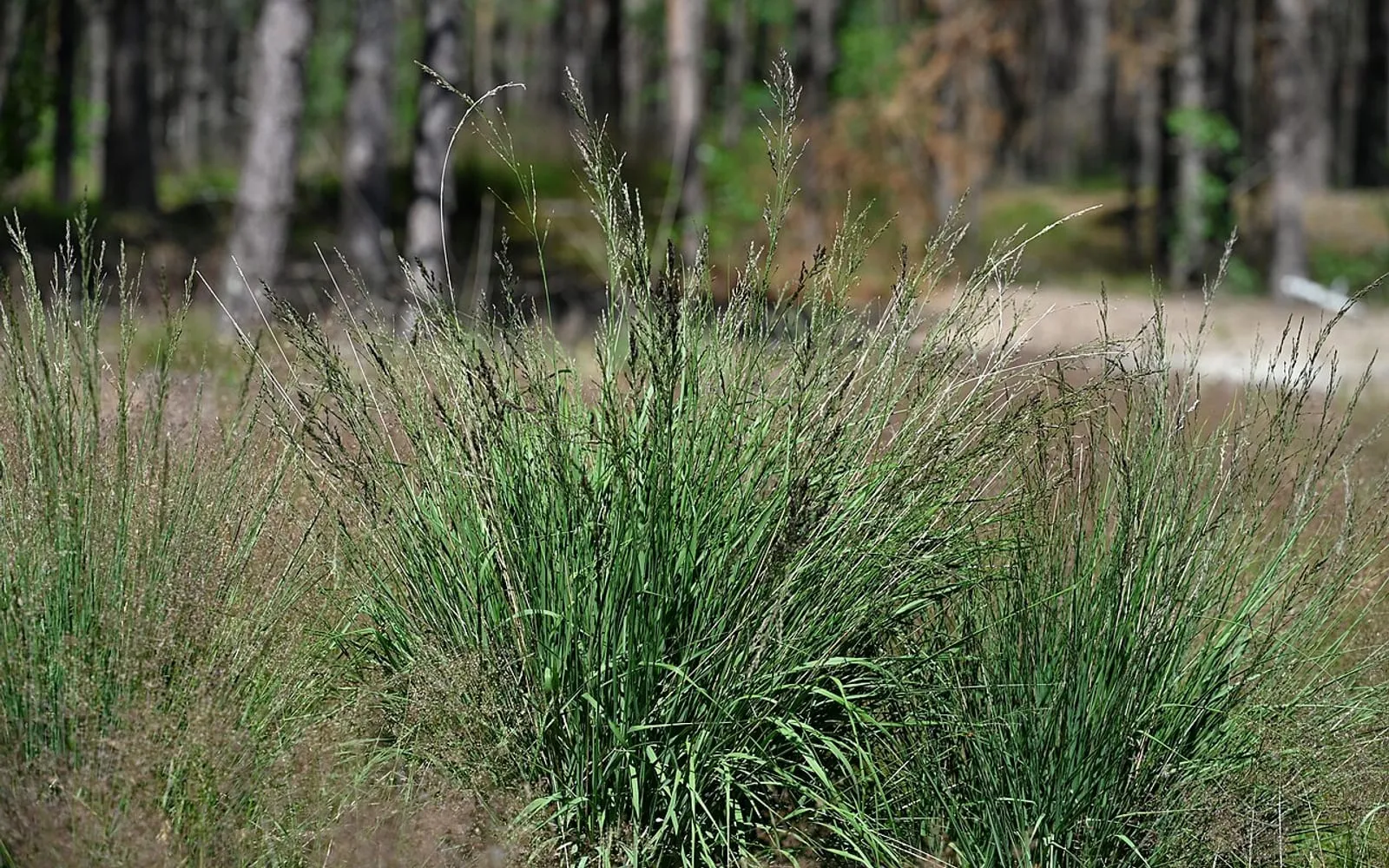
A low, dense tuft of narrow, arching leaves forms the base of the plant, turning bright yellow in autumn before dying back for winter, one of the more reliable autumn colour displays among ornamental grasses. Above that low base, wiry flower stems rise on their own, carrying small, loosely arranged purplish flower spikelets that give the species its common name, though the flowers themselves are modest compared with the overall airy effect of the stems.
Two distinct forms are grown. The straight species and its low-growing selections stay under half a metre and suit a smaller border or a bog garden edge, while the taller subspecies arundinacea, sometimes sold separately as tall purple moor grass, can reach close to two metres in flower, holding its widely spaced stems like a fine screen through late summer and autumn.
Where it is from
Molinia caerulea is native across a huge range from western Europe, including Britain and Ireland, through Scandinavia and into western Asia, growing on acidic bog, wet heath and damp moorland, often in standing or slow-moving water for part of the year. Purple moor grass and rush pastures are recognised as a distinct, protected habitat type in Britain, underlining how closely tied the species is to that specific, waterlogged, acidic ground.
That native habitat explains the plant’s unusual combination of traits, extreme cold hardiness paired with a real need for damp, acidic soil, since a boggy moor in northern Europe offers exactly that mix of hard winters and constantly wet ground, and almost nothing else.
How it grows
Plant in spring into soil that has been improved to hold moisture, ideally on the acidic side, since this species performs poorly on free-draining, alkaline ground however carefully it is watered. Establishment is steady rather than fast, and a young plant thickens over its first two or three seasons into the mature, upright tuft.
Growth stays clump-forming rather than spreading aggressively, staying well-behaved in a border or bog garden setting over many years. It copes with wet, even boggy conditions far better than most ornamental grasses, making it a candidate for a pond margin or a low, damp spot in the garden that would rot most other grasses outright.
Cut the whole clump back close to the ground in late winter, once the foliage has faded and before new growth resumes, removing the previous year’s dead stems and encouraging a clean new season’s growth.
Through the seasons
Spring brings the cutback of old growth, followed by fresh green foliage emerging as the soil warms and the season’s water levels are often at their highest.
Summer is the main growing period, with the low foliage filling out before the wiry flower stems begin to rise late in the season.
Autumn brings the see-through display of flower stems into full effect alongside the bright yellow colouring of the foliage, often the peak ornamental moment of the year.
Winter foliage dies back completely, and the bare, faded flower stems, left standing, add a fine, skeletal structure to a border through the coldest months before the late-winter cutback.
Care difficulty
Moderate, and the difficulty lies almost entirely in matching the site to the plant’s unusual preference for damp, acidic soil rather than in any complicated ongoing care. Once planted somewhere damp, it needs very little attention; planted in an ordinary dry, alkaline border, no amount of watering fully compensates for the wrong soil chemistry.
Watering
Keep the soil consistently moist through the growing season, since this species has none of the drought tolerance typical of most ornamental grasses and dries out and thins visibly in a border that is allowed to go dry between waterings. A pond margin, a rain garden or a naturally damp low spot in the garden suits it better than a standard border that relies on supplemental watering alone.
Warning signs, diseases and pests
Few pests or diseases trouble this species in a typical garden setting, and a gardener growing it in suitably damp, acidic soil is unlikely to need to treat it for anything at all through a normal season.
Thin, sparse growth with few or no flower stems is the most common complaint, and it almost always traces back to soil that is too dry, too alkaline, or both, rather than to any pest or disease. Improving soil moisture and, where practical, acidity is the relevant fix rather than feeding or treating the plant for a problem it does not have.
A yellowing, stressed-looking clump in an otherwise damp bed can point to alkaline soil rather than to a lack of water. This species evolved on acidic bog and heath, and even reliably moist ground does the plant little good if the pH sits well on the alkaline side, since the roots struggle to take up nutrients under those conditions regardless of how much water is available.
Growing environment
Consistently damp, acidic soil is the essential requirement, and this species tolerates boggy ground far better than most border plants, including standing water for part of the year. Full sun to light shade both suit it, and it copes well with the poor light and sheltered conditions found at a pond or stream margin.
Feeding
Little to none is usually needed on suitably damp, humus-rich soil, since this species is adapted to naturally nutrient-poor moorland and bog conditions rather than to fertile garden ground. Where soil is notably poor even by this species’ undemanding standards, a light application of an acidic-leaning feed in spring can help, though correcting soil moisture and acidity does more for the plant than fertiliser ever will.
Troubleshooting
The plant looks thin and has produced few or no flower stems. This almost always points to soil that is too dry or too alkaline. Improve moisture retention and, where possible, acidify the soil, since neither watering more nor feeding more will substitute for getting the soil chemistry right.
Can I grow this in an ordinary dry border alongside prairie grasses like switchgrass or little bluestem? Not successfully. This species has essentially the opposite needs to most drought-tolerant ornamental grasses, and pairing it with plants that want sharp drainage sets up a conflict that neither planting wins.
Is it suitable for a pond margin or bog garden? Yes, better than almost any other ornamental grass covered in this guide. It tolerates standing water for part of the year and is a strong choice for damp, low-lying ground that would rot most other grasses.
Why does the foliage turn such a strong yellow in autumn compared with other grasses I grow? This is a normal and reliable trait of the species rather than a stress response, and it is one of the more consistent autumn colour displays among ornamental grasses.
Should I choose the short species or the tall subspecies arundinacea? That depends on scale. The shorter forms suit a smaller border or bog garden edge under half a metre, while arundinacea, at up to two metres in flower, works better as a tall, airy screen or backdrop in a larger planting.
When should I cut the plant back? Late winter, once the foliage has fully faded and before new growth starts, cutting the whole clump close to the ground to make way for the new season.
My soil is only moderately damp rather than boggy. Is that enough? It can be, provided the ground never fully dries out and the pH sits on the acidic side. This species does not need standing water to thrive, only soil that stays consistently moist and does not swing toward alkaline, and a well-mulched bed on the damper side of a normal border can suit it reasonably well.