
Houseplant
Chinese Jade
Sinocrassula yunnanensis
Also known as Sinocrassula yunnanensis
How to grow Sinocrassula yunnanensis, the Chinese jade, a small clumping succulent with near-black rosettes that flowers once and dies.
At a glance
- Difficulty
- Moderate
- Water
- When the mix has dried through
- Light
- Bright light with some direct sun
- Temperature
- Warm to cool; keep above about 5 deg C
- Humidity
- Low
- Hardiness
- USDA 10-11, RHS H2, hardy to 3 C
- Type
- Evergreen clumping rosette succulent, monocarpic rosettes
- Height
- Rosettes 3 to 6 cm; clumps low
- Native to
- China
A small clumping succulent from the mountains of Yunnan in China, growing in rocky, sharply drained ground. It needs bright light and free drainage, tolerates cool conditions and short dry spells, and is safest above about 3 deg C. Strong light deepens its near-black colour; cold, wet compost rots it.
Hardiness zones describe winter cold alone. Summer heat, humidity, rainfall and the length of the growing season decide as much, so treat the range as the outer limit rather than as a recommendation.
Not known to be toxic
This is a safe plant to keep around pets and children. Sinocrassula, a small Crassulaceae relative of the crassulas and echeverias, is not listed as toxic by the ASPCA or the RHS, and no harmful compound is recorded. A pet or child that bit a rosette would at worst have a watery, faintly bitter mouthful and mild stomach upset.
Sources: ASPCA toxic and non-toxic plants, RHS potentially harmful garden plants
About
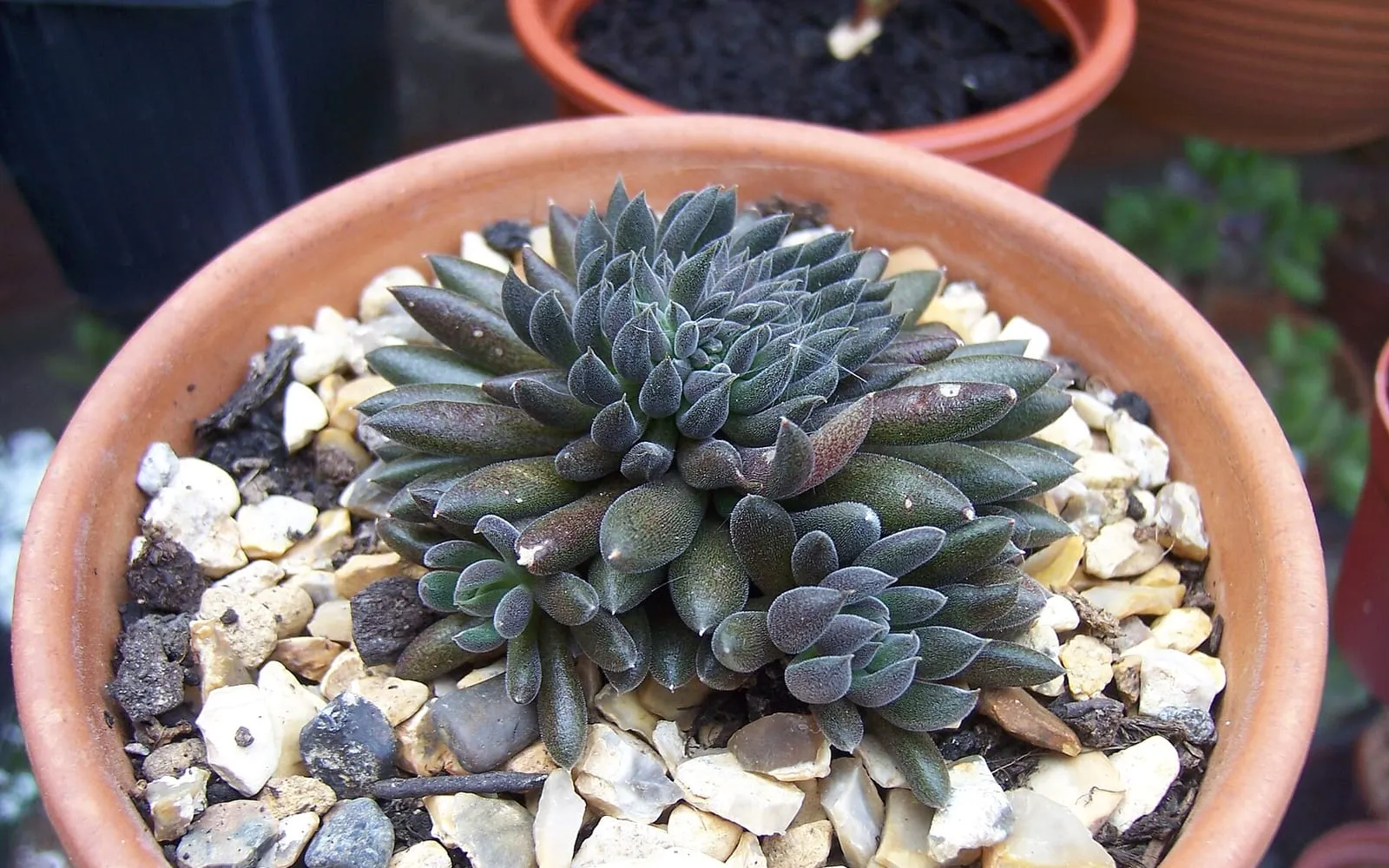
Chinese jade is grown for its colour as much as its form. Its small rosettes are built of many narrow, pointed, slightly incurved leaves, a deep green that darkens in strong sun to a near-black, and they cluster together into dense, low mounds. Massed in a shallow pot, it makes an unusual dark-leaved succulent.
It comes from the mountains of Yunnan in China, growing in rocky, sharply drained ground, and it takes cooler conditions than many succulents while still wanting bright light and free drainage. Strong light is what deepens the dark colour; in shade the rosettes green up, stretch and lose their character.
Small, slow and clumping, it is easy enough given light and sharp drainage, though it has one quirk to know: it is monocarpic, so a rosette that flowers dies afterwards. Because it clusters freely, the clump lives on, and it is readily propagated from its offsets. Grown bright, lean and dry, it stays compact and dark.
Appearance and character
The rosettes are small, three to six centimetres across, of many narrow, pointed, slightly incurved leaves, a deep green deepening to near-black in strong sun.
They cluster and offset freely into dense, low mounds, so the plant builds a packed cushion of dark rosettes instead of growing as single specimens.
Its dark colour depends on light. It is deepest in strong sun and cool weather, and fades to plain green in shade.
Like the aeoniums and some crassulas it is monocarpic: a rosette that flowers, sending up a short spike of small whitish to reddish blooms, dies afterwards, though the clustering clump readily fills the gap.
Where it is from
Sinocrassula yunnanensis grows in the mountains of Yunnan in China, in rocky crevices and thin, sharply drained soil, in bright light and cooler mountain conditions. It is adapted to strong light, free drainage and short dry spells.
Give it bright light and very free drainage. It tolerates cool conditions, and colours darkest under strong light. It rots in cold, wet compost, but is otherwise an easy little succulent.
How it grows
It grows through the milder months, the rosettes clustering and darkening, and slows in extreme heat or cold. It clumps steadily by offsets, and any rosette that flowers dies while the clump grows on around it. Strong light keeps it compact and dark; poor light stretches and greens it.
Grow it in a very free-draining, gritty succulent mix in a shallow pot to suit its clumping habit, and water when the mix has dried through. It stores water in its leaves and needs watering only occasionally.
Give it bright light with some direct sun, cool to warm conditions above about 3 deg C, and dry, airy conditions. Remove a spent flowered rosette, and the clump closes over the gap.
Propagation is easy from offsets, teased off with roots, or from leaf or stem cuttings.
Through the seasons
Spring starts active growth as the rosettes cluster and colour. Resume watering, repot if crowded, and remove offsets to propagate.
Summer is the main growth period. Water when the mix dries through, give a little dilute feed, and give strong light for the darkest colour, with some shade from the fiercest midday heat.
Autumn deepens the colour as nights cool. Reduce watering.
Winter is a cooler rest above about 3 deg C. Keep it bright and water sparingly, since cold, wet compost rots it now.
Care difficulty
Moderate, and easy once its needs are met. Bright light and sharp drainage keep it compact and dark, and it clusters and propagates readily. Its quirks are its monocarpic rosettes, which die after flowering but are replaced by the clump, and its dislike of cold, wet compost, which rots it. Give it light and sharp drainage and it is straightforward.
Watering
Water when the gritty mix has dried through, then soak it and let it drain. The fleshy leaves store water, so the plant tolerates short droughts and wants to dry out between drinks.
Water sparingly over winter and in extreme heat, when it rests, since cold, wet compost is the main danger. Rosettes that shrivel are thirsty; rosettes that go soft and translucent have rotted and should be removed, with firm offsets kept.
Warning signs, diseases and pests
Cold, wet compost rots the roots and rosettes, shown by soft, translucent, collapsing tissue. Let the plant dry, cut out the rot, and restart from firm offsets, watering more sparingly.
Mealybugs hide among the clustered dark rosettes as white fluff; dab them off with dilute alcohol and check the clump closely, since the packed rosettes give them cover.
Rosettes that green up, stretch and loosen are short of light. Move the plant into brighter light with some direct sun to darken and tighten them.
Growing environment
Bright light with some direct sun keeps the rosettes compact and darkens them to near-black. In poor light they green, stretch and loosen. It needs strong light, with a little shade only from the fiercest summer heat.
Cool to warm, dry, airy conditions suit it, above about 3 deg C, reflecting its mountain habitat. It needs low humidity and dislikes cold, wet, stagnant compost.
Grow it in a very free-draining, gritty succulent mix in a shallow pot in bright light, where its dark clustered rosettes show well.
Feeding
Feed only once or twice over the growing season with a dilute, low-nitrogen cactus feed. It needs little, and rich feeding produces soft growth that loses the dark colour.
Give nothing over winter or in extreme summer heat while it rests. Fresh gritty mix supports a repotted clump through its first season.
Troubleshooting
The rosettes have greened, stretched and loosened. Too little light. Move the plant into brighter light with some direct sun to darken and tighten them.
The rosettes are soft and translucent. Rot from cold, wet compost. Let it dry, cut out the rot, and restart from firm offsets, watering more sparingly.
A rosette flowered and died. Normal, since it is monocarpic. The clustering clump fills the gap; remove the spent rosette.
Why is it so dark, almost black? Strong light and cool weather deepen its colour to near-black; it is one of the darkest of the small succulents. In shade it reverts to plain green.
Is it safe around pets? Yes. Sinocrassula is not listed as toxic, so the little clumps are safe with cats, dogs and children.
Chinese Jade problem guides
Not sure what is wrong? See the common houseplant pests guide.