
Houseplant
Brazilian Waterweed
Egeria densa
Also known as Anacharis, Brazilian elodea
How to grow Brazilian waterweed, Egeria densa, as an oxygenating pond and aquarium plant, and why it is banned or restricted in many countries.
At a glance
- Difficulty
- Easy
- Water
- Grown fully submerged; no watering required
- Light
- Bright light, tolerates some shade
- Temperature
- 10-28 deg C
- Hardiness
- USDA 6-11, RHS H3, hardy to -5 C
- Type
- Submerged perennial
- Height
- Stems trail 30 cm to 2 m depending on water depth
- Native to
- South America
Tolerant of a wide temperature range and capable of surviving mild frost on the water surface so long as deeper water stays liquid, which is one reason it has naturalised so successfully well outside its South American range. It grows year round in a heated aquarium and slows but rarely dies completely in an unheated outdoor pond through a normal temperate winter.
Hardiness zones describe winter cold alone. Summer heat, humidity, rainfall and the length of the growing season decide as much, so treat the range as the outer limit rather than as a recommendation.
Not known to be toxic
Brazilian waterweed has no toxicity listing from the RHS or the ASPCA and is a standard, safe oxygenating plant for garden ponds and aquariums shared with fish, amphibians and pets that might drink from the water. Fish and waterfowl graze it readily with no ill effects.
Source: RHS
About
Brazilian waterweed is one of the most widely used submerged oxygenating plants in both garden ponds and aquariums, grown entirely underwater for its dense whorls of narrow green leaves along long trailing stems, which release oxygen directly into the water as the plant photosynthesises. It is sold under several common names, most often anacharis, and often bought as unrooted cut stems that root readily once weighted or planted into substrate.
Outside cultivation it has become one of the most troublesome invasive aquatic weeds in the world, clogging waterways, irrigation channels and lakes across North America, Europe, Australia and New Zealand after escaping from ponds and aquariums, and it is now illegal to sell, plant or release in a number of countries and US states. Check local regulations before buying it and never release excess plant material into a natural waterway; compost it instead.
Appearance and character
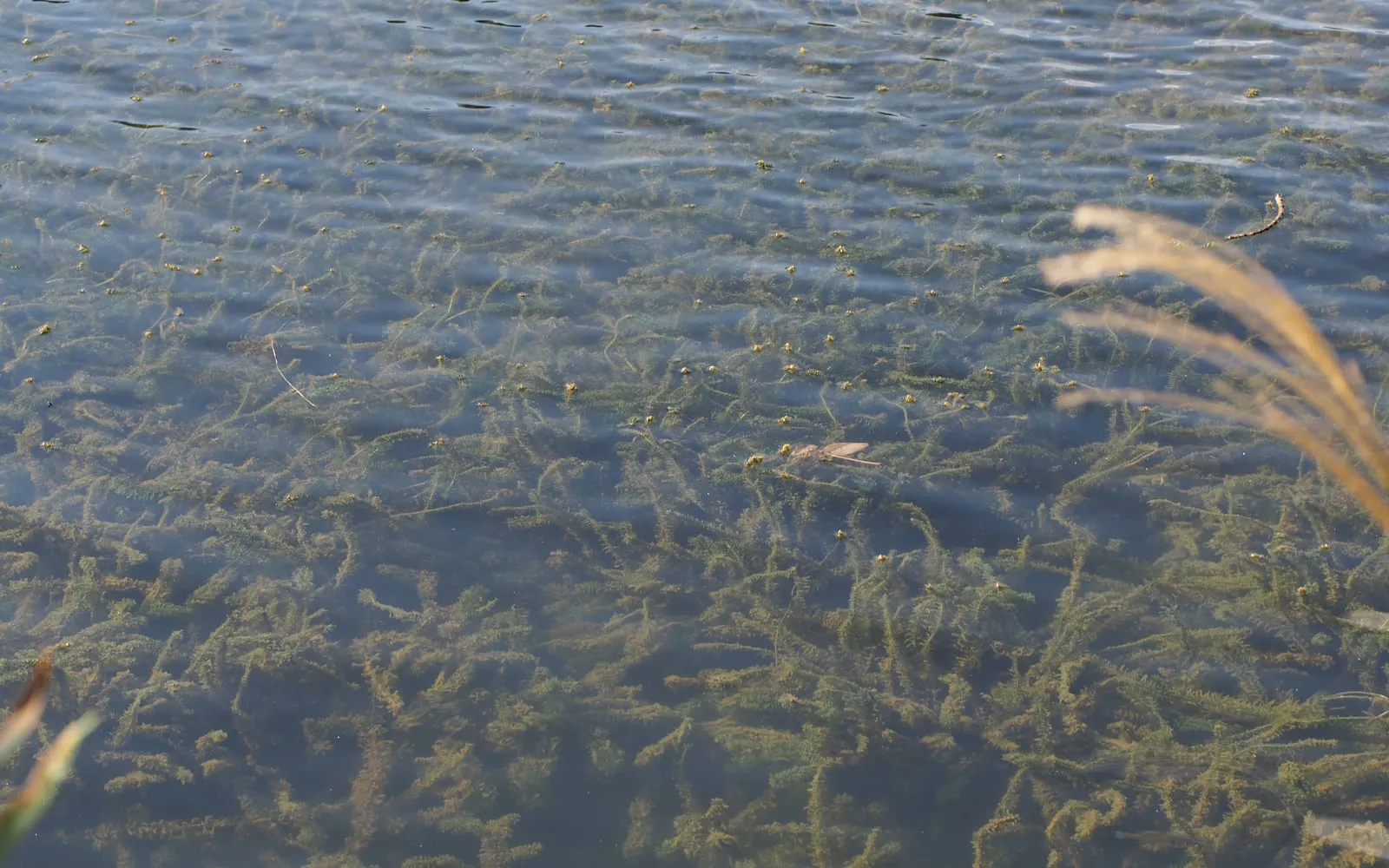
Long, branching stems trail through the water bearing whorls of three to five narrow, slightly curved leaves at each node, giving the whole plant a dense, bottlebrush texture underwater. Small white flowers with three petals occasionally reach the surface on a thin stalk, though most cultivated plants outside South America are a single sex and never set seed, spreading instead entirely by stem fragments.
That capacity to regrow from almost any broken piece of stem is central to both its usefulness as an easily propagated oxygenator and its reputation as an aggressive invasive weed once it escapes a contained setting.
Where it is from
Slow-moving rivers, lakes and ponds across South America, particularly Brazil and Argentina, in a range of water conditions from cool to warm and clear to moderately turbid.
Its tolerance of a wide temperature range, from close to freezing at the surface to warm tropical aquarium conditions, is unusual for a plant from a relatively narrow native range, and is a large part of why it has established so readily on almost every other continent.
How it grows
A submerged perennial that grows continuously from the tip of each stem, extending rapidly toward the light and readily rooting wherever a node touches soft substrate. Cut a healthy stem into several pieces and each one will typically produce roots and continue growing independently within a couple of weeks, which is both how it is propagated deliberately and how it spreads so effectively when a fragment escapes into open water.
Growth is fastest in bright light and warm water, and slows but does not usually stop entirely in a cooler, shadier pond, making it one of the more reliable year-round oxygenators for a temperate garden pond.
Through the seasons
Spring and summer are the fastest growing period, with long stems extending quickly toward the surface and light. Thin out excess growth regularly to stop it dominating the water column.
Autumn growth slows as light and temperature drop, though it rarely stops entirely in a pond that does not freeze solid.
Winter growth continues slowly in a heated aquarium, and pauses but usually survives in an unheated outdoor pond so long as some liquid water remains beneath any surface ice.
Care difficulty
Easy to the point of needing active restraint rather than encouragement. It needs nothing beyond water and light, and the main ongoing task is thinning it out before it fills the whole pond or tank, rather than coaxing it to grow at all.
Watering
None needed in the conventional sense; the plant lives entirely submerged and takes everything from the surrounding water. It can be left loose and floating, weighted down to sit near the substrate, or planted lightly with its lower nodes in gravel or aquatic soil, and it roots and grows well under any of these approaches.
Warning signs, diseases and pests
Few pests trouble this plant seriously. Aphids occasionally colonise stems that reach the surface, and snails sometimes graze the softer new growth at stem tips, but neither typically causes lasting damage to an established patch.
Stems that go pale, thin and straggly usually indicate too little light reaching the plant, often because it has been left to grow so dense it shades its own lower and older growth. Thinning the patch and moving some stems higher in the water column, or improving overall light levels, usually restores healthy, bushy growth within a few weeks.
Brown, mushy stem sections are a sign of decay, usually starting where a stem has been damaged or where growth has become so congested that decaying material accumulates without enough water movement to disperse it. Remove affected sections promptly to stop rot spreading.
Growing environment
Bright light gives the densest, healthiest growth, though it tolerates much more shade than many other oxygenating plants, which is part of why it does well even in ponds partly overhung by trees or buildings. Water movement is tolerated well, unlike some more delicate submerged plants, making it suitable for ponds with a fountain or filter return.
Feeding
No feeding is needed. This plant draws the nutrients it needs directly from the surrounding water, and in fact its main practical value in a pond is using up excess nutrients that would otherwise feed algae, which is why it is often recommended specifically as a tool for keeping pond water clear.
Troubleshooting
Growth has become a dense, tangled mass filling the pond or tank. Expected without regular thinning. Remove and compost a substantial proportion every few weeks through the growing season rather than letting it accumulate unchecked.
Stems are pale, thin and reaching for the surface. Usually insufficient light, often from the plant’s own dense growth shading itself. Thin the patch and improve overall light where possible.
Sections of stem have turned brown and mushy. Localised decay, often starting at damaged tissue in an overcrowded patch. Remove affected pieces promptly and improve water movement around the remaining healthy growth.
A cutting placed in the pond has not rooted after several weeks. Check that at least one node is in contact with substrate or sitting in reasonably still water; a cutting left fully floating in a strong current takes longer to establish.
Brazilian Waterweed problem guides
Not sure what is wrong? See the common houseplant pests guide.