
Houseplant
Lady of the Night Orchid
Brassavola nodosa
Also known as Brassavola, Lady of the Night
How to grow lady of the night orchid, Brassavola nodosa, including its succulent cylindrical leaves, star-shaped white flowers, and fragrance released only after dark.
At a glance
- Difficulty
- Easy
- Water
- Water thoroughly, then let the mix dry out fully before watering again
- Light
- Bright light, tolerating several hours of direct sun
- Temperature
- 15-32 deg C
- Humidity
- 40-60 percent
- Hardiness
- USDA 10-12, RHS H1c, hardy to 10 C
- Type
- Evergreen epiphytic perennial orchid
- Height
- 25-40 cm
- Native to
- Mexico, Central America, Caribbean, Northern South America
Native to coastal scrub and dry forest from Mexico down through Central America and into the Caribbean and northern South America, where a pronounced dry season and strong sun are the norm rather than the exception. That drought-tolerant origin explains why this species handles neglect noticeably better than most epiphytic orchids sold as houseplants, and why constant moisture and heavy shade do it more harm than a missed watering ever would.
Hardiness zones describe winter cold alone. Summer heat, humidity, rainfall and the length of the growing season decide as much, so treat the range as the outer limit rather than as a recommendation.
Not known to be toxic
Brassavola has no toxicity listing from the RHS or the ASPCA, and orchids of this kind carry an unusually clean safety record among houseplants generally. No part of the plant is documented as harmful to cats, dogs or people if chewed, and there is no recorded history of poisoning associated with the species.
Source: ASPCA
About
Lady of the night orchid saves its fragrance for a specific audience. During the day the flowers carry little or no detectable scent, but after dusk they release a strong, sweet perfume, sometimes compared to jasmine, that can fill a room and carries well into the surrounding garden outdoors. The timing is not accidental: the species is pollinated by night-flying hawkmoths, whose long proboscis reaches deep into the flower’s slender nectar spur, and the fragrance switches on precisely when those moths are active and switches off again by morning.
Its leaves are as distinctive as its flowering habit. Narrow, cylindrical and succulent, closer in feel to a slender cactus pad than to the flat, broad leaves of most other orchids, they store enough water to see the plant through a genuine dry spell without visible stress, a trait shared with few other orchids commonly grown indoors.
Appearance and character
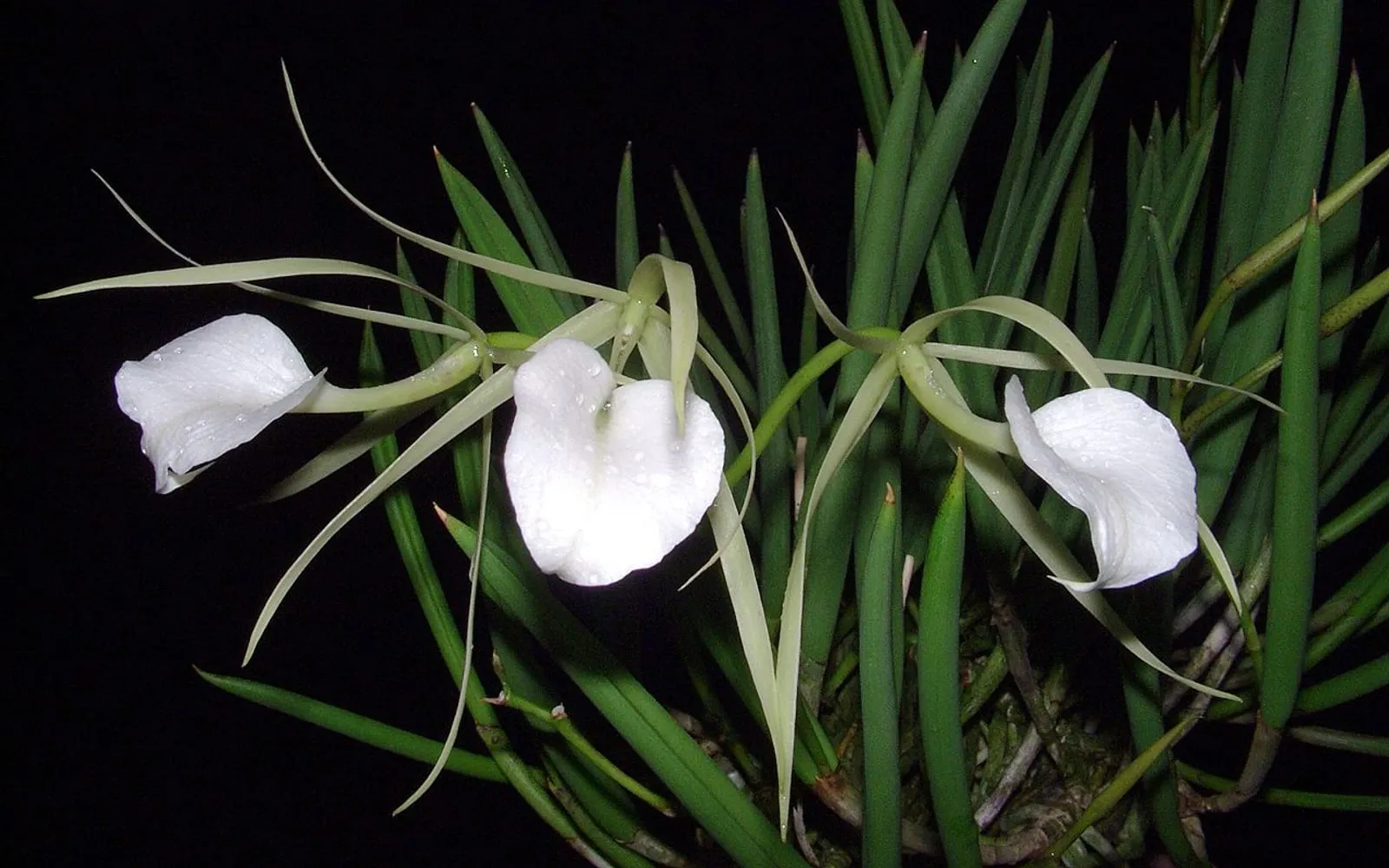
Growth comes from small pseudobulbs, largely hidden at the base of the foliage, each one carrying a single narrow, pencil-thick leaf that can reach 15 to 25 cm long. The leaves stand upright to gently arching, pale green and faintly mottled, with a firm, fleshy texture that makes the plant noticeably tougher-handling than most orchids on the same windowsill.
Flowers appear from the base of a mature leaf, usually two to five per spike, star-shaped with narrow, pale green to white sepals and petals surrounding a broad, pure white lip. The overall look is delicate and understated by day, which is part of why the flower’s transformation after dark, when its fragrance becomes the dominant impression, surprises first-time growers.
Where it is from
Brassavola nodosa grows across a wide range spanning Mexico, Central America, the Caribbean and the northern edge of South America, typically in coastal scrub, mangrove edges and dry, open forest rather than the humid, shaded canopy many other epiphytic orchids favour. A pronounced dry season is the norm across most of that range, and the species has built its succulent leaves specifically to survive it.
That native toughness carries directly into cultivation. Strong sun, irregular rainfall and periods of low humidity, conditions that would stress many showier orchids, are close to what this species experiences in the wild for a large part of the year, which is why it tolerates a degree of neglect that would leave a Miltonia or Masdevallia in serious trouble.
How it grows
Pot it in a coarse, fast-draining bark mix, or mount it on bark or cork, either of which suits a species built to dry out fully and quickly between waterings. A mix that holds significant moisture, of the kind suited to a Zygopetalum, works against this plant’s natural preference and increases the risk of root and leaf rot.
New growths emerge from the base of the plant through the warmer months, each eventually producing its own succulent leaf and, once mature, a flower spike. Give it as much direct sun as the position allows; strong light produces compact, sturdy growth and reliable flowering, while shade leads to soft, elongated leaves and far fewer flowers.
Repot only occasionally, since this species tolerates being left undisturbed in the same container for several years far better than many other orchids, and disturbing the roots unnecessarily slows it down more than leaving it be.
Through the seasons
Spring brings new growth as the plant enters its main growing period. Resume regular watering as new leaves develop.
Summer is the peak growing season, and the strongest, most fragrant flowering typically occurs during the warmest months. Water thoroughly, then let the mix dry out fully before watering again.
Autumn growth slows gradually. Continue the same dry-then-soak watering pattern, adjusting frequency downward as temperatures cool.
Winter brings a natural slowdown, and this species tolerates a distinctly drier, more sparing winter watering routine than most other orchids in this collection. Keep it warm and in as much light as possible through the shorter days.
Care difficulty
Easy, and one of the most forgiving orchids in this collection for a grower prone to underwatering. Its succulent leaves store enough water to shrug off an irregular watering schedule that would stress many other epiphytic orchids, and its main requirement, strong light, is straightforward to provide on any bright windowsill or outdoors through summer.
Watering
Water thoroughly, soaking the mix or mount completely, then let it dry out fully before watering again rather than watering on a fixed schedule. The succulent leaves are a visible guide: they stay firm and plump through a normal dry interval and only begin to look slightly softer once a dry spell has gone on for a long stretch.
This species tolerates underwatering far better than overwatering. A mix or mount kept constantly damp, especially in cooler weather, is a far greater risk to the roots than an extended dry spell ever is.
Warning signs, diseases and pests
Scale insects and mealybugs can settle at the base of the leaves and along the pseudobulbs, appearing as small brown bumps or cottony white tufts. Check occasionally, particularly where new growth emerges, and treat with horticultural soap if found.
Spider mites can appear in the warm, dry conditions this species often grows in, showing as fine speckling on the leaves; because the plant already tolerates lower humidity well, raising it slightly to discourage mites causes no conflict with its normal care.
Soft, yellowing patches on an otherwise firm leaf usually indicate rot from a mix or mount that has stayed too damp, particularly during cooler weather. Cut away any affected tissue with a clean blade and let the plant dry out more thoroughly between waterings afterward. A leaf that looks slightly wrinkled after a long dry spell, by contrast, is normal and plumps back up within a day or two of the next watering.
Growing environment
Bright light suits this species best, including several hours of direct sun where it can be given; it tolerates more sun than almost any other orchid in this collection without scorching, reflecting its dry, open native habitat. Too little light produces soft, elongated leaves and weak flowering.
Moderate humidity, in the 40 to 60 percent range, is enough, and this species copes with drier indoor air better than most epiphytic orchids sold as houseplants. Good air movement around the roots and leaves matters more here than raising humidity artificially.
Feeding
A balanced orchid fertiliser at quarter strength, applied every second or third watering through the growing season, supports steady leaf and pseudobulb production without pushing the plant toward the soft, lush growth that suits it poorly.
Reduce feeding through the quieter winter months in step with the reduced watering, resuming the fuller routine as new growth picks up again in spring.
Troubleshooting
The flowers have no noticeable scent during the day. This is normal. The fragrance is released almost entirely after dark, timed to attract the night-flying hawkmoths that pollinate this species in the wild, and is usually strongest a few hours after sunset.
The leaves look slightly wrinkled. Likely a long dry spell, which this species tolerates well. Water thoroughly and expect the leaves to plump back up within a day or two; persistent wrinkling despite regular watering points instead to a root problem worth checking.
The plant grows healthy leaves but rarely flowers. Almost always too little light. Move it to the brightest spot available, including direct sun for at least part of the day, and expect noticeably better flowering within a season.
A leaf has gone soft and yellow rather than staying firm. Rot, usually from a mix or mount kept too damp, especially in cooler weather. Cut away the affected tissue and let the plant dry out more thoroughly between waterings going forward.
Can this orchid be grown outdoors through summer? Yes, in a bright, sheltered spot once night temperatures are reliably above around 10 deg C, and many growers find the fragrance and flowering noticeably improve with a real summer outdoors in strong light.
Should I feed this orchid as often as I feed my other, less drought-tolerant orchids? Roughly the same schedule works well, but err on the lighter side. This species is adapted to lean, dry conditions in the wild, and heavy feeding pushes it toward soft growth that suits it poorly compared with its naturally tougher habit.
Lady of the Night Orchid problem guides
Not sure what is wrong? See the common houseplant pests guide.