
Outdoor plant
Blue Grama
Bouteloua gracilis
Also known as Mosquito grass, Eyelash grass
How to grow blue grama, Bouteloua gracilis, as a low-water lawn alternative or border grass. Its curled, eyelash-shaped seed heads and prairie toughness.
At a glance
- Difficulty
- Moderate
- Water
- Regular watering while establishing, drought-tolerant once mature
- Light
- Full sun
- Hardiness
- USDA 3-10, RHS H7, hardy to -35 C
- Type
- Hardy deciduous perennial grass
- Height
- 20-60 cm in flower, 10-20 cm as foliage alone
- Native to
- Central North America
Extremely hardy and adapted to the wide temperature swings of the North American prairie, tolerating both severe winter cold and considerable summer heat and drought once established. It needs a reliably sunny, open position to perform well, and struggles in damp shade or heavy, poorly drained soil far more than it struggles with either cold or heat.
Hardiness zones describe winter cold alone. Summer heat, humidity, rainfall and the length of the growing season decide as much, so treat the range as the outer limit rather than as a recommendation.
Not known to be toxic
Blue grama has no toxicity listing from the RHS or the ASPCA and is considered safe around pets and children. It has a long history as a valuable native grazing grass for livestock and wildlife across the North American prairie, a further indication of its general safety.
Source: RHS
About
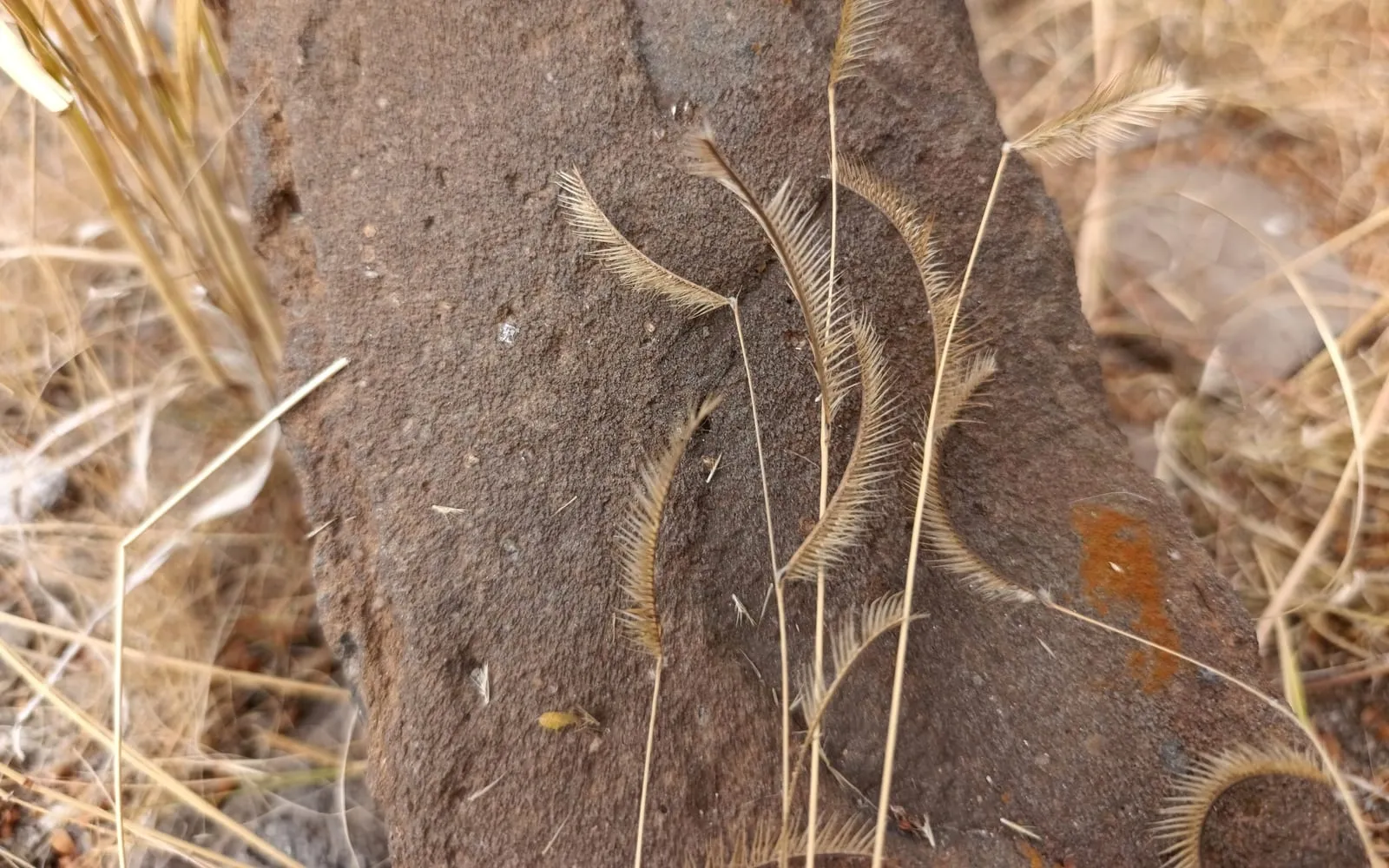
Blue grama is a signature grass of the North American shortgrass prairie, grown in gardens for its fine, low, blue-green foliage and its distinctive seed heads, which curl sideways into a shape often compared to an eyelash or a tiny comb, held horizontally rather than upright the way most grass flower spikes are. It is increasingly used as a real low-water lawn alternative in dry climates, since it tolerates mowing, foot traffic and drought much better than a conventional turf grass while needing a fraction of the water.
Historically a foundation species of the shortgrass prairie ecosystem, it has supported grazing wildlife and livestock across huge areas of central North America for millennia, a role that has made it a well-studied and reliably tough plant for a dry, sunny garden.
Appearance and character
Fine, narrow, blue-green leaves form a low, dense tuft that stays compact and tidy without much intervention, turning an attractive straw-gold colour through autumn and winter rather than dying back to bare ground. Distinctive seed heads rise on thin stalks in summer, each one curling sideways into a comb-like curve that has given the species its eyelash grass nickname.
Left unmown, a mature clump develops a soft, slightly shaggy texture with its curling seed heads catching the light and moving readily in a breeze, while a regularly mown planting used as lawn stays lower and denser, losing most of the seed head display in the process.
Where it is from
The shortgrass prairie of central North America, spanning a huge range from Canada down into Mexico, in a climate defined by cold winters, hot summers and generally low, unpredictable rainfall.
That prairie origin, adapted to grazing, fire and drought as recurring natural events, is the source of the plant’s remarkable toughness in cultivation, and it performs at its best in conditions that mimic that open, sunny, well-drained prairie setting rather than a shaded or damp garden position.
How it grows
A hardy perennial forming a slowly expanding, dense tuft rather than spreading aggressively by runners, which keeps it well-behaved and predictable in a border or lawn setting. Growth is strongest through the warmer months, with seed heads developing from established clumps in summer.
Because it evolved under regular grazing and occasional fire, this species tolerates mowing or cutting back much better than many ornamental grasses, regrowing readily from its base rather than being set back significantly by the practice.
Through the seasons
Spring new growth resumes as the soil warms, with the straw-coloured winter foliage gradually replaced by fresh blue-green growth.
Summer is the main growing season, with the distinctive curled seed heads developing on established clumps.
Autumn foliage begins turning its characteristic straw-gold colour as growth slows.
Winter the dried, pale gold foliage remains standing and adds winter interest, tolerating hard cold without damage.
Care difficulty
Moderate while establishing, easy once settled. Getting the site right, full sun and sharp drainage, matters more than any ongoing care, and a plant struggling in damp shade will not be rescued by extra attention; the fix is moving it or accepting it is the wrong spot.
Watering
Regular watering supports good establishment in the first year. Once its root system is developed, this species tolerates significant drought and generally performs poorly if overwatered, since consistently moist soil favours weaker, less characteristic growth over the tight, drought-adapted habit the plant shows in its native prairie.
Warning signs, diseases and pests
This is an unusually trouble-free grass, with few pests or diseases of note in a typical garden setting; rust disease occasionally appears as orange-brown pustules on the leaves but is rarely a serious concern.
Floppy, less compact growth than expected usually indicates soil that is too rich or too consistently moist for this prairie-adapted species, and the practical fix is reducing water and avoiding fertiliser rather than treating it as a pest or disease issue.
Poor growth in a shaded or heavy clay position reflects an unsuitable site rather than a health problem with the plant itself; blue grama needs full sun and reasonable drainage to perform as intended.
Growing environment
Full sun is essential; this species performs poorly in anything less. Free-draining soil suits it well, and it tolerates poor or clay-heavy ground far better than consistently wet or shaded conditions, making it a strong candidate for a difficult, hot, dry spot where many other grasses and lawn alternatives would struggle.
Feeding
Little to none is appropriate. This species is adapted to naturally low-nutrient prairie soil, and fertiliser tends to produce softer, floppier growth that loses the tight, characteristic form the plant is valued for, so the better approach for most gardens is to leave it unfed.
Troubleshooting
Growth looks floppy and less compact than expected. Usually soil that is too rich or too consistently moist. Reduce watering and avoid fertiliser, both of which work against this prairie species’ natural tight, drought-adapted habit.
The plant is struggling in a shaded or damp part of the garden. This reflects an unsuitable site rather than a treatable problem. Move it to full sun with sharper drainage, or accept that the position does not suit this species.
You are considering this species as a lawn alternative. It tolerates mowing and light foot traffic reasonably well and needs far less water than conventional turf, though it will not match the dense, year-round green of a well-watered lawn, particularly through its straw-gold winter phase.
Seed heads are not developing on an otherwise healthy clump. This can reflect a young plant that has not yet reached flowering maturity, or a very heavily and frequently mown planting, since regular close mowing removes the flowering stems before they can develop.
You want to establish a new area from seed rather than plugs or plants. Sow in spring or early summer onto well-prepared, weed-free, free-draining soil, keeping the seedbed lightly moist until germination is complete, after which the young plants need progressively less watering as their prairie-adapted root systems establish.