
Edible
Bearberry
Arctostaphylos uva-ursi
Also known as Kinnikinnick, Common bearberry, Mountain box
How to grow bearberry, Arctostaphylos uva-ursi. The evergreen acid-soil carpeter, its red berries and glossy leaves, and where it grows wild on Scottish moorland.
At a glance
- Difficulty
- Moderate
- Water
- Weekly until established, then rarely
- Light
- Full sun to light shade
- Temperature
- Fully hardy, to -30 deg C. It grows inside the Arctic circle
- Hardiness
- USDA 2-6, RHS H7, hardy to -40 C
- Type
- Hardy evergreen shrub
- Height
- 10-30 cm, spreading to 1 m or more
- Native to
- the northern temperate zone
- Best month
- May and September in the Northern Hemisphere, November and March in the Southern Hemisphere
Poor acid sandy ground with sharp drainage is what it wants, and it declines on anything fertile, which is the opposite of most garden advice. It grows inside the Arctic Circle and resents root disturbance, so plant it small and leave it alone. Hot summers shorten its life.
Hardiness zones describe winter cold alone. Summer heat, humidity, rainfall and the length of the growing season decide as much, so treat the range as the outer limit rather than as a recommendation.
Every month named in this guide is for the temperate Northern Hemisphere. If you garden in the Southern Hemisphere, shift each one by six months, so May becomes November. Closer to the equator the wet and dry seasons matter more than the calendar, and the shift stops being a useful guide.
Edible, with limits
- Safe to eat
- The berries, which are edible and dull
- Do not eat
- The leaves in medicinal quantity, because of hydroquinone
- Harm from
- Eating it
- Affects
- People
The berries are edible, mealy and close to tasteless, and bears and birds eat them, which is where the name comes from. The leaves are the part with a history and a caution. Bearberry leaf contains arbutin, which the body converts to hydroquinone, and it has been used as a urinary antiseptic for centuries. The European Medicines Agency has assessed it as a traditional herbal medicine and limits use to a few days at a time and no more than five courses a year, because hydroquinone is toxic to the liver in sustained doses and its long-term safety is not established. It is also advised against in pregnancy and in children. None of that makes the plant a hazard in a garden, and nothing about growing it or handling it is dangerous. It is not on the RHS list of potentially harmful garden plants.
Sources: European Medicines Agency, Arctostaphylos uva-ursi, RHS potentially harmful garden plants
About
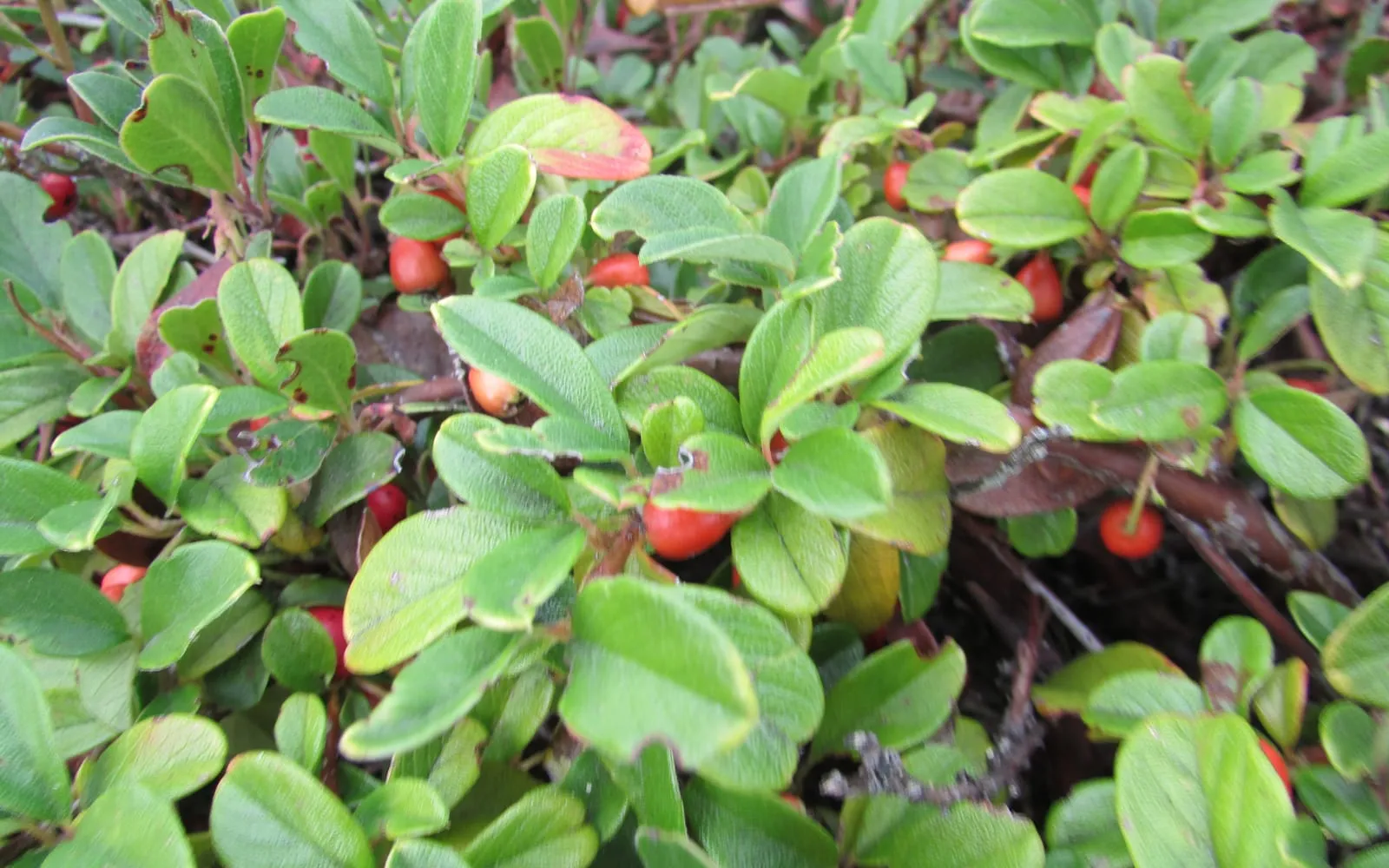
Bearberry is a low evergreen carpeter for acid sandy ground, with small glossy leaves, pink-white urn-shaped flowers in spring and bright red berries in autumn. It is one of the toughest plants in this collection, growing on Arctic tundra and on Scottish mountain heath in conditions almost nothing else survives.
In a garden it makes dense ground cover in the sort of position that defeats most plants, meaning poor, dry, acid, sandy soil in sun. It will not grow on chalk or in a fertile border, and there is no way to persuade it.
The leaves have a long medicinal history as a urinary antiseptic, and the berries are edible and rather dull. Its garden value is the evergreen mat, the autumn berries and its willingness to grow where nothing else will.
Appearance and character
A prostrate evergreen shrub, 10 to 30 cm deep, spreading to a metre or more and rooting from the stems where they touch the ground.
Leaves are small, 1 to 3 cm, spoon-shaped, thick, leathery and glossy dark green, paler beneath, with a distinct net of veins. They flush bronze-red in a cold winter.
Flowers open in April and May in small drooping clusters, urn-shaped and waxy, white flushed pink at the mouth, and they look like miniature lily-of-the-valley bells.
Berries follow in late summer, bright glossy red, 6 to 12 mm, mealy and dry inside, and they hang on the plant into winter.
Stems are reddish-brown and papery, and old ones peel.
The mat is dense enough to suppress weeds once it has knitted, which takes two or three years.
Where it is from
Bearberry has one of the widest natural distributions of any plant in these guides, circumpolar across the northern temperate and Arctic zones, through northern Europe, Siberia, Canada and the northern United States.
In Britain it is a native of Scottish mountain heath and moorland, common in the Highlands and Cairngorms, with a few sites in northern England and Ireland.
Its North American name, kinnikinnick, comes from an Algonquian word meaning mixture, and it refers to smoking blends in which the dried leaves were combined with tobacco and other plants by many indigenous nations.
Its European medicinal use as a urinary antiseptic goes back to at least the thirteenth century, appearing in the Welsh Physicians of Myddfai, and it stayed in pharmacy well into the twentieth century.
The leaves were also used for tanning leather in Scandinavia and Russia, because they are rich in tannins, and for dyeing.
How it grows
Buy plants. Seed is slow and difficult, requiring scarification and months of cold, and it is not worth the trouble when nursery plants are available.
Take semi-ripe cuttings in late summer with a heel, rooting them in a sandy ericaceous mix. They are slow but reliable.
Plant in spring into acid, sandy, sharply drained soil in sun or light shade, spacing at 45 to 60 cm for ground cover.
Prepare the ground properly. This plant will not grow on alkaline soil, and it resents heavy ground. On chalk, use a raised bed of ericaceous compost and sharp sand, or grow it in containers.
Mulch with pine needles, bark or grit. Do not use mushroom compost, which contains lime.
Water with rainwater through the first two summers while it establishes, which is slow.
Weed by hand until the mat knits, which takes two or three years.
Trim lightly in spring if it outgrows its space, cutting into green growth.
Through the seasons
Winter keeps the evergreen mat, often flushed bronze-red by the cold, and the berries hang on into the new year.
Spring brings the flowers in April and May, small and easily missed unless you look closely.
Early summer is when the plant makes most of its growth. Trim now if needed.
Late summer brings the berries, turning from green to bright red.
Autumn is planting season and the berries are at their best. Keep fallen leaves off the mat, which rots underneath them.
Care difficulty
Moderate, and the whole difficulty is the soil.
Bearberry needs acid ground. On neutral or alkaline soil it yellows, declines and dies, and no amount of feeding or watering will change that. On chalk the only options are a raised bed of ericaceous compost or a container.
Establishment is slow. Expect two or three years before the mat closes, and hand weeding throughout that time.
Drainage has to be sharp. It grows on mountain heath and rots in wet heavy ground.
Once established it is close to indestructible. It takes -30 deg C, wind, drought and poor soil without complaint, and it needs no feeding, no watering and almost no pruning.
Weeds rooted inside the mat are the one persistent nuisance, as they are with any carpeting evergreen.
Watering
Water with rainwater in a hard water area. Tap water gradually raises the pH and this plant will not tolerate it.
Water weekly through the first two summers while it establishes.
After that it needs very little. Bearberry is drought tolerant and grows on dry sandy heath.
Water in a prolonged drought if the leaves start to look dull and dry.
Never let it sit wet. Sharp drainage matters as much as acidity.
A container needs watering twice a week in summer, using rainwater and ericaceous compost.
Warning signs, diseases and pests
Yellowing between the leaf veins means the soil is too alkaline. That is the commonest complaint and the hardest to fix. Move the plant into ericaceous compost.
Root rot in heavy or wet ground kills patches, which brown and lift away with no roots.
Leaf spot marks the foliage in a damp shaded position. Improve the airflow and move it into more light.
Slow growth in the first two years is normal and not a sign of anything wrong.
Weeds rooted through the mat are difficult to remove without tearing it. Clear the ground thoroughly before planting.
Brown patches under fallen leaves mean litter was left lying on it. Sweep it off in autumn.
Bronze-red winter colour is normal and not stress.
Growing environment
Full sun to light shade. It flowers and fruits best in sun.
Acid soil, pH 4.5 to 6, and there is no negotiating this. Chalk and limestone are impossible without a raised bed.
Poor, sandy, sharply drained ground. Fertility and heavy soil both work against it.
A heather bed, a sandy bank, a gravel garden on acid ground, or the front of a raised ericaceous bed all suit it.
It is hardy anywhere in its range, tolerates wind and salt spray, and grows in conditions that defeat almost anything else, which makes it useful on exposed coastal and upland sites.
It companions naturally with heathers, bilberry and dwarf conifers, all of which want the same acid poor ground.
Feeding
None. Bearberry grows on tundra and mountain heath with almost no nutrients available, and feeding it produces soft growth and no benefit.
Do not lime the soil under any circumstances.
Do not use mushroom compost as a mulch, since it contains lime.
Pine needles, composted bark or grit are the right surface mulches, and they maintain the acidity rather than working against it.
Refresh a container with fresh ericaceous compost every second or third year rather than feeding it.
Troubleshooting
The leaves went yellow between the veins. The soil is too alkaline. Bearberry needs acid ground and there is no way around it. Move it into ericaceous compost, and water with rainwater.
It has barely grown in two years. Normal. Bearberry is slow to establish and then spreads steadily.
Can I eat the berries? Yes, and you will not enjoy them much. They are mealy, dry and close to tasteless raw, though they cook into a passable jelly and birds and bears take them freely.
Can I make tea from the leaves? It has a long history as a urinary antiseptic, and the European Medicines Agency limits it to short courses because the hydroquinone it produces is toxic to the liver in sustained use. Treat it as a herbal preparation with limits rather than a daily tea.
Weeds have grown through it. The usual problem with any carpeting evergreen. Clear the ground completely before planting, and hand weed until the mat closes.
Patches went brown over winter. Either wet ground or fallen leaves left lying on it. Sweep the mat clear in autumn and check the drainage.
Will it grow on chalk? No. Use a raised bed of ericaceous compost and sharp sand, or grow it in a container.