
Houseplant
Pansy Orchid
Miltonia spectabilis
Also known as Showy Miltonia
How to grow pansy orchid, Miltonia spectabilis, including its flat pansy-like flowers, thin soft leaves, and why pleating is the clearest sign it needs more water.
At a glance
- Difficulty
- Moderate
- Water
- Keep evenly moist through the growing season, never letting the mix dry out fully
- Light
- Bright indirect light, no direct midday sun
- Temperature
- 15-27 deg C, with a stable range preferred over sharp swings
- Humidity
- 50-70 percent
- Hardiness
- USDA 10-11, RHS H1c, hardy to 10 C
- Type
- Evergreen epiphytic perennial orchid
- Height
- 25-35 cm
- Native to
- Brazil
Native to the coastal forest belt of Brazil's Atlantic range, at moderate elevations where temperature stays fairly even across the year rather than swinging between a hot summer and a cold winter. The zone number says nothing about that steadiness, which matters more to this species than surviving any particular low temperature; a cold snap and a sudden hot spell are both harder on it than most epiphytic orchids sold as houseplants.
Hardiness zones describe winter cold alone. Summer heat, humidity, rainfall and the length of the growing season decide as much, so treat the range as the outer limit rather than as a recommendation.
Not known to be toxic
Miltonia has no toxicity listing from the RHS or the ASPCA, and orchids of this kind are considered safe around pets and children as a general rule. There is no documented case of poisoning from this species, and no part of the plant is known to cause more than mild, passing irritation if chewed.
Source: ASPCA
About
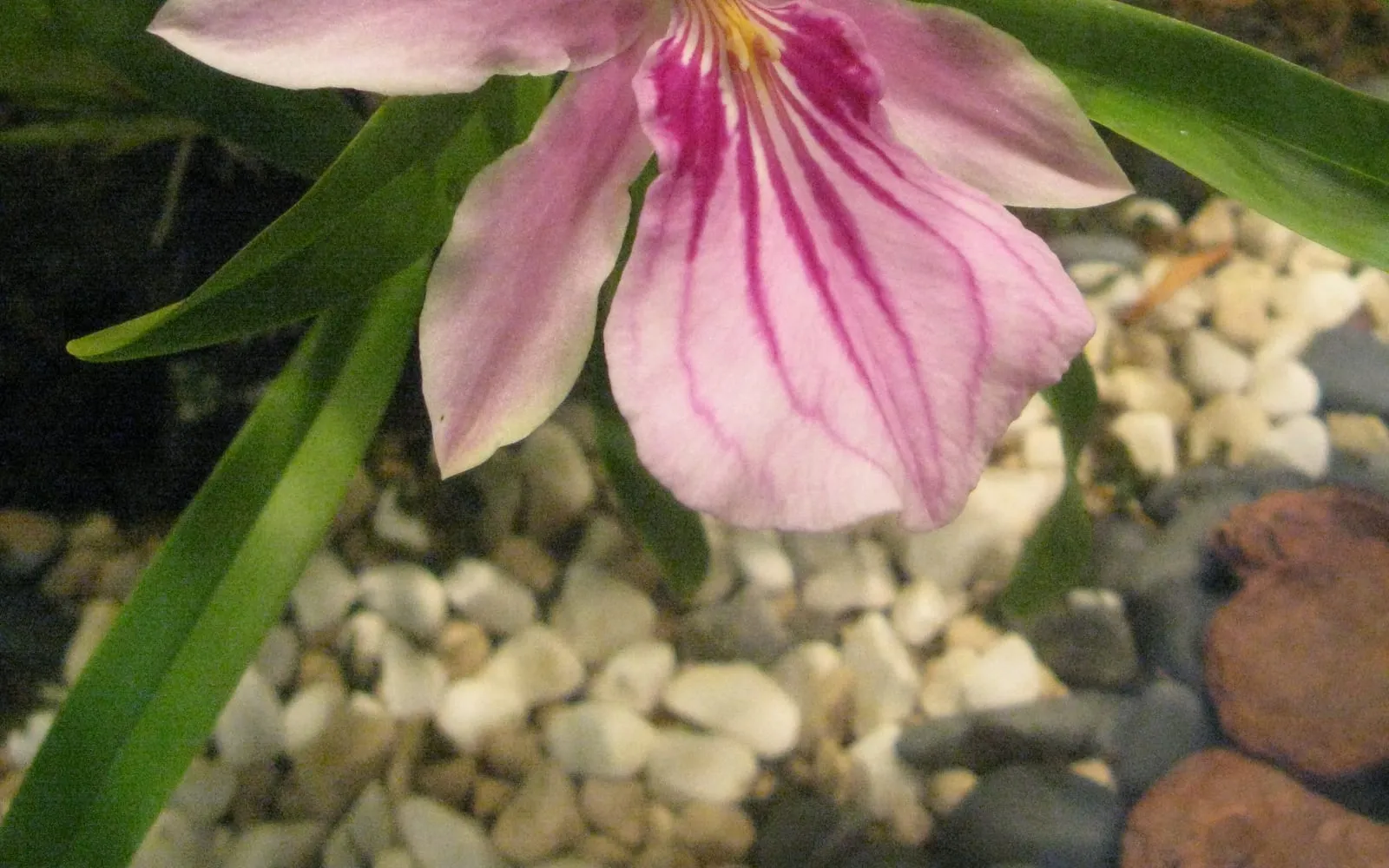
The pansy orchid earns its common name honestly. Its flat, wide-open flowers, held two or three to a short spike, resemble a garden pansy far more closely than most people expect from an orchid, with broad, rounded petals in white or pale pink marked by a strong purple-veined lip. Unlike many showier orchids, it flowers reliably on a modest, compact plant rather than needing years of growth to build to a large specimen first.
Its thin, soft leaves are the plant’s most useful diagnostic feature. Where a Cattleya or Cymbidium stores water in a thick pseudobulb and shows little outward sign of thirst until badly stressed, Miltonia’s leaves are soft enough to pleat lengthwise, like a fan being folded, within days of drying out too far. That pleating is an early, unmistakable signal that watering has slipped, well before the plant looks unwell in any other way.
Appearance and character
Flattened, oval pseudobulbs sit close together in a spreading clump, each one carrying one or occasionally two soft, pale green leaves that stand somewhat more upright than the arching leaves of many other orchids. The whole plant has a lighter, more delicate look than a Cattleya of similar size, and the leaves themselves are noticeably thinner to the touch.
Flower spikes rise from the base of a newly matured pseudobulb, usually carrying two to four flowers 7 to 9 cm across, flat-faced and wide open rather than cupped or twisted. The base colour runs from white through pale rose to a deeper pink, with a broad, flaring lip carrying a dense network of purple veining that gives the flower most of its visual interest.
Where it is from
Miltonia spectabilis grows through the Atlantic forest of eastern Brazil, mostly at low to moderate elevation, where humidity stays consistently high and temperature swings between seasons are gentler than in much of the rest of South America’s orchid-growing regions. It is often found on tree trunks and larger branches at a height that keeps it shaded from direct sun but still bathed in bright, filtered light through the canopy.
That relatively even native climate is the reason this species tolerates a cool snap or a hot spell noticeably worse than many other popular orchids. It has not evolved against either extreme, and both show up quickly as stress on the thin leaves rather than being absorbed quietly the way a thick Cattleya pseudobulb can absorb a bad week.
How it grows
Pot it in a fine to medium bark mix with a portion of sphagnum moss worked through it, which holds noticeably more moisture around the roots than a coarse Cattleya-style mix while still draining well enough to avoid waterlogging. A plain bark mix, sized for a thicker-rooted orchid, dries out too fast for this species and shows up quickly as pleated leaves.
New growths form at the base of the clump through the warmer months, each one eventually flowering once it has fully matured. Because the plant has no thick pseudobulb reserve to fall back on, consistency in both watering and temperature matters more here than for many other epiphytic orchids, and a plant moved between very different spots in a home often struggles to settle.
Repot every one to two years, before the sphagnum component breaks down and starts holding too much stale moisture around the roots, which encourages rot rather than the steady, even dampness the plant needs.
Through the seasons
Spring brings fresh growths and new roots as the plant comes into its main growing period. Keep the mix evenly moist as growth accelerates.
Summer is the peak growing season, with the fastest new growth and the highest water demand of the year. Watch for pleating leaves during any hot, dry stretch and water more frequently if it appears.
Autumn growth slows gradually. Continue watering at a similar frequency to summer, since this species has no strong dry rest built into its cycle, only a gentle easing of pace.
Winter brings the main flowering for many plants, along with a quieter growth period. Keep watering steady rather than letting the mix dry out for long stretches, even while the plant is resting.
Care difficulty
Moderate, and the difficulty sits almost entirely in consistency rather than in any single demanding task. This orchid has little tolerance for being allowed to dry out between waterings the way many other epiphytic orchids can shrug off, and a grower used to that pattern often underwaters it out of habit before the pleated leaves teach them otherwise.
Watering
Keep the mix evenly moist through the growing season, watering again as soon as the surface starts to feel dry rather than waiting for the whole pot to approach dryness. Little and often suits this species far better than a single heavy soak followed by a long gap, which is closer to how a thicker-rooted orchid prefers to be watered.
Watch the leaves as a guide. The moment they start to pleat lengthwise, water immediately; a pleated leaf that has been caught early usually plumps back out within a day or two, while one left pleated for a week or more may never fully recover its original shape.
Warning signs, diseases and pests
Scale insects and mealybugs settle in the crowded pseudobulb bases and along leaf undersides, appearing as small brown bumps or cottony white patches. Because the leaves are thin and soft, an infestation weakens this species faster than it would a thicker-leaved orchid, so check regularly and treat promptly with horticultural soap.
Spider mites appear in warm, dry air, showing as fine pale speckling across the leaf surface; raising humidity discourages them, and this species’ preference for even moisture makes that an easy adjustment to combine with its normal care. Aphids sometimes cluster on soft new growth and developing flower spikes.
Pleated, accordion-folded leaves are this orchid’s clearest warning sign of underwatering, and should prompt an immediate increase in watering frequency rather than a wait-and-see approach. Soft, translucent patches on a leaf or pseudobulb point the other way, to rot from a mix kept too wet for too long, particularly where old sphagnum has broken down and turned soggy; repot into fresh mix and ease back watering slightly while the plant recovers.
Growing environment
Bright, indirect light suits this orchid well, with direct midday sun avoided since the thin leaves scorch more readily than the thicker leaves of a Cattleya. An east-facing window or a spot with filtered light through a sheer curtain is usually close to ideal.
A stable temperature, avoiding both a cold draught and a hot windowsill in summer, matters more here than for most other popular orchids. High humidity, in the 50 to 70 percent range, supports the soft leaves and helps prevent the browning tips that dry indoor air tends to bring on.
Feeding
Feed at every watering through the growing season, but at a properly weak dilution, around quarter strength of a balanced orchid fertiliser. The soft roots and leaves of this species are more sensitive to a build-up of fertiliser salts than the tougher roots of many other orchids, so a light, frequent feed suits it better than a stronger dose given less often.
Flush the mix thoroughly with plain water every month or so to clear any accumulated salts, and reduce feeding somewhat through the quieter winter period without stopping it entirely.
Troubleshooting
The leaves have developed lengthwise pleats. Underwatering, and this species’ clearest warning sign. Increase watering frequency straight away; a leaf caught early usually plumps back out within a couple of days.
Flower spikes formed but the blooms are smaller than expected. Usually a sign the growth carrying them was not given enough light or consistent moisture while it was developing. Give the plant its brightest safe light and steady watering through the next growing season before judging it again.
The leaf tips are browning and drying out. Most often low humidity, sometimes combined with a build-up of fertiliser salts in the mix. Raise humidity around the plant and flush the mix with plain water at your next feed.
A pseudobulb feels soft rather than firm. Check for rot at the base first, particularly if the mix has stayed wet for an extended period. Unpot, trim away any soft tissue, and repot into fresh bark and sphagnum, watering a little more cautiously while new roots establish.
Should this orchid ever be allowed to dry out fully between waterings? No. Unlike many other epiphytic orchids, it has no thick pseudobulb reserve built for a proper dry spell, and letting the mix go fully dry shows up quickly as pleated, stressed leaves rather than being absorbed without harm.
Is it the same plant as Miltoniopsis, sold under a similar name? No, and the two are often confused. Miltoniopsis, the Colombian pansy orchid, comes from cooler highland forest and needs noticeably lower temperatures than this Brazilian species tolerates well, so check the label carefully before assuming either one’s care routine applies to the other.
Pansy Orchid problem guides
Not sure what is wrong? See the common houseplant pests guide.