
Houseplant
Cymbidium Orchid
Cymbidium ensifolium
Also known as Four Season Orchid, Golden Edge Orchid
How to grow Cymbidium orchid, Cymbidium ensifolium, including its grassy foliage, semi-terrestrial roots, cooler winter rest and centuries of Chinese scholar cultivation.
At a glance
- Difficulty
- Moderate
- Water
- Water when the top few centimetres of mix have dried, roughly weekly in active growth
- Light
- Bright filtered light, with shade from direct midday sun
- Temperature
- 15-28 deg C, cooler at night than by day
- Humidity
- 50-70 percent
- Hardiness
- USDA 9-11, RHS H1b-H2, hardy to 5 C
- Type
- Evergreen semi-terrestrial perennial orchid
- Height
- 30-60 cm
- Native to
- China, Southeast Asia, Japan
The zone range says nothing about the wide swing between night and day temperature that this species has adapted to in hill forest, or the short, distinctly cooler autumn spell it needs before it will flower. A plant held at one warm, even temperature all year can look completely healthy and still skip flowering for seasons at a stretch.
Hardiness zones describe winter cold alone. Summer heat, humidity, rainfall and the length of the growing season decide as much, so treat the range as the outer limit rather than as a recommendation.
Not known to be toxic
Cymbidium carries no toxicity listing from the RHS or the ASPCA, and orchids as a family have an unusually clean safety record among popular houseplants. No part of the plant is documented as harmful to cats, dogs or people if chewed, though the coarse bark-based mix it grows in is not food, and a pet that mouths a pot may bring some of it back up simply from the roughage.
Source: ASPCA
About
Cymbidium ensifolium is grown for its scent and its foliage before its flowers, which is unusual among orchids sold as pot plants. The spikes carry modest, often greenish or pale yellow blooms rather than the huge showy flowers of a Cattleya or the long-lasting sprays of a Phalaenopsis, and a grower buys it anyway because a single spike can perfume a whole room for days. The narrow, blade-like leaves arch outward in dense grassy fans, giving the plant a texture closer to an ornamental grass than to most other orchids on a windowsill.
Confucian tradition in China praised the fragrance of this orchid over two thousand years ago, calling it the scent of a noble friend, and pot-grown Cymbidium has been cultivated by Chinese scholars since at least the Song dynasty. That history sits behind the plant’s continuing popularity at Lunar New Year, when a flowering specimen is still a traditional gift.
Appearance and character
Growth comes from a loose cluster of small, rounded pseudobulbs mostly hidden at the base of the leaf fans rather than exposed and prominent the way a Cattleya’s are. Each pseudobulb carries several narrow, strap-shaped leaves, glossy and slightly leathery, that can reach 40 to 60 cm long on a mature plant and arch gracefully rather than standing stiffly upright.
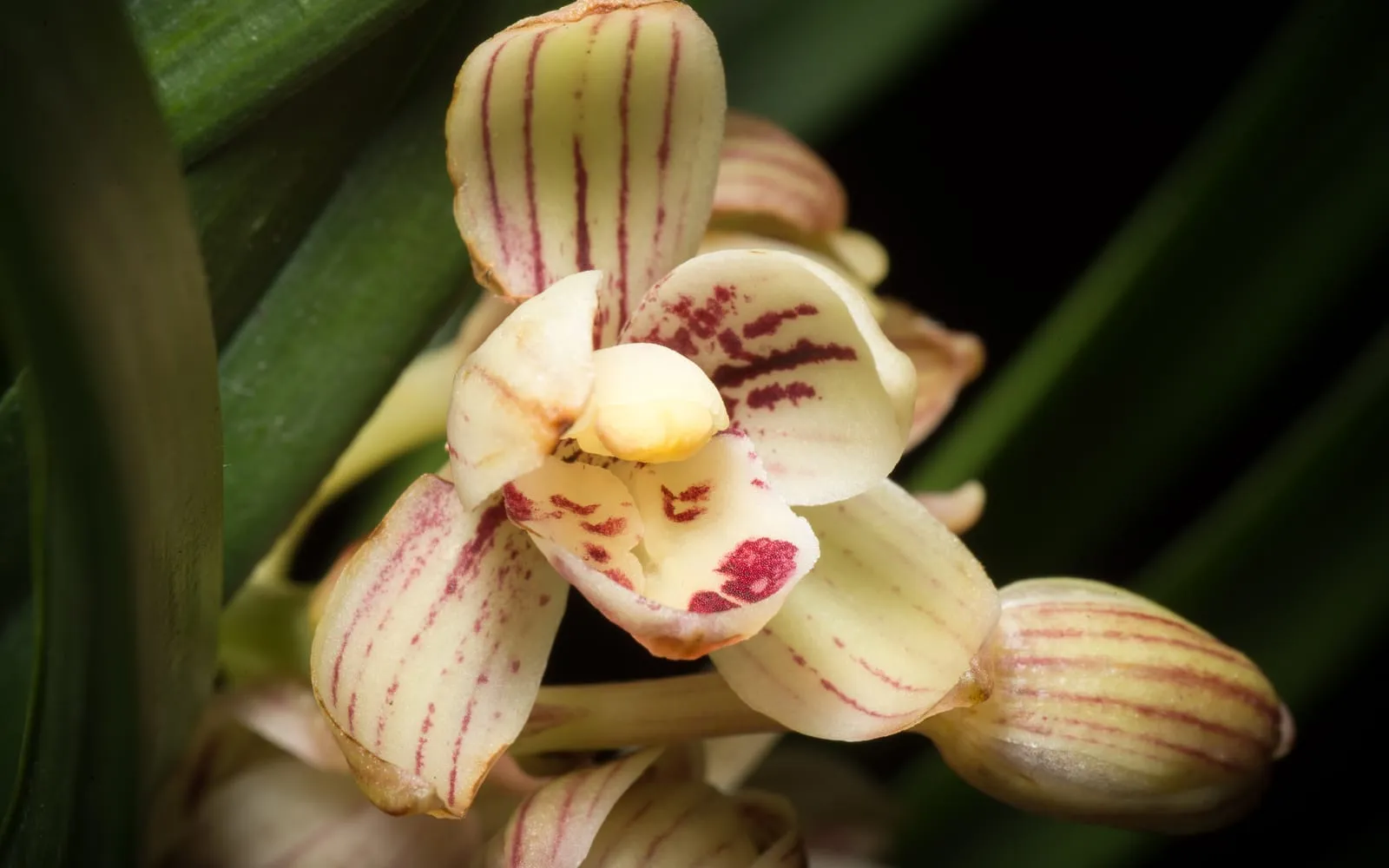
Flower spikes rise from the base of a mature pseudobulb, usually in autumn or winter, carrying anywhere from a handful to a dozen or more small star-shaped flowers in shades of green, cream, yellow or a warm gold, often with a darker red-brown lip. The scent, released mainly in the morning and on warm days, is sweet and carries readily, in sharp contrast to the restrained size of the flowers producing it.
Where it is from
This species grows across southern China, Taiwan, Japan, and through much of Southeast Asia, typically in dappled light at the edge of forest rather than deep shade or open exposure. Roots run through leaf litter and thin soil over rock as often as up the trunk of a tree. That gives the plant its semi-terrestrial habit, unlike the strictly bark-clinging lifestyle of a Cattleya or Vanda.
Populations at higher, cooler elevations experience a real drop in temperature each autumn, and cultivated Cymbidium has kept the same response to it. Without that seasonal cue, a plant tends to grow leaves indefinitely and flower rarely.
How it grows
Pot it in a mix built for a semi-terrestrial habit rather than the open bark chunks that suit a purely epiphytic orchid. A blend of medium bark, perlite and a proportion of leaf mould or fine compost holds enough moisture around the roots between waterings while still draining freely, which matches how the roots run through humus and thin soil in the wild.
New growths emerge from the base of the most recent pseudobulb each spring, each one eventually maturing into a fan of leaves capable of flowering the following season. A plant left undisturbed for several years builds a dense clump of many growths at different stages, and division is usually only needed once a pot becomes tightly packed.
Give the plant a spot with bright, filtered light rather than deep shade or strong midday sun, which scorches the leaves. A slight temperature drop at night, even indoors, supports both healthy growth and future flowering better than a constant, unvarying warmth.
Through the seasons
Spring brings new growths at the base of the clump, alongside fresh roots. Repot now if needed, right as new growth is just beginning.
Summer is the main growing season. Water and feed regularly, and give the plant its brightest light of the year, short of direct midday sun.
Autumn brings the temperature drop that triggers flower spikes on mature growths. Ease off feeding and let nights run several degrees cooler than summer.
Winter usually brings the flowers, along with their fragrance, on a well-timed plant. Reduce watering slightly while the plant is not producing new leaves.
Care difficulty
Moderate. The plant tolerates a wide range of everyday care and rarely declines quickly from a single missed watering, but reliably flowering it depends on giving it a real autumn temperature drop, which an evenly heated room does not provide on its own. Growers who keep it on a cool windowsill or an unheated porch through autumn generally see far more consistent flowering than those who keep it at one constant indoor temperature all year.
Watering
Water thoroughly whenever the top few centimetres of the mix have dried, letting the excess drain away completely rather than allowing the pot to sit in a saucer of water. Because the mix holds more moisture than a pure bark blend, this species tolerates slightly less frequent watering than a mounted epiphytic orchid, and erring on the side of a little too dry between waterings is safer than keeping the roots constantly damp.
Reduce watering somewhat through the cooler autumn rest, resuming a fuller routine once new growth resumes strongly in spring.
Warning signs, diseases and pests
Scale insects and mealybugs favour the tight leaf bases where new growths emerge, appearing as small brown bumps or cottony white tufts that are easy to miss until a colony has established. Check these hidden folds regularly and treat with horticultural soap at the first sign.
Spider mites turn up in warm, dry indoor air, leaving a fine stippled speckling on the leaves and sometimes faint webbing between them; raising humidity around the plant discourages them. Aphids occasionally cluster on soft, developing flower spikes, weakening buds before they open if left unchecked.
Soft, blackened patches at the base of a pseudobulb usually mean rot from a mix that has stayed too wet for too long. Unpot, cut away any affected tissue with a clean blade, and repot into fresh mix, watering more cautiously afterward. Leaves that yellow and drop from the bottom of an older fan, by contrast, are a normal part of ageing and no cause for concern on their own.
Growing environment
Bright, filtered light suits this species best; too little produces healthy leaves but few, if any, flower spikes, while direct midday sun can scorch the foliage within a single afternoon. An east-facing window or a spot with dappled sun through a curtain is usually a good match.
Moderate to high humidity, in the range of 50 to 70 percent, keeps growth steady and the leaf tips from browning. A pebble tray of water beneath the pot, with the pot’s base kept clear of the water itself, raises humidity around the plant without wetting the roots.
Feeding
Feed with a balanced orchid fertiliser every second or third watering through spring and summer, switching to a high-potash, low-nitrogen blend for several weeks before the expected autumn flowering to support bud development on mature growths.
Cut feeding back sharply once the cooler autumn rest begins and through the flowering period itself, resuming the fuller routine as strong new growth restarts the following spring.
Troubleshooting
The plant grows well every year but rarely flowers. Almost always a missing seasonal cue. Give it a real drop in night temperature through autumn rather than the same warm indoor conditions all year, and check that light through summer has been bright enough to fully mature the current growths.
The leaf tips are turning brown and crisp. Usually low humidity or a build-up of fertiliser salts in the mix. Raise humidity around the plant and flush the mix thoroughly with plain water every few months to clear any residue.
A pseudobulb has gone soft and dark at the base. Rot, typically from a mix that has stayed wet too long. Unpot, trim away the affected tissue with a clean blade, and repot into fresh mix, watering more cautiously afterward.
Should I repot every year? No. This species flowers best when slightly potbound, so repot only every two to three years, or once the mix has visibly broken down, and time it for right after flowering finishes.
The flower spike is developing very slowly. This is normal for the species; a spike can take several weeks from first appearing to opening its first flower. Keep watering and feeding steady through this period rather than assuming something has stalled.
Older leaf fans at the back of the clump have died down. A spent fan that has finished flowering can be left in place, where it continues to support the plant through its remaining pseudobulb, or trimmed back once it has fully yellowed for a tidier appearance.
Can I divide a large clump to make more plants? Yes, once a plant has built up several strong growths. Divide after flowering, keeping at least three or four pseudobulbs per division, since a smaller piece takes noticeably longer to re-establish and flower again.
Cymbidium Orchid problem guides
Not sure what is wrong? See the common houseplant pests guide.