
Outdoor plant
Zinnia
Zinnia elegans
Also known as Youth-and-old-age
How to grow zinnia from seed. Its bold, long-lasting cut flowers, why good air circulation matters more than feeding, and how to keep powdery mildew off the leaves.
At a glance
- Difficulty
- Easy
- Water
- Regular watering, avoiding wetting the foliage
- Light
- Full sun
- Hardiness
- USDA 2-11, RHS H2, hardy to 0 C
- Type
- Half-hardy annual
- Height
- 30-90 cm
- Native to
- Mexico
Grown as a half-hardy annual across virtually every temperate climate, sown fresh each year rather than surviving winter as a living plant. It needs real warmth and sun to perform well and is especially prone to powdery mildew in cool, damp or poorly ventilated conditions, more so than several other easy summer annuals.
Hardiness zones describe winter cold alone. Summer heat, humidity, rainfall and the length of the growing season decide as much, so treat the range as the outer limit rather than as a recommendation.
Not known to be toxic
Zinnia has no toxicity listing from the RHS or the ASPCA and is considered safe around pets and children. There is no documented history of poisoning associated with this species.
Source: RHS
About
Zinnia is grown for bold, long-lasting flowers in vivid, saturated colours, from pure white and soft pastels through to fiery orange, deep red and near-black-purple, held on sturdy, upright stems that make it one of the best annuals for cutting. A row grown specifically for the vase can supply armfuls of flowers over a long summer season. Cut zinnias last well in water, and regular cutting keeps the plant flowering rather than weakening it.
Its old-fashioned common name, youth-and-old-age, refers to the way a single plant has flowers at different stages simultaneously: buds, fresh blooms and fading heads all present together, a detail that also explains why regular deadheading makes such a visible difference to how tidy and floriferous a bed looks through the season.
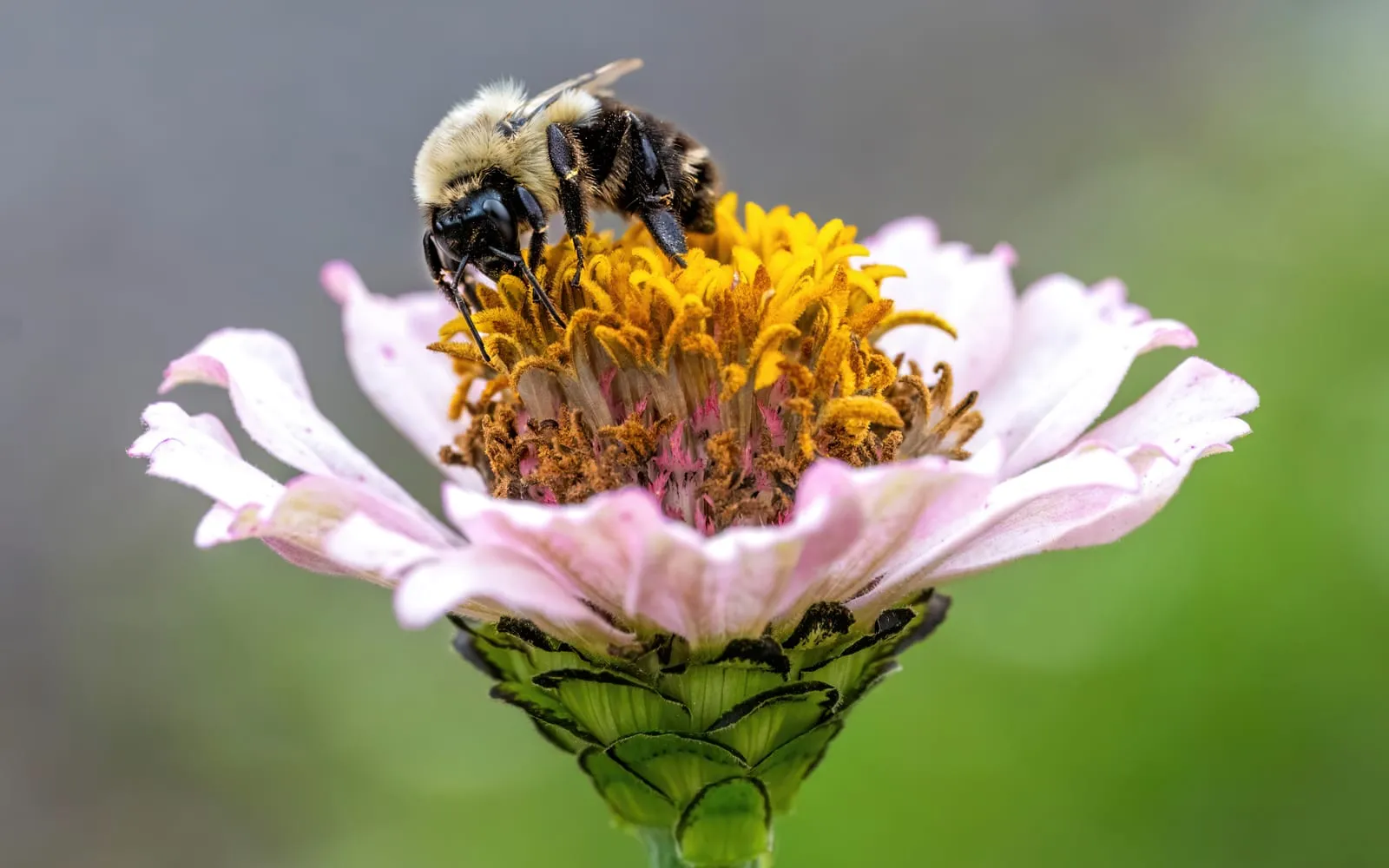
The open-centred single kinds are a favourite of butterflies, which feed at the ring of small disc florets, so a patch earns a place in a pollinator border as much as a cutting bed. The densely double sorts hide that centre and are far less use to them.
Appearance and character
Coarse, oval, slightly hairy leaves clothe upright, branching stems that build into a bushy plant over the growing season. Flowers are large and often densely double in popular garden varieties, with rows of broad petals surrounding a central disc, in an unusually wide range of strong, saturated colours compared with many other summer annuals.
Flowering continues in a long, staggered succession rather than one single flush, with new buds constantly developing at different points on a well-grown, actively deadheaded plant, keeping colour going for months rather than weeks.
Where it is from
Open, sunny ground in Mexico, in a climate with warm summers and a defined growing season, conditions the plant compresses into a single fast growing season wherever it is cultivated as an annual further north or south.
That Mexican origin explains both the plant’s love of heat and strong sun and its vulnerability to powdery mildew in a cooler, damper climate, since it evolved with reliably warm, relatively dry conditions rather than the humid or unsettled summer weather that troubles it in many temperate gardens.
How it grows
A fast-growing annual that germinates readily from seed sown after the last frost, reaching flowering size within eight to ten weeks given reasonable warmth. Growth is upright and branching, and pinching out the growing tip of a young plant encourages a bushier habit with more flowering stems rather than one dominant central stem.
Because powdery mildew is such a common problem for this species, good air circulation between plants matters in practice, and spacing plants generously apart from the outset, rather than planting them closely for an instant full look, pays off over the course of a full summer season.
Through the seasons
Spring sow seed directly outdoors after the last frost, or start earlier under cover for an earlier display; ensure generous spacing between seedlings from the outset.
Summer is the main flowering season, continuing over many weeks given regular deadheading and warm, sunny, well-ventilated conditions.
Autumn flowering continues until the first hard frost, which typically ends the display for the year.
Winter the plant dies with the first hard frost, having completed its annual life cycle; clear spent plants and resow fresh the following spring.
Care difficulty
Easy given warmth and good air circulation, though noticeably more prone to powdery mildew than several other easy annuals if grown too closely together or in a cool, damp summer, which is the main practical challenge with this otherwise straightforward plant.
Watering
Water regularly at the base of the plant rather than overhead, since wet foliage significantly increases the risk of powdery mildew developing. Established plants tolerate short dry spells reasonably well, but consistent moisture at the root produces the strongest, most floriferous growth.
Warning signs, diseases and pests
Powdery mildew is the most significant problem this species faces, showing as a pale, dusty coating across the leaves, and is best prevented through generous spacing, watering at the base rather than overhead, and choosing a resistant variety where mildew is a recurring local problem. Aphids occasionally colonise soft new growth, and slugs and snails can damage young seedlings soon after planting out.
Reduced flowering as summer progresses most often reflects a lack of deadheading rather than disease, since a plant left to set seed redirects its energy away from producing further blooms.
Growing environment
Full sun and good air circulation both matter significantly for this species; a crowded, poorly ventilated position is one of the more common avoidable causes of powdery mildew. Ordinary, moderately fertile, free-draining soil suits it well.
Feeding
A balanced liquid feed, applied every few weeks through summer, supports strong, continuous flowering over a long season. This species responds well to feeding, unlike some other easy annuals that prefer to be left on leaner soil.
Troubleshooting
A pale, dusty coating has appeared on the leaves. This is powdery mildew, the most common problem with this species. Improve spacing and air circulation, water at the base rather than overhead, and remove badly affected leaves.
Flowering has slowed despite a healthy-looking plant. Deadhead spent flowers promptly and consistently, since seed formation redirects the plant’s energy away from producing further blooms.
Young seedlings have been eaten or damaged. Check for slugs and snails soon after planting out, and protect vulnerable young plants until they are established enough to tolerate light grazing.
You want the longest possible vase life from cut flowers. Cut stems in the cooler part of the day once flowers are fully open, since zinnias do not continue opening much once cut, and change the vase water regularly to extend how long the blooms last indoors.
You keep losing plants to mildew despite good spacing. Consider switching to a variety bred for mildew resistance, since some named selections perform noticeably better than the species in a consistently humid or unsettled summer climate, even with otherwise ideal spacing and watering practice, since some summers bring more humid, still weather than good technique alone can fully offset regardless of how carefully the bed was planned and planted out in spring. A resistant variety removes most of the guesswork in an unpredictable climate.