
Outdoor plant
Field Scabious
Knautia arvensis
Also known as Bluebuttons
How to grow field scabious in a border or wildflower meadow. Its lilac pincushion flowers, why chalky soil suits it best, and its value to butterflies.
At a glance
- Difficulty
- Easy
- Water
- Regular watering while establishing, drought-tolerant once mature
- Light
- Full sun
- Hardiness
- USDA 4-8, RHS H6, hardy to -15 C
- Type
- Hardy herbaceous perennial
- Height
- 30-90 cm
- Native to
- Europe, Western Asia
Reliably hardy through ordinary temperate winters, and best suited to lean, free-draining, often chalky soil rather than rich, damp ground where it competes poorly against more vigorous plants. It tolerates a range of temperate climate conditions well within its broad native distribution, provided drainage is good.
Hardiness zones describe winter cold alone. Summer heat, humidity, rainfall and the length of the growing season decide as much, so treat the range as the outer limit rather than as a recommendation.
Not known to be toxic
Field scabious has no toxicity listing from the RHS or the ASPCA and is considered safe around pets and children. There is no documented history of poisoning associated with this species.
Source: RHS
About
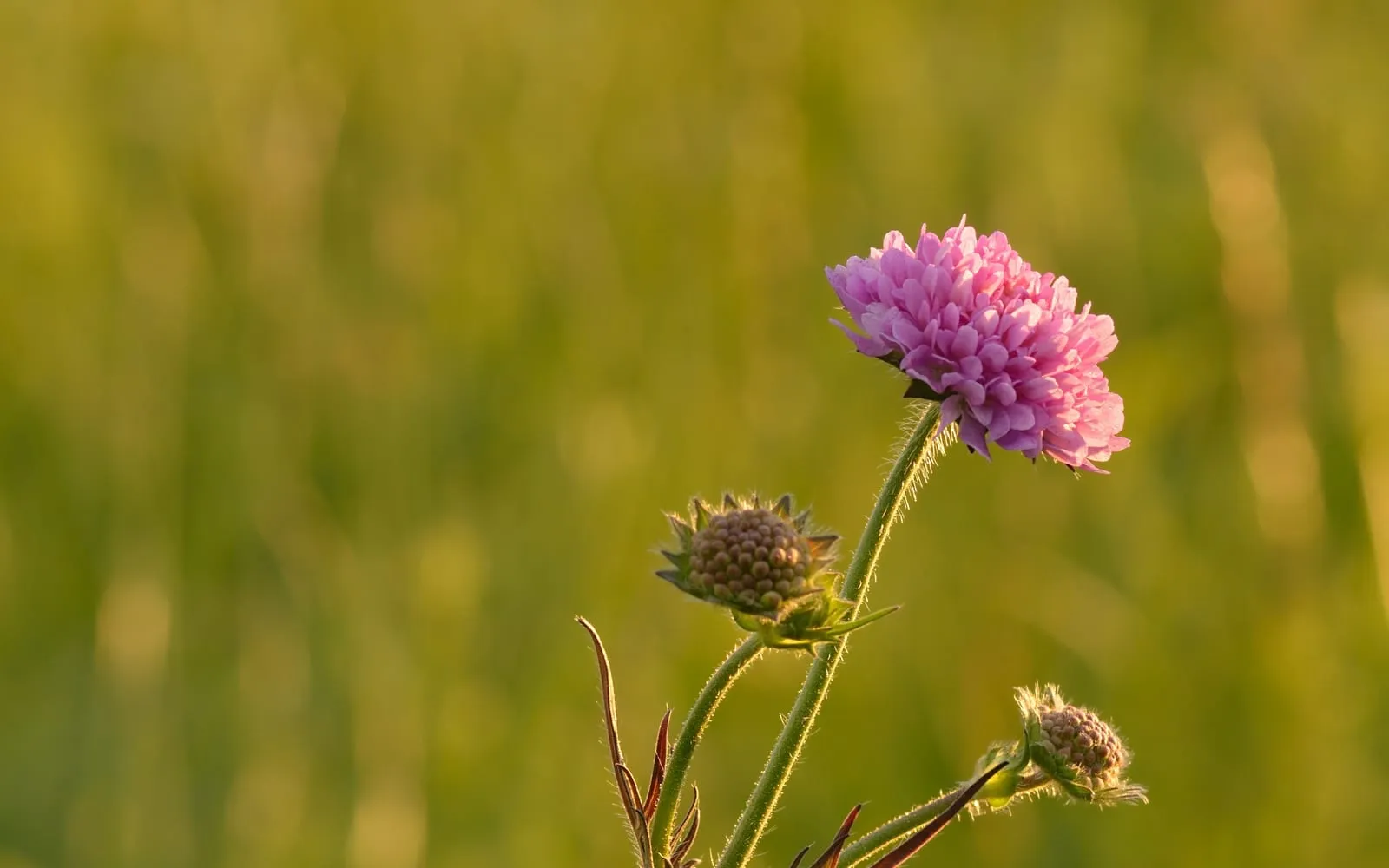
Field scabious has delicate, lilac-blue, pincushion-shaped flowers on slender, wiry stems above a low rosette of divided leaves, a familiar sight on chalk grassland and along dry, sunny field margins across much of Europe. It is one of the most valuable native wildflowers for butterflies, particularly the marbled white and several blue species, and its long flowering season makes it a reliable nectar source across much of summer.
Like several other classic chalk grassland wildflowers, it performs best on lean, free-draining soil and competes poorly against more vigorous plants on rich, fertile ground, which makes it a better fit for a dedicated wildflower area or a gravel garden than a conventionally fed border.
Appearance and character
A basal rosette of divided, slightly hairy leaves gives rise to slender, branching, wiry stems, each topped with a domed, pincushion- shaped flower head made up of many small individual flowers, the outer ones larger than those toward the centre. Colour is typically a soft lilac-blue, though it varies somewhat between individual plants.
Flowering continues over a long season from early summer into autumn, and the flat, accessible flower shape makes it easy for a wide range of pollinating insects, particularly butterflies with their long proboscis, to feed effectively compared with a deeper, more tubular flower. Bees and hoverflies work the same heads, and the seeds that follow feed finches into autumn, so the plant earns its keep well past the end of flowering.
Where it is from
Chalk grassland, dry meadows and field margins across Europe and western Asia, typically on lean, free-draining, often calcium-rich soil rather than damp or heavily improved ground.
That chalk grassland origin is central to how the species performs in cultivation: it thrives on the poor, free-draining, often alkaline soil that limits many richer garden plants, and struggles by comparison on damp, fertile ground where more vigorous neighbours readily outcompete it.
How it grows
A hardy perennial forming a basal rosette that persists through the year, sending up flowering stems each summer that branch and produce a long succession of pincushion flower heads. Growth is not especially vigorous, which is precisely why lean, uncompetitive soil suits this species better than a rich border where faster-growing plants would crowd it out.
Deadheading spent flower heads extends the flowering season much, while leaving some heads to set seed toward the end of summer supports self-seeding into a wildflower meadow or naturalistic planting.
Through the seasons
Spring the basal rosette resumes active growth as temperatures rise, with flowering stems beginning to develop.
Summer is the main flowering period, continuing over an extended season given regular deadheading, and drawing significant butterfly activity.
Autumn flowering tapers as temperatures drop; seed disperses from any heads left unremoved, supporting self-seeding for the following year.
Winter the plant persists as a basal rosette through winter in most climates, fully hardy and needing no protection.
Care difficulty
Easy in the right setting, lean, free-draining soil, ideally over chalk or limestone, and much harder to maintain in rich, damp ground where more vigorous plants outcompete it over time.
Watering
Regular watering supports establishment in the first year. Once settled, this species tolerates real drought well, reflecting its adaptation to lean, free-draining chalk grassland, and generally performs poorly in consistently damp or waterlogged soil.
Warning signs, diseases and pests
Aphids occasionally colonise flower stems and soft new growth, usually in low enough numbers to leave alone or dislodge with a jet of water. Powdery mildew can develop in crowded or poorly ventilated conditions, though this species is generally not especially prone to it compared with several other border perennials.
A declining presence within an established wildflower area often signals that the soil has become more fertile or damper over time, favouring more vigorous competing plants over this lean-ground, free-draining species.
Growing environment
Full sun is essential for strong flowering, and free-draining soil, ideally over chalk or limestone, gives the best results. Avoid damp, heavily improved ground, which favours competing plants over this species regardless of how much sun it receives.
Feeding
None. Feeding actively favours more vigorous competing plants over this species, so the best approach for most gardens is to leave the soil unimproved where it is wanted.
Troubleshooting
The plant is being outcompeted in a mixed border. Move it to a leaner, more free-draining spot, ideally with chalky or alkaline soil, where it faces less competition from vigorous border perennials crowding it out for light and available root space.
Flowering has slowed as the season progresses. Deadhead spent flower heads promptly to encourage further flowering over an extended summer season.
Growth looks weak in damp or heavy soil. This species performs poorly on wet, fertile ground. Improve drainage significantly, or choose a different, more moisture-tolerant wildflower for a damp part of the garden rather than persisting with this one in an unsuitable spot.
You want to attract more butterflies to a wildlife garden. This species is a particularly strong draw for butterflies thanks to its flat, accessible flower shape and long flowering season; planting it in a sunny, open drift rather than a single isolated plant tends to attract noticeably more visiting insects.
You are choosing companions for a chalk or gravel garden. Pair it with other lean-soil specialists such as ox-eye daisy or yarrow rather than moisture-loving border perennials, since all three share the same preference for poor, free-draining ground and compete on equal terms with one another rather than one quickly swamping the others.
You are collecting seed from your own plants for next year. Wait until the round seed heads have dried and turned brown on the stem before collecting, then store the seed somewhere cool and dry over winter, ready for sowing directly into prepared, open ground the following spring once the risk of hard frost has passed. Fresh seed generally germinates more reliably than seed kept for more than a year or two, so use up older stored seed first before it loses viability and germination rates start to drop noticeably from one season to the next.