
Outdoor plant
Cosmos
Cosmos bipinnatus
Also known as Mexican aster
How to grow cosmos from seed. Its ferny foliage, saucer-shaped flowers on tall wiry stems, and why deadheading matters more than feeding for this annual.
At a glance
- Difficulty
- Easy
- Water
- Regular watering while establishing, drought-tolerant once mature
- Light
- Full sun
- Hardiness
- USDA 2-11, RHS H2, hardy to 0 C
- Type
- Half-hardy annual
- Height
- 60-120 cm
- Native to
- Mexico
Grown as a half-hardy annual across virtually every temperate climate, sown fresh each year rather than surviving winter as a living plant. It flowers over a very long summer season given regular deadheading and performs best in a reliably sunny position, flowering less freely and growing leggier in shade.
Hardiness zones describe winter cold alone. Summer heat, humidity, rainfall and the length of the growing season decide as much, so treat the range as the outer limit rather than as a recommendation.
Not known to be toxic
Cosmos has no toxicity listing from the RHS or the ASPCA and is considered safe around pets and children. There is no documented history of poisoning associated with this species.
Source: RHS
About
Cosmos is one of the easiest and most rewarding annuals to grow from seed, producing tall, wiry stems topped with wide, saucer-shaped flowers in shades of white, pink and crimson above a haze of finely divided, almost feathery foliage. A single sowing in spring can flower continuously from early summer right through to the first hard frost, making it one of the most reliable sources of long-lasting colour for very little effort or expense.
Its open, daisy-like flowers with a prominent central disc are particularly attractive to bees, hoverflies and butterflies, and the plant’s airy, see-through habit lets it be threaded through a border without blocking the view of shorter plants behind it, a useful trait few other tall annuals share.
Appearance and character
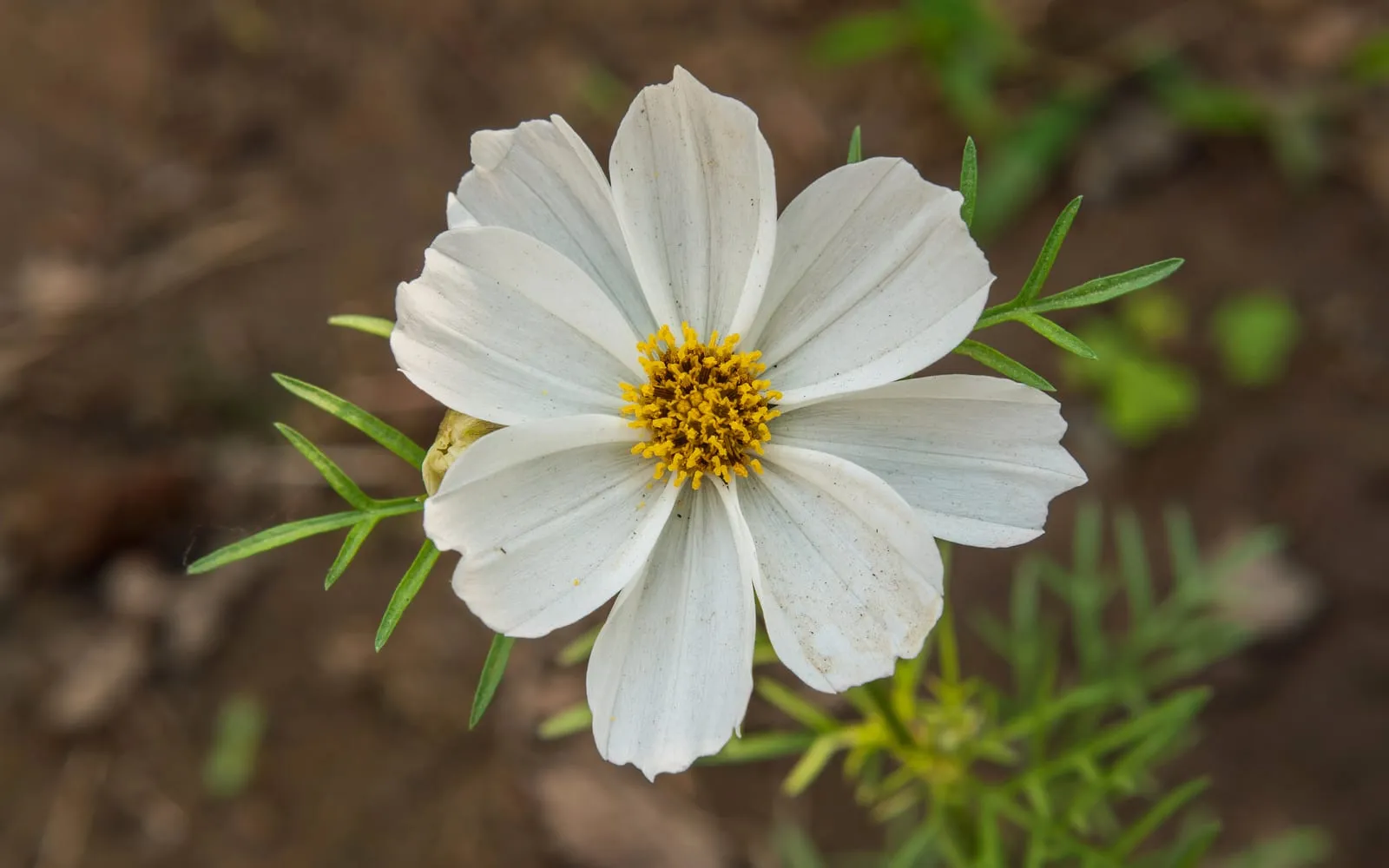
Finely divided, thread-like leaves give the whole plant a light, airy, almost see-through texture quite different from the bolder foliage of many other annuals. Tall, branching, wiry stems carry wide, flat, saucer-shaped flowers, each with a ring of broad petals surrounding a prominent yellow central disc, in shades ranging from pure white through soft pink to deep crimson depending on the variety.
Flowering continues in flushes over a long season, with new buds constantly developing to replace spent flowers, particularly on a plant deadheaded regularly rather than left to set seed early in the season.
Where it is from
High grassland plateaus in central Mexico, at an elevation that gives warm days but noticeably cooler nights than true lowland tropical ground, a combination the plant has into cultivation as a preference for strong daytime sun without needing tropical humidity.
Spanish colonists are thought to have carried the plant back to Europe via cultivated gardens in the Philippines and Madrid centuries ago, and it has since spread into cultivation worldwide from those early introductions, making it one of the older Mexican garden imports still widely grown today rather than a recent addition.
How it grows
Seed sends up its first true leaves within days in warm soil, and the whole plant races toward flowering height far faster than its bushy, branching outline might suggest, reaching bud within roughly eight weeks under reasonable conditions. Stems taken up on rich soil grow noticeably taller and more inclined to lean or flop than the same seed sown on leaner ground, where growth stays shorter and sturdier.
Each spent flower removed by hand redirects the plant’s energy straight back into forming the next round of buds rather than ripening seed, so a gardener who deadheads consistently gets a visibly longer season than one who lets the odd flower go to seed unnoticed.
Through the seasons
Spring sow seed directly outdoors after the last frost, or start earlier under cover for an earlier display; thin or transplant seedlings to their final spacing once large enough to handle.
Summer is the main flowering season, continuing over many weeks given regular deadheading and warm, sunny conditions.
Autumn flowering continues until the first hard frost, which typically ends the display for the year.
Winter the plant dies with the first hard frost, having completed its annual life cycle; clear spent plants and resow fresh the following spring.
Care difficulty
Easy. This is one of the more forgiving annuals for a beginner growing from seed, asking for little beyond sun, moderate watering while young, and regular deadheading to keep the flowers coming.
Watering
Regular watering supports strong establishment while seedlings are young. Once established, this species tolerates real drought reasonably well, needing supplemental watering mainly during an extended dry spell, and consistently overwatered plants tend to grow soft and leggy rather than compact and floriferous.
Warning signs, diseases and pests
Aphids occasionally colonise soft new growth and flower buds, and are dislodged easily with a jet of water. Slugs and snails can damage young seedlings, particularly soon after sowing or transplanting, and protecting vulnerable young plants is worthwhile until they toughen up.
Tall, leggy, floppy growth usually reflects soil that is too rich, too much shade, or plants spaced too closely together competing for light; thinning seedlings to a reasonable spacing and avoiding feeding both help produce sturdier, more self-supporting plants.
Growing environment
Full sun is essential for compact, floriferous growth; in shade the plant grows tall, leggy and flowers less freely. Ordinary, free-draining soil suits it well, and this species performs better on leaner ground than on rich, heavily improved soil.
Feeding
None to minimal. Rich soil or heavy feeding encourages lush foliage at the expense of flowers and produces weaker, floppier stems than the lean conditions this species prefers instead.
Troubleshooting
Growth is tall, floppy and needs staking. Usually soil that is too rich, overcrowding, or too much shade. Thin seedlings to a reasonable spacing, avoid feeding, and ensure full sun for sturdier growth in future sowings.
Flowering has slowed despite a healthy-looking plant. Deadhead spent flowers promptly, since seed formation redirects the plant’s energy away from producing further blooms.
Young seedlings have been eaten or damaged. Check for slugs and snails, particularly soon after sowing or transplanting, and protect vulnerable seedlings until they are established enough to tolerate light grazing.
You want flowers to continue as late into autumn as possible. Continue deadheading right up until the first frost, and consider a second, later sowing a few weeks after the first to stagger flowering and extend the overall display.
You want to save seed from this year’s plants for next year. Leave a few flower heads unpicked toward the end of the season to mature and dry on the plant, then collect and store the seed somewhere cool and dry over winter, ready for sowing the following spring once the frost risk has passed.
You are choosing where to position taller varieties in a border. Place them toward the back or middle of a bed where their airy, see- through habit lets shorter plants remain visible in front, rather than at the very front where the tall stems would obscure everything behind them, particularly once plants reach their full summer height and begin leaning slightly toward the light.