
Outdoor plant
Cornflower
Centaurea cyanus
Also known as Bachelor's button
How to grow cornflower from seed. Its true-blue flowers, origin as an arable weed, and why it is now rarer in the wild than in gardens that deliberately sow it.
At a glance
- Difficulty
- Easy
- Water
- Regular watering while establishing, drought-tolerant once mature
- Light
- Full sun
- Hardiness
- USDA 2-11, RHS H4, hardy to -10 C
- Type
- Hardy annual
- Height
- 30-90 cm
- Native to
- Europe
Grown as a hardy annual across almost every temperate climate, tolerating a light frost as a young plant, particularly from an autumn sowing. It flowers over a long season given regular deadheading and self-seeds readily where conditions suit it, though like several arable annuals it needs disturbed, open ground to germinate rather than an already crowded, established border.
Hardiness zones describe winter cold alone. Summer heat, humidity, rainfall and the length of the growing season decide as much, so treat the range as the outer limit rather than as a recommendation.
Not known to be toxic
Cornflower has no toxicity listing from the RHS or the ASPCA and is considered safe around pets and children. Its petals are edible and sometimes used as a garnish or dried for use in herbal tea blends, a further indication of the plant's general safety.
Source: RHS
About
Cornflower produces one of the truest, most vivid blues found in any common garden flower, a fringed, thistle-like bloom held on slender, branching stems that once coloured entire fields of grain across Europe before intensive farming and effective weedkillers pushed it to the edge of extinction as a real wild plant. It survives today mainly as a deliberately sown garden and wildflower meadow annual, a striking reversal for a plant that farmers spent centuries trying to eliminate from their crops.
Its history as an arable weed shapes what it needs to thrive: an open, disturbed, sunny spot rather than a crowded, well-established border, since the plant’s seed is adapted to germinate readily in freshly turned soil the way it once did each year in a newly sown field of grain.
Appearance and character
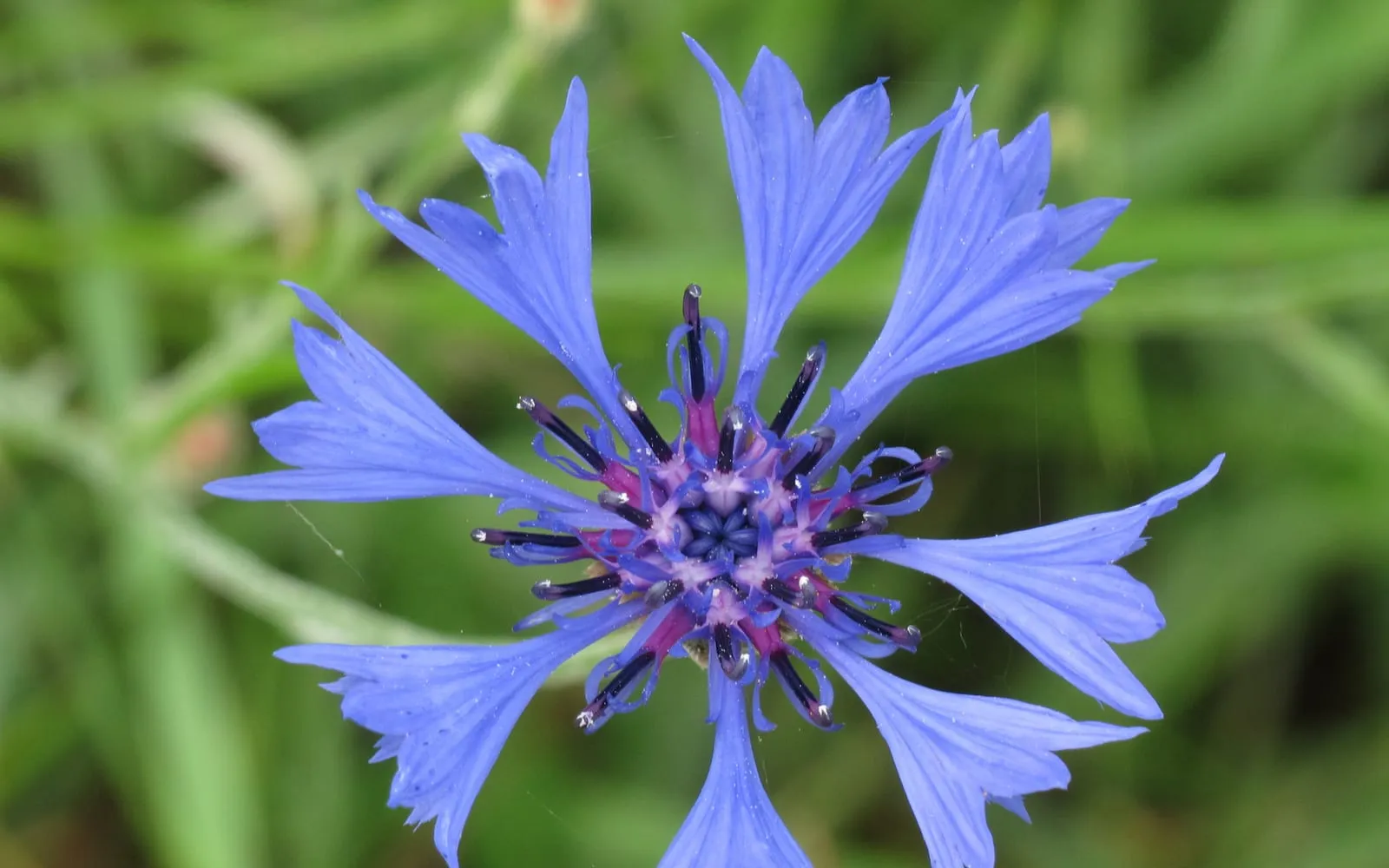
Narrow, grey-green leaves clothe slender, wiry, branching stems that carry the plant’s distinctive fringed flowers, most often a vivid true blue, though pink, white and maroon garden varieties are also widely available. Each flower head is made up of many narrow, ragged-edged florets radiating outward, giving the bloom a distinctive shaggy, thistle-like texture quite different from a typical rounded daisy flower.
Flowering continues over a long season given regular deadheading, and the flowers are excellent for cutting, holding their colour and shape well in a vase for several days.
Where it is from
Historically an abundant arable weed across cultivated grain fields in Europe, now much rarer as a real wild plant following decades of intensive farming, herbicide use and seed-cleaning practices that have removed it from most agricultural land.
That history as a weed of disturbed, cultivated ground is the single most important thing to understand about growing it well: the species is adapted to germinate in freshly turned, open soil rather than an already established, densely planted border, which is why direct sowing into prepared ground generally succeeds far better than trying to introduce it into existing planting.
How it grows
A hardy annual germinating readily from seed sown directly into open, disturbed soil, reaching flowering size within a matter of weeks given reasonable warmth. Growth is slender and somewhat sprawling on rich soil, and much more compact and self-supporting on leaner ground, in keeping with the plant’s origin on poor, cultivated arable land rather than a rich garden border.
Because the seed needs open, disturbed soil to germinate well, an established border with existing dense planting rarely supports good self-seeding even if a few plants are allowed to set seed, and fresh soil disturbance, such as light hoeing of bare ground in autumn or spring, generally produces far better germination than leaving seed to fend for itself among established neighbours.
Through the seasons
Spring sow seed directly into open, prepared soil from mid-spring, or in autumn for larger, earlier-flowering plants the following summer in a mild climate.
Summer is the main flowering season, continuing over many weeks given regular deadheading.
Autumn flowering tapers as temperatures drop; an autumn sowing can also be made now for overwintering as young plants in a mild climate.
Winter the plant dies with hard frost, having completed its annual cycle, though autumn-sown seedlings may already be established as small plants ready to flower earlier the following summer.
Care difficulty
Easy, and the main skill is less about ongoing care than about sowing into the right kind of ground: open, disturbed, sunny soil rather than an already crowded border, which is where most disappointing results with this species come from.
Watering
Regular watering supports strong establishment while seedlings are young. Once established, this species tolerates real drought reasonably well, needing supplemental watering mainly during an extended dry spell.
Warning signs, diseases and pests
Aphids occasionally colonise soft new growth and flower buds, and are dislodged easily with a jet of water. Powdery mildew can occasionally develop in crowded or poorly ventilated conditions, though this species is generally less prone to it than several other summer annuals.
Poor germination from direct-sown seed most often reflects soil that was not sufficiently disturbed or cleared of competing growth beforehand, since this species needs open, bare ground to establish well, mirroring the disturbed arable land it evolved alongside.
Growing environment
Full sun is essential for strong, compact growth and good flowering. Ordinary, free-draining soil suits it well, and this species performs better on lean, open ground than on rich, heavily improved soil, which tends to produce weaker, floppier growth.
Feeding
None to minimal. Rich soil or heavy feeding encourages soft, floppy growth and fewer flowers than the lean conditions this arable-weed species naturally performs best in.
Troubleshooting
Seed sown directly has germinated poorly. Check that the soil was sufficiently open and disturbed beforehand, since this species needs bare, cultivated ground to germinate well rather than sowing into existing dense planting.
Growth is floppy and needs staking. Usually soil that is too rich. Avoid feeding in future sowings, and consider a leaner part of the garden for this species.
Flowering has slowed despite a healthy-looking plant. Deadhead spent flowers promptly, since seed formation redirects the plant’s energy away from producing further blooms.
You want this species to persist through self-seeding. Leave some open, bare soil nearby rather than mulching or planting it densely, and lightly disturb the surface in autumn to encourage fallen seed to germinate the following spring.
You are sowing this species alongside other cornfield annuals. Poppy, corn marigold and corn chamomile share the same preference for freshly disturbed, open soil and the same arable-weed history, and sowing them together mimics the mixed cornfield display these species once formed naturally before intensive farming removed them from most cultivated land, a combination now increasingly popular in dedicated cornfield annual seed mixes sold specifically for restoring that once-familiar look. Scattering the mix onto freshly raked bare soil, rather than sowing in neat rows, gives the most convincing informal result across the whole bed.