
Houseplant
Zebra Plant
Goeppertia zebrina
Also known as Goeppertia zebrina
How to grow Goeppertia zebrina, the zebra plant, a Brazilian prayer plant with velvety dark-barred leaves that fold up at night.
At a glance
- Difficulty
- Easy
- Water
- When the top few centimetres of mix have dried
- Light
- Bright indirect light to light shade
- Temperature
- Warm; keep above about 13 deg C
- Humidity
- Average to high
- Hardiness
- USDA 10-12, RHS H1b, hardy to 13 C
- Type
- Perennial
- Height
- 60-100 cm
- Native to
- Brazil
A tender tropical foliage plant from Brazil, growing in warm, humid, shaded to filtered light. It needs warmth, humidity and bright indirect light, and it cannot take frost or chill. It is safest above about 13 deg C, and cold, wet compost or dry air spoils it.
Hardiness zones describe winter cold alone. Summer heat, humidity, rainfall and the length of the growing season decide as much, so treat the range as the outer limit rather than as a recommendation.
Not known to be toxic
The ASPCA lists the calatheas, now placed in Goeppertia, as non-toxic to cats and dogs, and the RHS does not list the genus as harmful. No toxic compound is recorded in Goeppertia zebrina. A pet or child that chewed a leaf would be unlikely to come to real harm beyond a possible mild stomach upset.
Sources: ASPCA toxic and non-toxic plants, RHS potentially harmful garden plants
About
Goeppertia zebrina is a Brazilian foliage plant of the prayer-plant family, grown for large, soft, velvety leaves banded in two tones of green. It belongs among the calatheas, a group known for strong leaf markings and for being demanding houseplants. Zebra plant is one of the more striking of them.
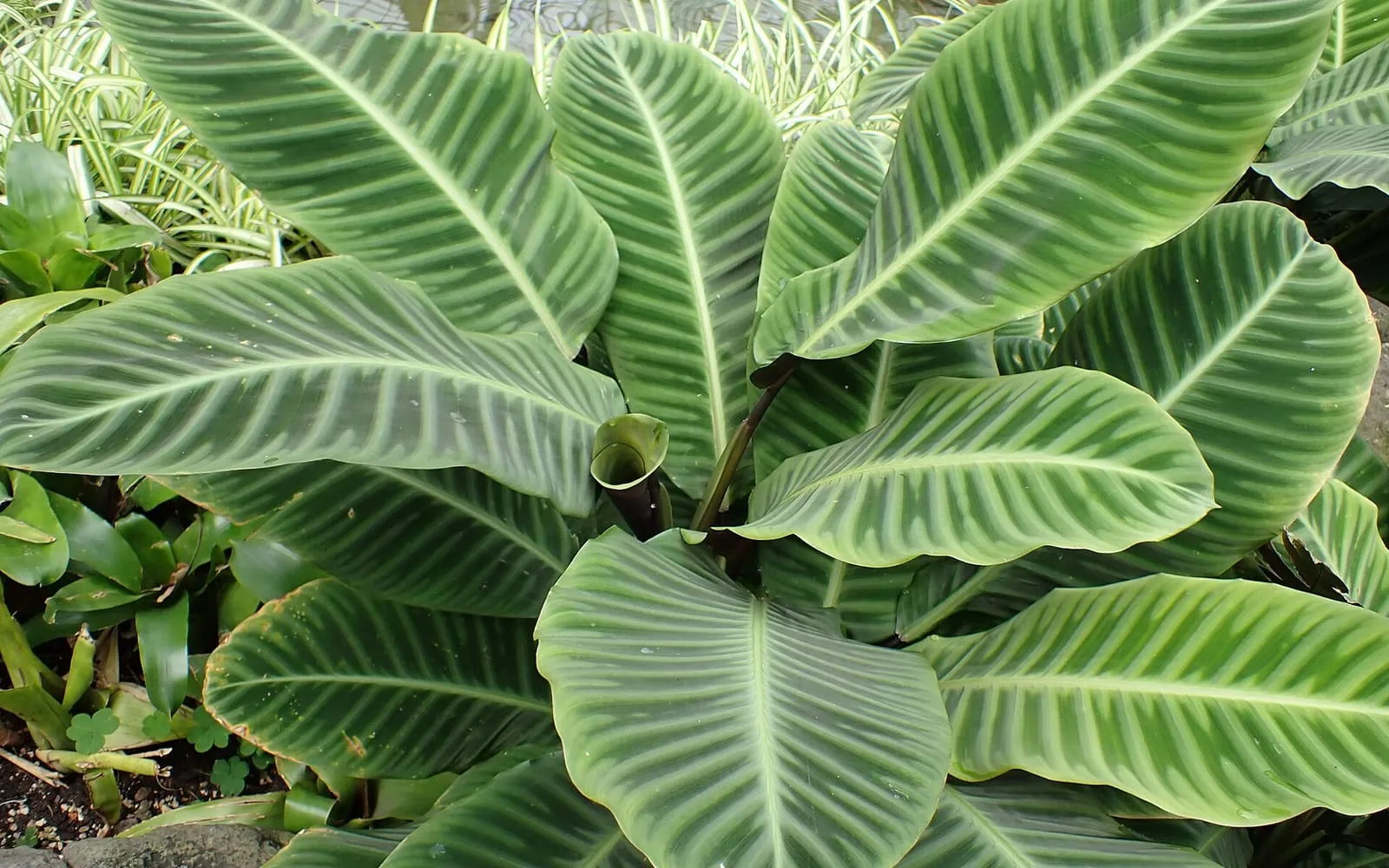
The leaves are broad and oval, mid to deep green with darker bars running out from the midrib to the margin. They have a matt, velvety surface that sets them apart from glossier houseplants. The undersides are flushed purple-red, which shows when the leaves lift. A well-grown clump makes a full, arching mound of patterned leaves.
Like others in its family it moves. The leaves lie open and flat through the day and fold upward at dusk, then lower again in the morning. This nightly folding is normal and healthy. The main challenge is keeping the foliage clean and unmarked.
Appearance and character
The patterned leaves are the main reason to grow it, and their velvety texture is as important as the markings. Held on upright stalks, they arch outward from a low clump, and a healthy plant fills out into a dense, leafy dome.
The plant grows from a spreading root system and enlarges by producing new leaves from the base instead of by climbing or trailing. It stays compact and clump-forming, which makes it a good plant for a table or shelf where the markings can be seen closely and the leaf movement noticed over the course of a day.
Where it is from
The species comes from the warm, humid forests of Brazil, where it grows on the shaded forest floor beneath a dense canopy. Conditions there are consistently warm and moist, the air is humid, and the light is filtered.
Recreating those conditions is the main requirement, and most problems come from falling short of them. It needs warmth without cold snaps, high humidity, gentle light out of direct sun, and moist compost watered with soft water. The drier, colder or sunnier the room, the more effort the plant takes.
How it grows
The plant grows steadily from its base, unfurling new leaves through the warm months and building up a fuller clump over time. It is not fast, and it puts its energy into large, well-marked leaves instead of into rapid spread.
Propagation is by division. Tip an established, congested plant out of its pot in spring, tease or cut the clump into sections each with roots and leaves, and pot them separately into fresh, moist compost. Keep divisions warm and humid while they settle, since they dislike disturbance and take a little while to recover.
Through the seasons
Spring brings the plant back into active growth as light and warmth increase. Resume feeding, water more regularly, and divide or repot a congested plant now so it recovers through the growing season.
Summer is the main growth period. Keep it warm and humid in soft, indirect light, water when the top of the mix dries, and keep it well away from any hot, dry draught, which crisps the leaves fast.
Autumn slows growth as the days shorten. Reduce feeding and let the compost dry a little more between waterings, and keep the humidity up as heating begins to dry the air.
Winter is the hardest season for it, because indoor heating dries the air just when the plant is least able to cope. Keep it warm and above its minimum, well away from radiators and cold glass, water sparingly with soft water, and do all you can to hold the humidity up.
Care difficulty
More demanding than many houseplants. The zebra plant survives easily enough, but keeping its leaves unblemished takes attention to humidity and water quality. Dry air or hard water show quickly as brown, crisp margins.
Give it warmth, steady moisture, humid air and soft water, keep it out of direct sun and draughts, and it stays full and well marked. Most of its troubles come from air that is too dry or water that is too hard.
Watering
Keep the compost lightly and evenly moist through the growing season, watering when the top few centimetres have begun to dry and letting the surplus drain away. The plant dislikes both drying right out and sitting in cold, waterlogged compost, so aim for the steady middle.
Use soft water where you can, since the plant is sensitive to the minerals, fluoride and chlorine in hard tap water, which build up and brown the leaf edges. Rainwater, filtered or distilled water suit it best. Ease off watering in winter, when the cooler, slower plant takes up much less.
Warning signs, diseases and pests
Brown, crisp leaf edges are the classic complaint and point to dry air, hard water or a dried-out root ball, often all three together. Raise the humidity, switch to soft water, and keep the watering even to prevent it.
Curling or fading leaves that lose their markings suggest too much light or under-watering. Move the plant out of direct sun into soft, filtered light and check that the compost is not drying out.
Warm, dry air favours red spider mite in particular, which shows as fine speckling and webbing on the undersides. Mealybug can appear too. Raise the humidity to discourage mites, wipe off what you find, and treat early before numbers build.
Growing environment
Give it soft, indirect light. Direct sun scorches the velvety leaves and fades the markings, while deep shade dulls the pattern, so a spot with good but gentle light is the target. A shaded east aspect or a position back from a bright window suits it.
Keep it warm, humid and out of draughts, which rules out spots near doors, radiators and cold glass. Pot it into a light, moisture-retentive but free-draining mix in a container with drainage holes, and stand it on a damp pebble tray or group it with other plants to lift the humidity.
Feeding
Feed with a dilute balanced liquid fertiliser through spring and summer while the plant is in active growth, at a modest strength, since it is easily over-fed and salts can add to the tip-browning problem.
Stop feeding in autumn and winter while growth is at rest. Flushing the compost occasionally with soft water helps clear any build-up of feed and minerals that would otherwise mark the leaves.
Troubleshooting
Why are the leaf edges brown and crisp? Dry air and hard water are the usual causes, often with an uneven watering habit as well. Raise the humidity, water with soft water, and keep the compost evenly moist.
The leaves are curling or losing their markings. Too much light or too little water. Move it into soft, indirect light and check the compost is staying lightly moist.
Why do the leaves fold up at night? That is the plant’s natural rhythm. The leaves open by day and fold upward at dusk. It is normal and a sign of a healthy plant.
How do I propagate it? Divide a congested clump in spring into sections each with roots and leaves, and pot them separately, keeping them warm and humid while they settle.
Is it safe around pets? Yes. The ASPCA lists the calatheas as non-toxic to cats and dogs, and a chewed leaf is unlikely to cause more than a mild stomach upset.
Zebra Plant problem guides
Not sure what is wrong? See the common houseplant pests guide.