
Houseplant
Rattlesnake Flower
Goeppertia crotalifera
Also known as Goeppertia crotalifera
How to grow Goeppertia crotalifera, the rattlesnake flower, a bold-leaved prayer-plant relative grown for its rattle-shaped spikes of yellow bracts.
At a glance
- Difficulty
- Easy
- Water
- When the top few centimetres of mix have dried
- Light
- Bright indirect light to light shade
- Temperature
- Warm; keep above about 13 deg C
- Humidity
- Average to high
- Hardiness
- USDA 10-12, RHS H1b, hardy to 13 C
- Type
- Perennial
- Height
- 1-2.5 m
- Native to
- Central and South America
A tender tropical foliage plant from Central and South America, growing in warm, humid, shaded to filtered light. It needs warmth, humidity and bright indirect light, and it cannot take frost or chill. It is safest above about 13 deg C, and cold, wet compost or dry air spoils it.
Hardiness zones describe winter cold alone. Summer heat, humidity, rainfall and the length of the growing season decide as much, so treat the range as the outer limit rather than as a recommendation.
Not known to be toxic
Goeppertia crotalifera, the rattlesnake flower, is not recorded among the seriously toxic plants, and related plants in its group are not listed as toxic by the ASPCA or the RHS. A pet or child that chewed a leaf would be unlikely to come to serious harm beyond a possible mild stomach upset.
Sources: ASPCA toxic and non-toxic plants, RHS potentially harmful garden plants
Named for a rattle, not a leaf
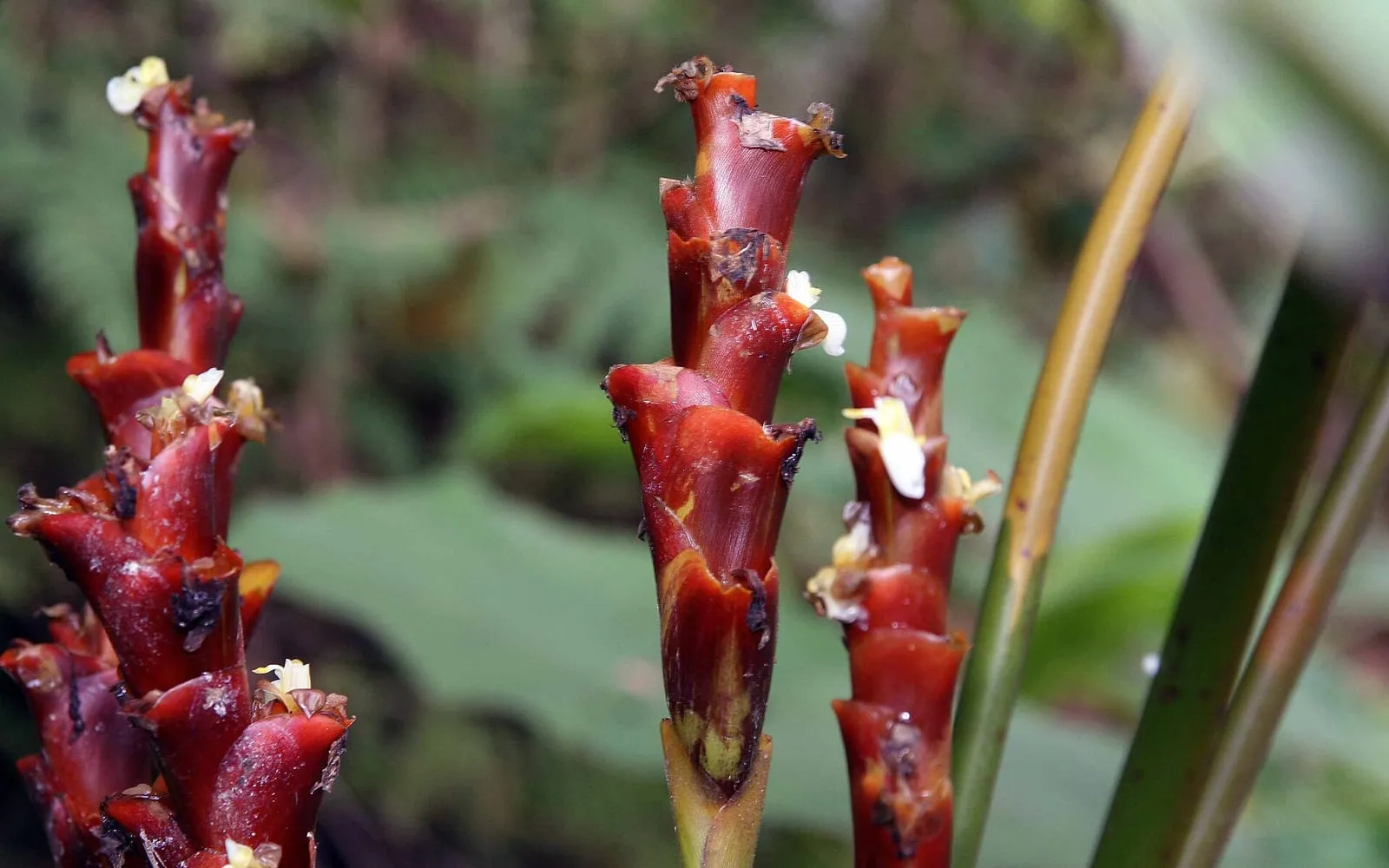
Most prayer-plant relatives are grown for foliage alone, but Goeppertia crotalifera is grown as much for the flower head that gives it its names. From among the leaves it pushes up a stiff, upright spike built of overlapping bracts, flattened into two ranks and stacked like the segments of a snake’s tail, in waxy yellow to greenish gold. The likeness to a rattlesnake’s rattle is close enough that the botanical name crotalifera, meaning rattle-bearing, records it, and the plant carries the same idea into English as the rattlesnake flower. Small, short-lived true flowers appear from between the bracts, but the long-lasting bract spike provides the display for weeks.
Behind the flower is a bold plant. Large, paddle-shaped leaves rise on long stalks from a clumping base, plain mid-green above with a paler, sometimes purple-flushed reverse, broad enough to make the plant noticeable in a room. It sits among the calatheas and marantas in the arrowroot family, the Marantaceae, and shares their habits and their fussiness in equal measure.
Leaves that fold up at night
Every leaf of this family moves on a daily rhythm. A jointed swelling at the top of each stalk, the pulvinus, works like a hinge, raising the blades towards the vertical through the evening and lowering them flat by day. A healthy plant lifts its leaves at dusk and opens them again by morning. The movement follows the light instead of the touch of a hand, and a plant that stops moving its leaves is usually one kept too dark or too cold. Fresh blades unfurl from a tight rolled tube, often showing their coloured underside before they flatten out.
Where it grows wild
This is a plant of warm, wet lowland forest across Central and South America, rooted in the leaf mould of the shaded understorey where the canopy filters the sun and the air stays damp for most of the year. Nothing about that home is dry, exposed or cold, and every part of its care indoors follows from those conditions. Give it steady warmth, soft light, moist air and compost kept evenly damp, and it grows well; let any one of those slip badly and the leaf edges brown quickly.
Light
Bright, indirect light suits it and direct sun does not. A beam of midday sun through glass fades the green, scorches dry brown patches and can make the leaves curl inward as the plant tries to shield itself. An east or north aspect, or a position set back from a south window behind a sheer curtain, gives the gentle brightness it needs. Too little light, on the other hand, flattens the colour and slows the leaf movement to a stop, so aim for a well-lit room without direct hot sun crossing the plant.
Watering and humidity
Water to keep the compost lightly moist at all times through spring and summer, letting the surface and the top few centimetres dry before the next drink but never letting the whole pot go bone dry. Rainwater, distilled water or filtered water helps prevent the brown speckling that hard, chlorinated tap water tends to cause. Ease back over the shorter days of winter, when the plant rests and takes far less. Damp air matters for this one: stand it on a wide tray of moist pebbles, cluster it with other plants, or keep it in a humid room, and mist it in warm spells to keep the broad blades from crisping at the margins.
Compost and repotting
Use a light, airy medium that drains well yet holds moisture, such as a peat-free houseplant compost opened up with orchid bark, coir and perlite so water moves through without the roots ever sitting sodden. The plant grows from a spreading clump, so a broad pot works better than a tall one, and it likes to be refreshed each spring before the roots fill the container. Set the crown at its old depth and firm the mix lightly. Keep it out of cold draughts and away from radiators, both of which dry and chill it faster than watering can correct.
Feeding
Feed lightly and often instead of strongly and rarely. A balanced liquid feed at half strength, given once a month through the growing season, keeps the leaves large and the colour full without scorching the sensitive roots. Flush the compost with plain water every few weeks to wash out any fertiliser salts, which this family dislikes around the roots. Withhold feed entirely through winter and for the first weeks after repotting, while fresh compost still supports the plant.
Propagation
Divide an established clump in spring to make more. Slide the plant from its pot, separate the rootball into sections that each keep several leaves and a fair share of roots, and pot the pieces up into the same open mix. Enclose the fresh divisions in a loose clear bag or a propagator for a week or two to hold the humidity high while new roots take, then bring them on in warm, softly lit conditions. Division is far more reliable at home than seed, which is rarely available.
Problems
Browning, crisping leaf edges are the commonest complaint and usually point to dry air or hard water rather than pests or rot; raise the humidity and change the water. Curling or faded leaves follow too much direct sun or a plant left too dry. A limp, discoloured base with a sour smell is root rot from cold, wet compost; trim off the rotten tissue and water more carefully. Warm, dry air encourages spider mites, which stipple the leaves and web their undersides, and mealybugs, which lodge as white fluff in the leaf joints. Raising humidity and sponging the foliage clean helps control both.
Why is it called the rattlesnake flower? It sends up a stiff spike of stacked yellow bracts that resembles a rattlesnake’s rattle, which the botanical name crotalifera also describes.
Do the leaves really move? Yes. Like other plants in its family it lifts its leaves at night and lowers them by day, driven by a hinge-like joint at the top of each leaf stalk.
Why are the leaf tips going brown? Dry air or mineral-laden tap water is the usual culprit. Increase humidity around the plant and water with rainwater or filtered water.
Is it safe around pets? The ASPCA lists calatheas (Goeppertia) as non-toxic to cats and dogs, so a chewed leaf is unlikely to cause more than a mild stomach upset.
Rattlesnake Flower problem guides
Not sure what is wrong? See the common houseplant pests guide.