
Houseplant
Rose-Painted Calathea
Goeppertia roseopicta
Also known as Goeppertia roseopicta
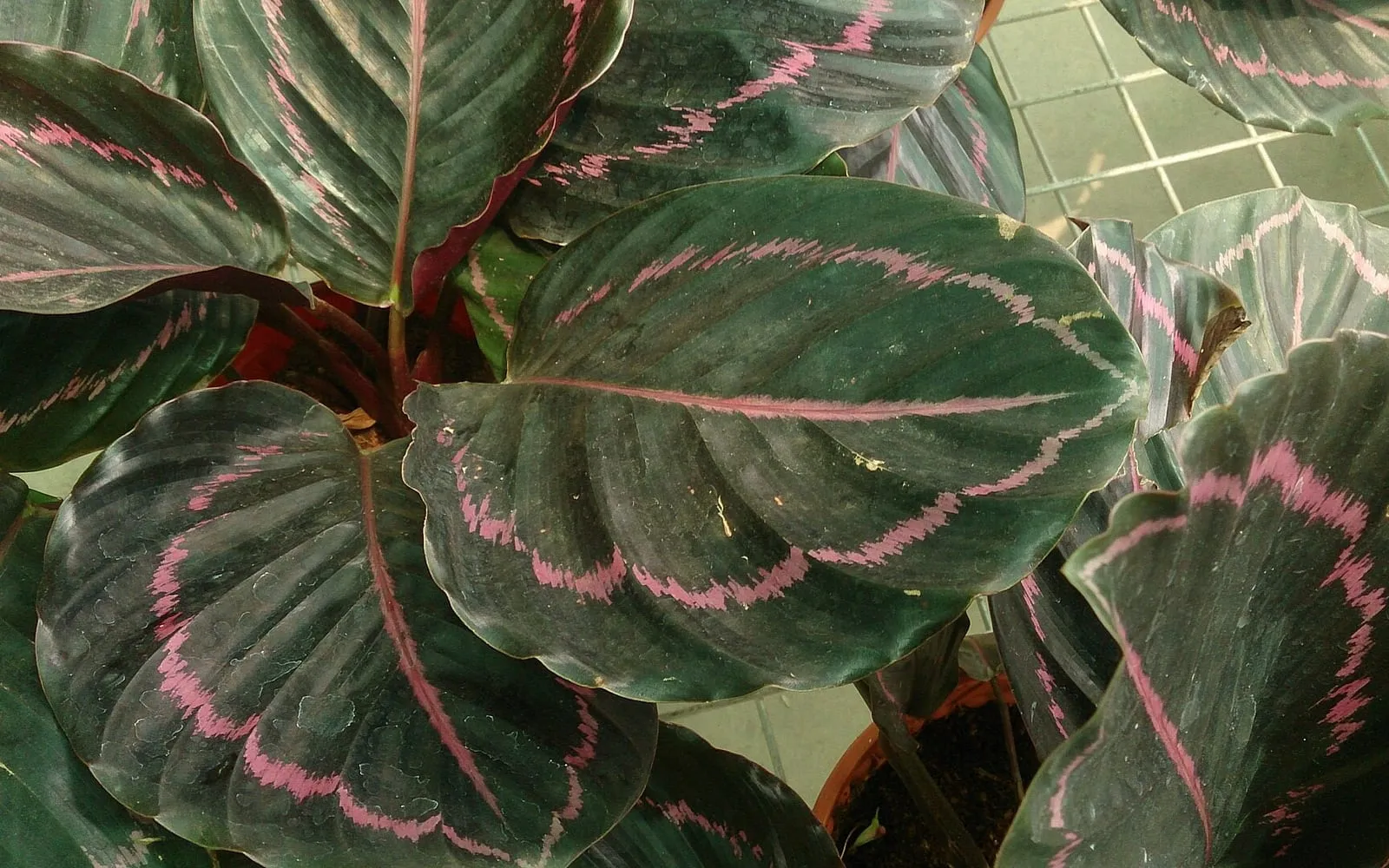
Growing Goeppertia roseopicta, the rose-painted calathea, an Amazonian prayer plant ringed and feathered in pink that fades to silver over a red-purple back.
At a glance
- Difficulty
- Easy
- Water
- When the top few centimetres of mix have dried
- Light
- Bright indirect light to light shade
- Temperature
- Warm; keep above about 13 deg C
- Humidity
- Average to high
- Hardiness
- USDA 10-12, RHS H1b, hardy to 13 C
- Type
- Perennial
- Height
- 40-60 cm
- Native to
- Brazil
A tender tropical foliage plant from Brazil, growing in warm, humid, shaded to filtered light. It needs warmth, humidity and bright indirect light, and it cannot take frost or chill. It is safest above about 13 deg C, and cold, wet compost or dry air spoils it.
Hardiness zones describe winter cold alone. Summer heat, humidity, rainfall and the length of the growing season decide as much, so treat the range as the outer limit rather than as a recommendation.
Not known to be toxic
Goeppertia roseopicta, the rose-painted calathea, is not recorded among the seriously toxic plants, and related plants in its group are not listed as toxic by the ASPCA or the RHS. A pet or child that chewed a leaf would be unlikely to come to serious harm beyond a possible mild stomach upset.
Sources: ASPCA toxic and non-toxic plants, RHS potentially harmful garden plants
A leaf painted in a ring
Goeppertia roseopicta takes its species name from the rosy markings on its foliage. Each broad, rounded blade is a deep matt green with a feathered band that follows the outline of the leaf a short way in from the edge, so the pattern looks like a painted ring instead of a stripe. On a young leaf that ring is pink, alongside a matching flush of rose feathering down the central vein, and both soften towards cream or pale silver as the leaf matures. Turn the blade over and the whole underside shows a rich claret, the red-purple that runs through much of this Brazilian group. Growers have selected many named forms from the species, among them the darker ‘Dottie’ and the softer pink ‘Rosy’, with different versions of the same ringed pattern.
From Calathea to Goeppertia
Shops, plant labels and older books still call this plant Calathea roseopicta, and that name is worth knowing when you go looking for it. A 2012 revision of the family moved many round-leaved calatheas into the genus Goeppertia because of their genetics, so the correct botanical name changed while the trade name lagged behind. The plant on the bench and the plant in the reference are the same. Nothing about its care changed with the label.
The nightly fold
Watch the plant towards evening and the flat blades begin to rise on their stalks and press together, lifting the wine-red undersides into view, then relax open again by mid-morning. This daily raising and lowering, called nyctinasty, works through a swollen band of cells at the top of each leaf stalk known as the pulvinus, which shifts water in and out to change its stiffness and move the blade. A rose-painted calathea that folds neatly each night is usually growing well. When the leaves hang slack and refuse to close, or curl inward and stay shut through the day, the roots may be cold, dry or stressed by the water.
Where it belongs
The species is native to the Amazon region of Brazil, where it grows in the warm, wet shade of the forest floor beneath a tall canopy. Rainfall is heavy and regular, the air holds a high, steady humidity, and the temperature stays warm with no cold spell to force a rest. Sunlight is filtered and dappled, not direct. Indoor care should copy those conditions. Keep it warm and out of any chill, hold the compost damp without letting it turn to bog, and give it filtered light.
Placing it for light
Set the plant where the light is bright yet always indirect, such as a couple of paces inside an east-facing window or screened behind a voile curtain on a brighter wall. Harsh direct sun bleaches the pattern to a flat pale green and browns the leaf edges, while a dim corner slows growth and stretches the stalks towards the window. Turn the pot a quarter each week so the rosette stays even and does not lean.
Water and its quality
Wait until the top two or three centimetres of compost feel dry, then water generously and let every drop of surplus drain away, so the rootball is moist but not waterlogged. The species is intolerant of the fluoride, chlorine and dissolved lime in hard mains water, which build up in the tissue and scorch the margins to a dry brown. Rainwater, filtered water, or tap water left uncovered overnight are gentler choices. Cut right back once autumn dims the light and growth slows, since cold compost held wet quickly rots the roots.
Warmth, humidity and repotting
Room temperatures of around eighteen to twenty-six degrees C keep it growing, and it should never sit below about thirteen degrees C or in the path of a draught, a radiator or a frosty pane. Dry indoor air is its main problem indoors, showing first as crisp brown edging. A wide tray of moist pebbles beneath the pot, a cluster of leafy neighbours, or a small humidifier all raise the surrounding moisture and do more good than a passing mist. Repot in spring only when roots fill the pot, moving up a single size into an open, peat-free blend lightened with bark, coir and perlite.
Feeding and making more
From spring to late summer, feed once a fortnight with a balanced houseplant fertiliser at half the stated strength, since the fine roots burn on a heavy dose, then stop for the winter. The most reliable way to increase your stock is by division. Lift a crowded clump in spring, part the rhizomes into pieces that each keep roots and a fan of leaves, pot them up separately, and hold them warm and humid until they root and push new growth.
Putting problems right
Brown, brittle margins point to dry air, hard water or both, so raise the humidity and switch to rainwater. Wholesale yellowing over a sour, soggy mix means the roots are drowning; let the compost dry further and check that water runs freely from the base. Leaves that curl tight and fail to open through the day are usually thirsty or scorched. In warm, dry conditions spider mites stipple the undersides with fine pale dots and spin faint webs, so rinse the foliage and lift the humidity to see them off. Mealybugs show as white woolly tufts tucked into the leaf joints and lift away on a cotton bud dipped in dilute alcohol.
Safe around the household
Goeppertia roseopicta carries no serious toxins, and the wider prayer-plant family is listed by the ASPCA as non-toxic to cats and dogs, so a nibble from a pet or child should bring nothing worse than a brief stomach upset. It suits a home with animals. Even so, keep it out of easy reach, since torn leaves ruin the display and constant handling disturbs the plant’s daily movement.
Quick answers
Why do the pink markings fade? They are meant to. The ring and midrib start rose-pink on new leaves and mellow to cream or silver with age.
Why are the edges going brown? Dry air or hard-water salts. Raise the humidity and water with rainwater or filtered water.
Why has it stopped folding at night? Cold, thirst or poor water. Correct those and the movement returns in a few days.
How do I propagate it? Divide the rhizome in spring, keeping roots and leaves on each section.
Rose-Painted Calathea problem guides
Not sure what is wrong? See the common houseplant pests guide.