
Houseplant
Yellow Tower Cactus
Parodia leninghausii
Also known as Lemon Ball Cactus, Golden Ball Cactus, Parodia leninghausii, Notocactus leninghausii
How to grow Parodia leninghausii, the yellow tower or lemon ball cactus, a Brazilian cactus with soft golden spines, clustering columns and yellow flowers.
At a glance
- Difficulty
- Easy
- Water
- When the mix has dried through; steady in summer
- Light
- Full sun to bright light
- Temperature
- Warm to cool; keep above about 2 deg C
- Humidity
- Low
- Hardiness
- USDA 9-11, RHS H2, hardy to 2 C
- Type
- Evergreen columnar cactus
- Height
- Columns to 60 cm or more
- Native to
- Southern Brazil
A columnar cactus from the rocky highlands of southern Brazil, storing water in ribbed green columns clothed in soft golden spines. It needs full sun, sharp drainage and long dry spells, with a cool, drier winter rest to flower. It has little frost tolerance and is safest above about 2 deg C, rotting in cold, wet compost.
Hardiness zones describe winter cold alone. Summer heat, humidity, rainfall and the length of the growing season decide as much, so treat the range as the outer limit rather than as a recommendation.
Not known to be toxic
A safe plant to keep around pets and children. The yellow tower cactus is not listed as toxic by the ASPCA or the RHS, and holds no harmful compound. Its spines are the main hazard. It is one of the gentler cacti to have around, though a pet is still best kept from chewing it. There is no chemical hazard, only the mild prickle of the spines.
Sources: ASPCA toxic and non-toxic plants, RHS potentially harmful garden plants
About
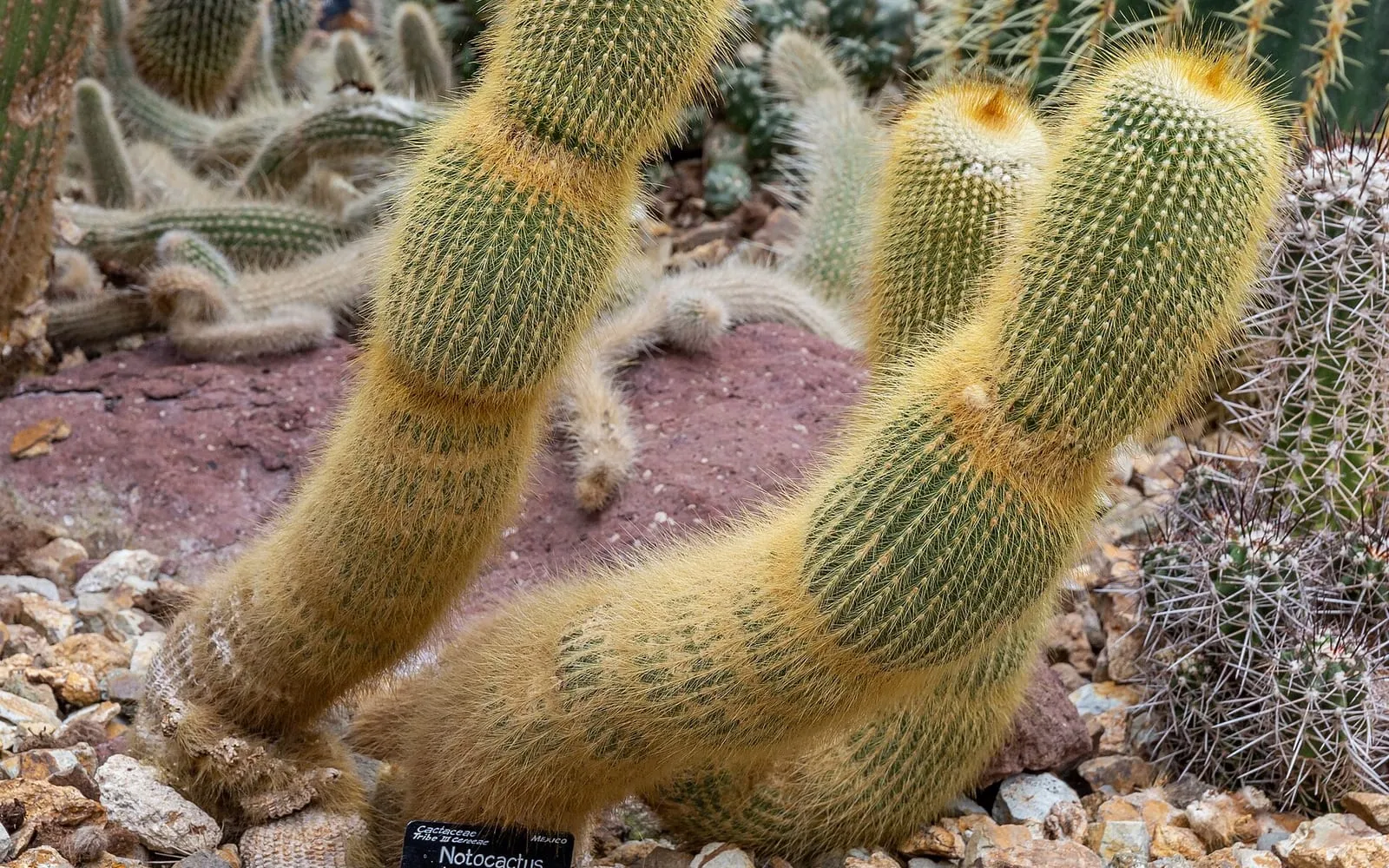
Yellow tower cactus has upright green columns with close ribs and soft, bristly golden spines. The spines lean towards the growing tip and give the plant its yellow look, but they are still the main hazard. In time it clusters into a small group of leaning golden columns.
It comes from the rocky highlands of southern Brazil instead of true desert, so while it needs full sun and gritty soil like any cactus, it takes a little more water in growth and cooler conditions than a desert species. A mature column, over about fifteen centimetres tall, opens large lemon-yellow flowers at its woolly tip in summer, matching the golden spines.
Easy and slow-growing, it needs sun, sharp drainage and a cool, drier winter rest to flower. Its soft spines make it one of the easier cacti to place on a bright sill, and it clusters slowly into a good-looking group.
Appearance and character
The columns are upright and ribbed, a fresh green, closely clothed in soft, fine, bristly golden-yellow spines that lean towards the tip and give the plant its golden look.
The spines are softer than those of many cacti, though the mass of fine bristles can still prickle.
It clusters slowly from the base into a group of leaning columns, each reaching sixty centimetres or more in time, and the base often turns corky and scarred with age, which is natural.
Its flowers are large, glossy and lemon-yellow, opening from the woolly crown of a mature column, over about fifteen centimetres tall, in summer, matching the golden spines.
Where it is from
Parodia leninghausii grows on rocky slopes and outcrops in the highlands of southern Brazil, in strong sun with warm, wet summers and cool, drier winters.
Give it full sun and sharp drainage. It takes a little more water in the growing season than a desert cactus, and needs a cool, drier winter rest to flower. It has no frost tolerance and rots in cold, wet compost.
How it grows
It grows through the warm months, lengthening and slowly clustering its golden columns, and rests over a cooler, drier winter. That winter rest helps set the summer flowers. Warmth, strong light and the dry rest keep it healthy.
Grow it in a very free-draining, gritty cactus mix in a pot to suit its size, and water when the mix has dried through, keeping it steadily watered in summer and nearly dry in winter. Let it drain freely.
Give it full sun for the densest golden spines and the best flowering, and keep it warm to cool above about 2 deg C. A cool, drier winter rest brings on the summer flowers on a mature plant.
Propagate from offsets where they form at the base, or from seed, which the plant sets readily after flowering.
Through the seasons
Spring brings new growth as light and warmth return. Resume watering and repot if needed.
Summer is the main growing and flowering season. Water when the mix dries through, give a little dilute feed, and give full sun to bring the lemon flowers from the crown of a mature column.
Autumn slows growth as light fades. Ease off watering ahead of the winter rest.
Winter is a cool, drier rest above about 2 deg C, which sets the flowers. Water barely at all, and keep it cool and bright instead of warm.
Care difficulty
Easy, and one of the more forgiving cacti. Given full sun and sharp drainage it is tough, slow and reliable, and its soft spines make it easier to handle than many cacti. Its one weakness is cold, wet compost, which rots it, so keep it nearly dry in winter. To flower, it needs to be mature and to have had a cool, drier winter rest. Otherwise it needs little.
Watering
Water when the gritty mix has dried through. Keep it steadily watered through the warm growing season, since as a highland cactus it takes a little more water than a desert species. Let it drain fully each time.
Water almost not at all over the cool winter rest, when cold, wet compost is the main danger and the dry spell helps set flowers. A column that puckers or softens at the base points to rot from overwatering.
Warning signs, diseases and pests
A soft, discoloured, collapsing base is rot, from cold, wet compost, the commonest way to lose the plant. Keep the mix sharply drained and nearly dry in winter, and never leave it cold and wet. A corky, scarred base with age, by contrast, is normal and harmless.
Mealybugs lodge at the base and among the soft spines as white fluff; treat them with dilute alcohol and check the crown and base regularly, since the spines give them cover.
Failure to flower usually means the plant is too young, under about fifteen centimetres, or has had no cool, drier winter rest. Give a mature plant its winter rest and full sun.
Growing environment
Full sun keeps the golden spines dense and the plant firm, and is needed for flowering. In poor light the spines thin, the column stretches and pales, and it will not bloom. Give it as much direct light as you can.
Warmth to cool conditions suit it, above about 2 deg C, with a cool, drier winter rest. It needs low humidity and dislikes cold, wet, stagnant compost.
Grow it in a gritty, free-draining cactus mix in a pot in full sun, on a bright sill. Its soft spines make it easier to place than a sharper cactus, though it should still stay out of a chewing pet’s way.
Feeding
Feed only once or twice over spring and summer with a dilute, low-nitrogen cactus feed. It needs little, and rich feeding forces soft growth.
Give nothing over winter. Fresh gritty mix supports a newly potted plant for a long time, since it grows slowly.
Troubleshooting
The base has gone soft and discoloured. Rot from cold, wet compost. Keep the mix sharply drained and nearly dry in winter, and never leave it cold and wet. A soft base is usually beyond saving.
The base has turned corky and brown, but is firm. This is normal ageing, not rot, and no cause for concern.
It will not flower. The plant is too young, under about fifteen centimetres, or has had no cool, drier winter rest. Give a mature plant its winter rest and full sun.
The column is stretching and the spines are thinning. Too little light. Move it into full sun to firm the growth and thicken the golden spines.
Is it safe around pets? Yes, chemically, since it is not listed as toxic. Its spines are soft, but it is still best kept from a chewing pet.
Yellow Tower Cactus problem guides
Not sure what is wrong? See the common houseplant pests guide.