
Houseplant
Yellow Disa
Disa tenuifolia
Also known as Disa tenuifolia
How to grow Disa tenuifolia, the yellow disa, a slender Cape orchid with lemon to golden flowers that blooms freely the season after a fire.
At a glance
- Difficulty
- Difficult
- Water
- Evenly moist in growth; ease off for any rest
- Light
- Full sun to bright light
- Temperature
- Cool and frost-free in winter growth; dry and warm through the summer rest
- Humidity
- Average, with good air movement
- Hardiness
- USDA 9-11, RHS H2, hardy to 0 C
- Type
- Perennial
- Height
- 15-40 cm
- Native to
- South Africa
A winter-growing Cape orchid from the fynbos of southwestern South Africa, where winters are cool and wet and summers hot and dry. It takes a light frost at most, so it is kept frost-free. The zone numbers leave out the dry summer rest the tuber needs and it fails in warm, humid, stagnant conditions.
Hardiness zones describe winter cold alone. Summer heat, humidity, rainfall and the length of the growing season decide as much, so treat the range as the outer limit rather than as a recommendation.
Not known to be toxic
No toxic compound is recorded in Disa tenuifolia, and orchids are not listed as harmful by the ASPCA or the RHS. A pet or child that chewed a leaf would be unlikely to come to real harm beyond a possible mild stomach upset.
Sources: ASPCA toxic and non-toxic plants, RHS potentially harmful garden plants
About
Disa tenuifolia is a slender yellow-flowered orchid of the Cape mountains in South Africa. Its species name refers to the fine, narrow leaves that grow through the fynbos vegetation. Growers call it the yellow disa for its clear lemon to golden blooms, an uncommon colour among the many pink and white species of the genus. It is a small tuberous terrestrial, and like several Cape geophytes it often flowers most heavily in the season after fire has cleared the slope. That fire response and its Cape habitat explain why this rarely grown species needs open light, sharp drainage and a dry summer rest.
Appearance and character
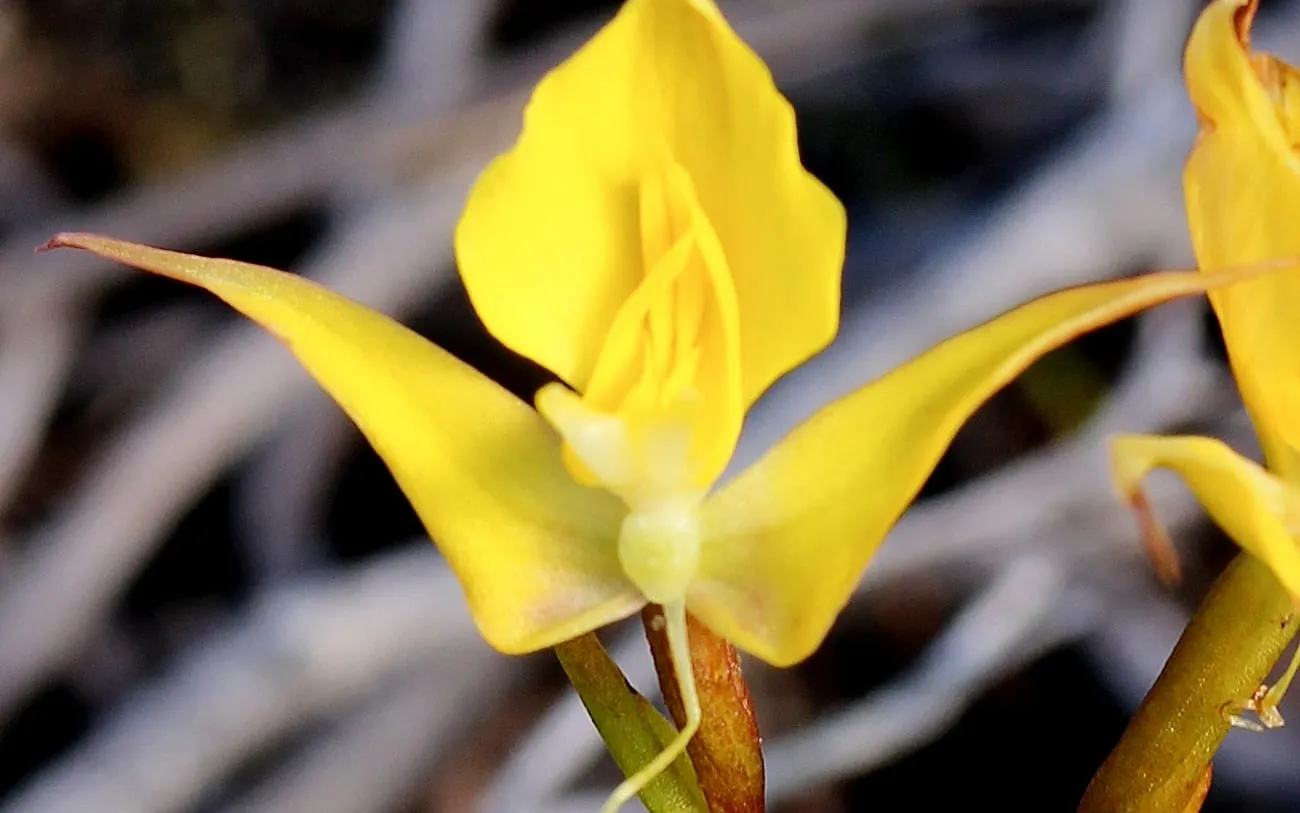
A flowering plant sends up a wiry stem with a spike of small yellow flowers, each with the hooded upper sepal, spreading laterals and small inner parts typical of the genus. The colour ranges from pale primrose to deeper gold. The narrow, almost thread-like leaves that give the species its name are its other main feature, much finer than the broad channelled foliage of the stronger disas. Between fires the plant may grow leaves and flower only sparingly, so many yellow spikes on a slope often mean the area burned recently.
Where it is from
The species is native to South Africa, growing on sandstone slopes and flats in the fynbos of the southwestern and southern Cape. There it lives through cool wet winters and hot dry summers, growing while the rain falls and resting underground through drought. Fynbos burns naturally every few years, and this orchid is one of many Cape plants that flower more heavily after a burn opens the ground to light and releases nutrients. Its response to fire shows its preference for open, unshaded, freely drained ground.
How it grows
The plant renews itself each year from a small tuber. Roots and fine leaves emerge with the winter rains, the tuber is rebuilt through the growing season, and a flower spike follows, most abundantly where fire has recently cleared competition. After seeding, the plant dies down and rests as a dormant tuber over summer. Increase in the wild is slow and mainly by tuber offset, and the dust-fine seed depends on soil fungi to germinate. This makes it hard to propagate outside a specialist setting.
Through the seasons
Return of winter rain breaks the summer rest; fine leaves and roots develop, and a potted plant is watered back into growth.
Winter proper is the leafy growing season under cool bright light, when the tuber is rebuilt for the year.
Spring raises the yellow flower spike as light strengthens and the lean medium begins to dry between waterings.
Summer is dormancy; the thread-like leaves wither, water is withheld, and the tuber rests through heat and drought.
Care difficulty
This is a difficult plant for all but the specialist grower of Cape terrestrials. It needs cool bright winter growth, very sharp drainage, soft low-mineral water and a dry summer rest, and warm stagnant wetness rots it fast. It may also flower poorly between fires, so even a healthy plant may not bloom if the grower cannot provide the open, sunlit conditions a burn creates. Match the Cape seasons and give it strong light and it can be kept alive, but flowers are never guaranteed.
Watering
Water in step with the growing season. Begin as the winter rains would return, keeping the gritty lean medium evenly moist but always free-draining so nothing stands at the roots. Rainwater or reverse-osmosis water is safest, because salts in hard tap water can harm the fine roots. Reduce watering as the narrow leaves age in spring, then withhold nearly all moisture once the plant dies down for summer. Give at most an occasional trace of water to stop the resting tuber drying out completely.
Warning signs, diseases and pests
Soft tubers and blackened roots come from a pot kept too wet, most dangerously during the summer rest. Move the plant into drier, coarser conditions. Weak drawn growth and a refusal to flower usually mean too little light or a missed rest, and sometimes the absence of the open post-fire conditions the plant prefers. Under glass, aphids attack the soft young spike, mealybugs and scale hide in leaf bases, and spider mites appear in hot dry air. Remove light infestations by hand, treat heavier ones with a suitable control, and keep the air moving.
Growing environment
Offer the brightest cool position you can manage through winter, short of scorching against hot glass, with good ventilation. A cold greenhouse or a bright frost-free room matches its mountain winters far better than a warm room. Build the compost from coarse sand and fine grit with a little fibre so water drains through at once, and keep the pot cool and off any heat source. Since it responds to the open sunlit ground a fire leaves behind, err towards strong light instead of shade.
Feeding
Feed very little. Fynbos soils are poor and this orchid is built for lean ground, so a highly dilute balanced feed once or twice during winter growth is ample. Stronger feeding leaves salt residues that damage the roots and encourages soft rot-prone tissue. No feed is given during the summer dormancy, when the resting tuber takes nothing from the medium.
Troubleshooting
Why won’t my yellow disa flower? Many Cape geophytes, this one among them, flower most freely after fire, so a plant grown without those open sunlit conditions may bloom only sparingly even when healthy.
Is a summer-dormant plant dead? Not if the tuber is firm. Summer dryness is its natural rest, so keep it dry and cool until the rains return.
Which water is best? Rainwater or reverse-osmosis water, since hard water harms the fine roots.
How do I propagate it? Mainly by slow tuber offset; seed depends on specific fungi and seldom germinates in ordinary pots.
Is it toxic to pets? No serious toxicity is recorded for the genus, though keeping pets from chewing it is sensible.
Yellow Disa problem guides
Not sure what is wrong? See the common houseplant pests guide.