
Houseplant
Column Disa
Disa cylindrica
Also known as Disa cylindrica
How to grow Disa cylindrica, the column disa, a South African tuberous orchid with a dense, narrow column of small greenish flowers, and how to site it.
At a glance
- Difficulty
- Difficult
- Water
- Evenly moist in growth; nearly dry through the summer rest
- Light
- Bright light with some direct sun
- Temperature
- Cool; dislikes heat, keep above about 4 deg C
- Humidity
- Average to high
- Hardiness
- USDA 9-10, RHS H2, hardy to 4 C
- Type
- Perennial
- Height
- 20-50 cm
- Native to
- South Africa
A terrestrial orchid from the winter-rainfall Cape of South Africa, where it grows in cool, damp winters and rests dry through a hot summer. It needs cool, bright, airy conditions in growth, low-mineral water and a dry summer dormancy, and it rots in warm, stagnant compost. The zone numbers give a safe cold limit and say nothing of that seasonal cycle.
Hardiness zones describe winter cold alone. Summer heat, humidity, rainfall and the length of the growing season decide as much, so treat the range as the outer limit rather than as a recommendation.
Not known to be toxic
Disa cylindrica has no ASPCA entry of its own. Neither the ASPCA nor the RHS lists the genus or the orchid family as toxic, and no poisoning is documented. A pet or child that chewed a leaf would be unlikely to have more than a mild stomach upset.
Sources: ASPCA toxic and non-toxic plants, RHS potentially harmful garden plants
About
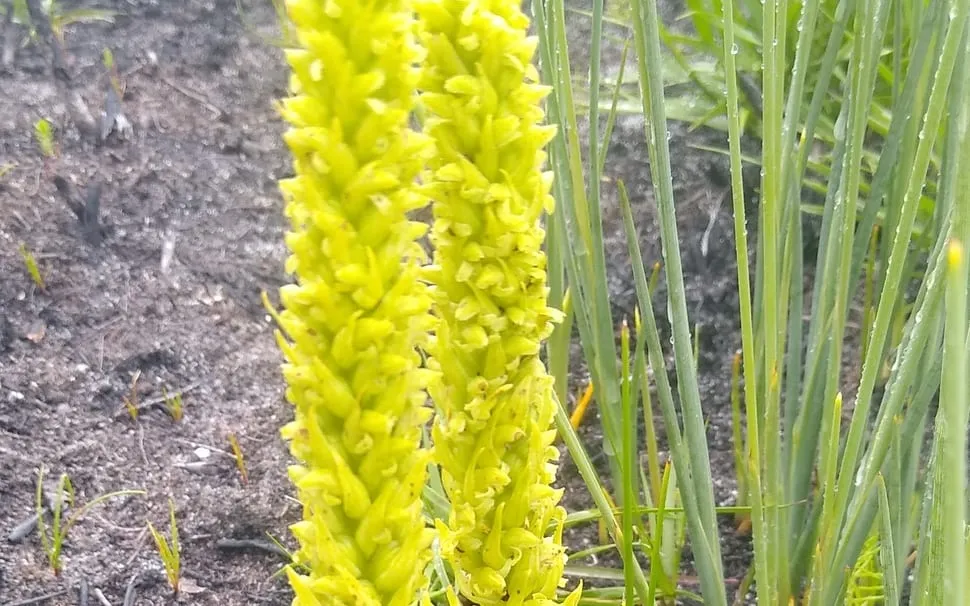
Disa cylindrica takes both its botanical and its common name from the shape of its flower spike, a dense narrow column of many small blooms packed tightly around a tall stem. It is a terrestrial orchid of South Africa, growing from a tuber in the grassy and marshy places of the Cape, and it belongs to the large African genus Disa without the bright colour of the streamside kinds. The flowers are modest, greenish to dull straw or brownish, and the neat spike shape is the main feature. A grower is far more likely to encounter it as a botanical curiosity than as a shop plant, so the account below concentrates on identification and on its seasonal cycle in the wild.
Appearance and character
A slim erect stem rises from a basal cluster of narrow leaves, topped by a cylinder of closely set small flowers that can run for a good part of the stem’s length. Each bloom is hooded, the upper sepal carries a short spur, and the overall colour is muted: green ageing to tan, occasionally washed with a dull purple. The tight, almost bottlebrush arrangement is the feature that names the plant and separates it at a glance from the looser-spiked disas. Leaves are grassy and slender, forming a tuft at the base that is easy to overlook among fynbos vegetation until the spike stands above the surrounding growth.
Where it is from
The plant is native to South Africa, occurring on seasonally damp flats, grassy slopes and marshy ground in the Cape region. It grows in a climate with cool wet winters and hot dry summers. In cultivation, it needs to grow while rain falls and the air is cool, then rest underground once the heat and drought of summer set in. It is adapted to ground that holds moisture through winter yet drains as summer arrives, so a stagnant permanently wet pot is quickly fatal.
How it grows
Like others in its genus, this orchid renews itself annually from an underground tuber. Fresh roots and leaves appear in the cool damp months, the plant uses that growth to refill its storage organ, and the tall spike extends and opens towards the end of the growing season. Once seed is set the foliage dies away and the tuber stays dormant through summer. Increase is slow and mostly by natural tuber offset, while seed germination depends on the fungal associates present in the soil, a requirement that makes deliberate propagation difficult outside a specialist setup.
Through the seasons
Cool damp months are the growing season. When rain returns and temperatures drop, water the plant back into leaf and keep the lean medium evenly moist.
Towards the end of that growing spell the column of flowers rises. Maintain moisture at the roots while the spike develops and opens.
As heat builds the leaves yellow and fade, and watering is steadily reduced so the tuber can enter rest.
Through the hot dry period the plant stays dormant below the surface, kept almost completely dry until cool weather and moisture return.
Care difficulty
This is a plant for the dedicated grower of Cape terrestrials. It needs a cool bright winter growing season, exceptionally free drainage, low-mineral water and a bone-dry summer rest. Warmth and stagnant moisture cause rapid root rot. The quiet flowers are a small display for a high level of effort, which is one reason it stays a specialist plant. It can be maintained if you can reproduce the seasonal cycle of its origin, but expectations should be modest.
Watering
Water according to the growing season instead of a fixed schedule. Begin as new growth appears in the cool damp part of the year, keeping the gritty medium moist but always freely drained so no water stands around the roots. Use rainwater or another source low in dissolved salts, since accumulated minerals gradually damage the fine root system. Ease back as the leaves age, then stop almost entirely once the plant dies down for summer, offering only the lightest occasional trace to keep the tuber from desiccating in a very dry pot.
Warning signs, diseases and pests
A tuber gone soft or roots turning dark and slimy indicate a medium held too wet, most dangerously during the summer dormancy, and the correction is drier storage in coarser material. Weak, etiolated growth and no spike usually mean insufficient light or a missed rest period. Under glass the usual pests appear. Aphids settle on the tender young spike, mealybugs and scale hide in the leaf bases, and spider mites come with hot dry air. Remove small numbers by hand and use a suitable mild control for stubborn ones, backed up with better ventilation.
Growing environment
Provide bright cool conditions with plenty of moving air through the winter growth, along the lines of a cold greenhouse or a cool bright frost-free room, and avoid warm stuffy corners. Use coarse sand, grit and a little organic fibre so the compost drains almost instantly, and keep the roots cool by standing the pot away from heat sources. The plant grows in open sunlit fynbos, so it needs good light instead of the dim shade some houseplants prefer.
Feeding
Feed sparingly, if at all. The soils of its habitat are poor and regularly leached, so a single very dilute balanced feed or two across the winter growing period covers its needs. Heavy or frequent feeding leaves damaging salt residues and produces lush growth that rots easily. Once the plant enters dormancy, feeding stops completely, because a resting tuber takes up nothing from the medium.
Troubleshooting
Why are the flowers so plain? That is the nature of the species; its interest is botanical rather than showy.
My plant died down in summer, is it dead? Probably not, if the tuber is firm. This is its normal dormancy, so keep it dry and cool and wait for the growing season.
What water is safe? Low-mineral water such as rain or reverse osmosis, because hard tap water harms the roots over time.
How do I propagate it? Chiefly by slow natural tuber increase; seed needs particular soil fungi and rarely succeeds in ordinary pots.
Is it a risk to pets? No serious toxicity is recorded for the genus, though it is wise to keep any orchid out of reach of pets that chew plants.
Column Disa problem guides
Not sure what is wrong? See the common houseplant pests guide.