
Houseplant
Vlei Disa
Disa racemosa
Also known as Disa racemosa
How to grow Disa racemosa, the vlei disa, a tall pink Cape orchid of seasonal marshes that stands in shallow water in winter and dries out in summer.
At a glance
- Difficulty
- Difficult
- Water
- Kept very wet through winter growth; dry through the summer rest
- Light
- Bright light with good air movement
- Temperature
- Cool; frost-free, roughly 5 to 25 deg C
- Humidity
- High
- Hardiness
- USDA 9-10, RHS H2, hardy to 0 C
- Type
- Perennial
- Height
- 20-40 cm
- Native to
- South Africa
A winter-rainfall orchid of Cape marshes, growing in wet ground through cool winters and dormant as a dry tuber through the summer. It takes a light chill but not a hard frost, and it dislikes hot, stagnant air. Keep it cool, bright and well ventilated while it is in growth, and dry and cool while it rests.
Hardiness zones describe winter cold alone. Summer heat, humidity, rainfall and the length of the growing season decide as much, so treat the range as the outer limit rather than as a recommendation.
Not known to be toxic
Disa racemosa, the vlei disa, is not recorded among the seriously toxic plants, and related plants in its group are not listed as toxic by the ASPCA or the RHS. A pet or child that chewed a leaf would be unlikely to come to real harm beyond a possible mild stomach upset.
Sources: ASPCA toxic and non-toxic plants, RHS potentially harmful garden plants
About
Disa racemosa is one of the taller pink disas of the Cape, named for the raceme of open flowers it carries and known to growers as the vlei disa. A vlei is the Afrikaans word for a seasonal marsh, and that is where this orchid lives, in shallow standing water and waterlogged flats that fill through the wet Cape winter and dry out over summer. It is a strong tuberous terrestrial of South Africa, more substantial and more colourful than many of its relatives, with clear pink blooms among reeds and sedges. It is demanding in cultivation, so these notes explain the wetland cycle it depends on.
Appearance and character
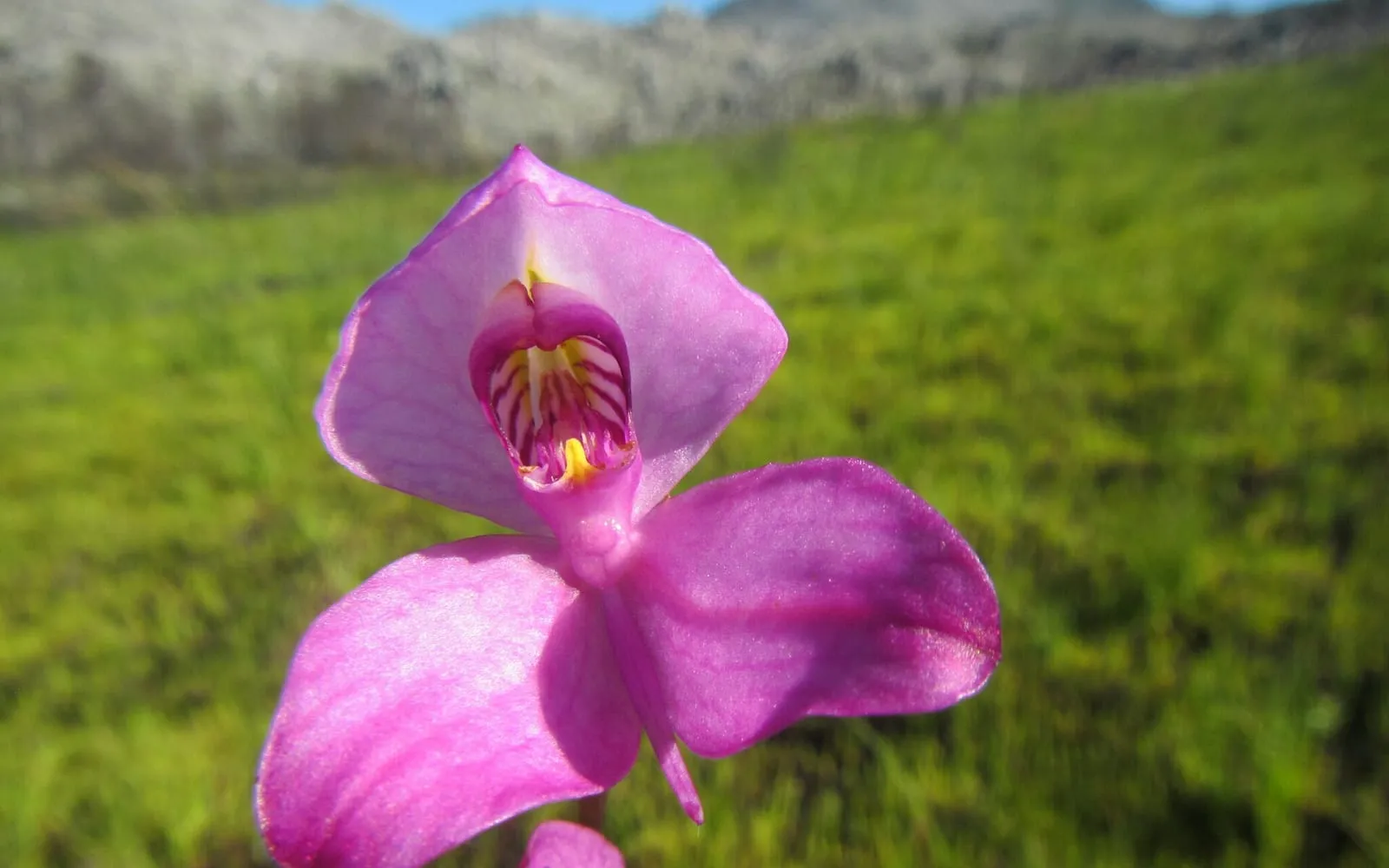
The plant produces a stout upright stem carrying a loose raceme of several to many flowers, each a good size for the genus and coloured soft to bright rose-pink, often with deeper veins or a paler throat. The hooded upper sepal, spreading lateral sepals and small inner parts follow the familiar disa pattern. Fleshy narrow leaves cover the lower stem and form a basal group, adapted to a life half-submerged in seasonal marsh. The whole plant is taller and more visible than the small ground-hugging disas.
Where it is from
The species is native to South Africa, growing in seasonal marshes, vleis and permanently seepy flats across the winter-rainfall southwestern and southern Cape. Through the cool wet season these low-lying places flood or stay saturated, and the orchid grows with its roots in moving, oxygen-rich water. As summer arrives, the marshes dry and the plant retreats to its tuber. Unlike sandy or rocky disas, this species needs abundant clean water during growth, but the roots still need air rather than stagnant water.
How it grows
Each year the underground tuber renews itself. With the winter rains the plant develops roots and leaves in saturated ground, builds its reserves, then sends up the tall pink raceme as the season matures, sets seed and dies back for the dry summer. Established plants can slowly form offset tubers. Seed is fine and relies on soil fungi for germination in the wild, so raising it that way is difficult. Careful division of dormant tubers is the more practical way to make more plants.
Through the seasons
Winter wet is the growing season. As the rains arrive the plant develops in saturated ground, so a cultivated specimen is watered generously and kept very wet while it is in leaf.
Late in the growing season the tall pink raceme rises; maintain wet, aerated conditions at the roots while it flowers.
Onset of summer dries the marsh in the wild, and watering is steadily withdrawn as the leaves yellow.
Summer drought is the dormancy; the plant dies down and the tuber sits dry and cool until the rains return.
Care difficulty
This is a difficult orchid for anyone without experience of wetland Cape terrestrials. The difficulty is the strong wet-then-dry cycle. During growth it needs abundant clean, moving soft water around aerated roots. During rest it needs near-total dryness. Mixing those two phases rots it quickly. The practical challenge is keeping a plant thoroughly wet without letting the water become stagnant and warm. It needs the flooded winter and dry summer of a Cape vlei.
Watering
Watering has two clear phases. Through the winter growing season the plant is kept very wet, often standing in a tray of soft water to imitate the marsh, provided that water is low in minerals. Use rainwater or reverse-osmosis water throughout, since dissolved salts build up and harm the roots. As the leaves age towards summer, remove the reservoir and dry the plant off. Keep the tuber almost completely dry through dormancy, with only a very occasional trace of water if it starts to shrivel.
Warning signs, diseases and pests
Rotting roots and a soft tuber usually mean water went stagnant and warm during growth, or the pot stayed wet through the summer rest. Use fresh soft water, improve aeration and keep the tuber dry in dormancy. Weak, drawn growth and no raceme point to poor light or a missed rest. Under glass, aphids gather on the developing spike, mealybugs and scale shelter in leaf bases, and spider mites take hold in dry warm air. Remove light infestations by hand, treat heavier ones with a suitable control, and keep air circulating to discourage them.
Growing environment
Give bright, cool conditions with good airflow through the winter growth, such as a cold greenhouse or a bright frost-free room, and keep the roots cool instead of warm. The compost needs to hold a great deal of water yet stay open, so a mix of coarse sand, grit, perlite and a little fibre works better than heavy peat, which turns sour when saturated. Strong light suits it, since it grows in open sunlit marshland. Avoid still air in a warm corner.
Feeding
Feed lightly. Wetland soils flushed by winter rain are not rich, so a very dilute balanced feed once or twice during active growth is sufficient. Because the plant is kept so wet, feed salts move around and can build up readily, so keep the dose weak to avoid damaging the roots. Give no feed during the dry summer dormancy.
Troubleshooting
Can I really keep it standing in water? During active winter growth, yes, provided the water is soft and fresh and the medium stays aerated, since it grows in seasonal marsh. Dry it right off for summer.
Is a summer-dormant plant dead? Not if the tuber is firm. Dryness in summer is its natural rest, so keep it dry and cool until the wet season.
What water should I use? Rainwater or reverse-osmosis water, because hard water leaves damaging salts.
How is it propagated? By slow division of dormant offset tubers; seed needs specific fungi and rarely germinates in ordinary pots.
Is it a hazard to pets? No serious toxicity is recorded for the genus, but keep pets from chewing the leaves as a precaution.
Vlei Disa problem guides
Not sure what is wrong? See the common houseplant pests guide.