
Houseplant
Pungent Disa
Disa obtusa
Also known as Disa obtusa
How to grow Disa obtusa, the pungent disa, a Cape coastal orchid of sandy winter-wet flats with scented, muted pink and tawny flowers.
At a glance
- Difficulty
- Difficult
- Water
- Evenly moist in growth; ease off for any rest
- Light
- Bright light, with open sun in growth
- Temperature
- Cool; keep frost-free, about 5 to 18 deg C in growth
- Humidity
- Average, with good airflow
- Hardiness
- USDA 9-11, RHS H2, hardy to 2 C
- Type
- Perennial
- Height
- 15-30 cm
- Native to
- South Africa
An orchid of sandy, winter-wet flats in the Western Cape, where winters are cool and mild and summers are dry. It grows through cool, bright, moist months and needs a dry summer rest, so a frost-free but cool winter suits it better than warmth.
Hardiness zones describe winter cold alone. Summer heat, humidity, rainfall and the length of the growing season decide as much, so treat the range as the outer limit rather than as a recommendation.
Not known to be toxic
Disa obtusa, the pungent disa, is not recorded among the seriously toxic plants, and related plants in its group are not listed as toxic by the ASPCA or the RHS. A pet or child that chewed a leaf would be unlikely to come to serious harm beyond a possible mild stomach upset.
Sources: ASPCA toxic and non-toxic plants, RHS potentially harmful garden plants
About
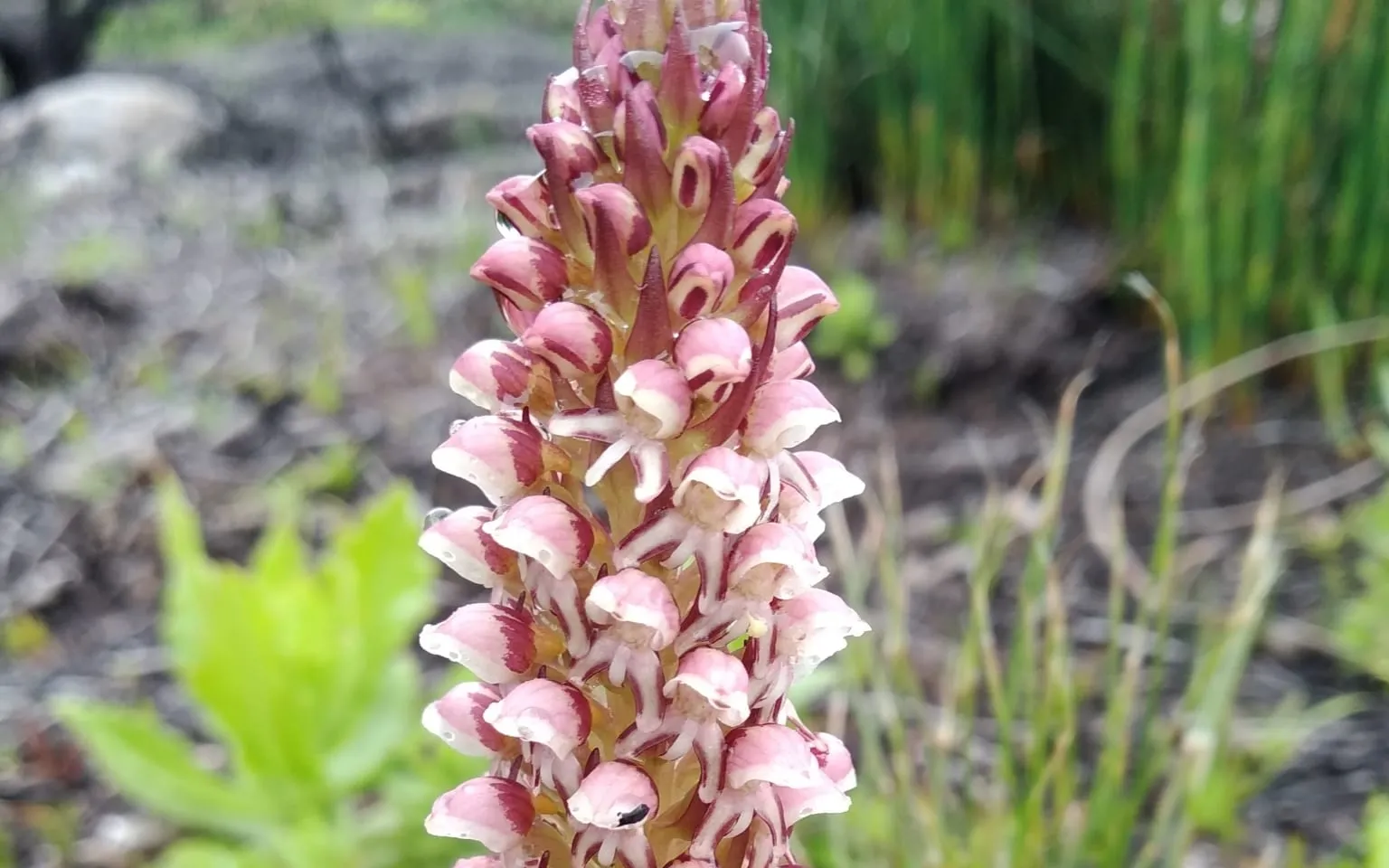
Disa obtusa is a modest terrestrial orchid of the Cape coast and lowlands in South Africa, its species name referring to the blunt, rounded tips of its flower parts. Growers know it as the pungent disa for the scent its blooms give off, a smell that draws the insects it depends on for pollination. The flowers are small and carried in shades of dull pink, salmon and buff instead of in bold colour, so it is mostly grown for botanical interest. Like its relatives it survives the dry Cape summer as an underground tuber and grows through the wet cool season. Because it is seldom cultivated and demanding when it is, the notes below focus on how to recognise it and understand its seasonal cycle in coastal fynbos.
Appearance and character
A flowering plant carries a short spike of a few to several small blooms on an upright stem. The flowers have the blunt, softly rounded sepals that give the species its name, coloured in muted pinks and tawny tones, with the usual disa arrangement of a hooded upper sepal, spreading laterals and small inner parts. A scent, often described as pungent or slightly musky, rises from the spike and is part of its identity. The leaves form a low basal group of narrow blades, greyish-green and inconspicuous, blending into the sandy coastal vegetation until the fragrant spike stands clear.
Where it is from
This orchid is native to South Africa, growing on coastal sands, dune slacks and low seasonally moist flats within the winter-rainfall Cape. Its home sees mild wet winters cooled by the sea and dry warm summers, and the plant is adapted to sandy ground that holds moisture through the growing months yet dries readily. Salt-laden coastal air and free-draining sand are the everyday conditions of its habitat, which tells a grower that it needs excellent drainage and dislikes the heavy stagnant compost that suits leafy houseplants.
How it grows
The plant renews itself each year from a small tuber. Roots and leaves appear with the winter rains, the plant builds up reserves, and a scented flower spike rises towards the end of the growing season before the foliage dies and the tuber rests through summer. Increase in the wild is slow, by natural tuber offset, while the fine seed needs the right soil fungi to germinate. That combination of a strict seasonal cycle and a fungal germination requirement makes the species difficult to raise deliberately away from its coastal home.
Through the seasons
Onset of winter rain starts the tuber back into growth; new roots and leaves form, and a potted plant is watered at this point.
Deep winter is the main growing season under cool bright conditions, when the sandy medium is kept evenly moist and the tuber rebuilds its reserves.
Spring brings the fragrant flower spike as the light grows stronger and watering starts to ease.
Summer is total dormancy; the leaves shrivel, water is withheld, and the tuber rests underground through the warm dry months.
Care difficulty
This is a difficult plant for anyone but a specialist. It requires cool bright winter growth, extremely open sandy drainage, low-mineral water and a dry summer rest, and it rots quickly if kept warm and wet at the tuber. The practical difficulty is that its small flowers do not give much display for the effort of reproducing a coastal Cape winter, so it stays a collector’s plant. Follow its natural cycle and provide sharp drainage and it can be maintained, but casual care will not keep it.
Watering
Let the season set the watering. Begin as the winter rains would return, keeping the sandy medium moist yet always free-draining so no water pools at the roots. Rainwater or reverse-osmosis water suits it best, since accumulated minerals from hard water damage the delicate roots over time. Cut back as the leaves age in spring, then stop nearly all watering once the plant dies down for summer, offering only the occasional light trace to keep the resting tuber from shrivelling in a bone-dry pot.
Warning signs, diseases and pests
Soft tubers and dark rotten roots come from a medium held too wet, above all during the summer rest, and drier, sandier storage corrects it. Thin drawn leaves and an absent spike usually mean insufficient light or a missed rest period. Under glass, aphids settle on the tender young spike, mealybugs and scale shelter among the leaf bases, and spider mites appear in hot dry air. Remove small infestations by hand and use a suitable mild treatment for heavier ones. Good air movement makes pest problems less likely.
Growing environment
Provide a bright cool spot with good ventilation for the winter growth, such as a cold greenhouse or a cool bright frost-free room, and steer clear of warm stuffy positions. The compost should be dominated by coarse sand and grit with only a little fibre, mimicking the free-draining coastal soils of its home so water passes straight through. Keep the pot off heated surfaces so the roots stay cool, and give it strong light instead of deep shade, since it grew in open sunlit sandveld.
Feeding
Feed sparingly. Coastal sand is a poor medium and the plant is built for lean conditions, so a single very dilute balanced feed or two during active winter growth is all it needs. Heavier feeding leaves salt residues that harm the roots and forces soft growth prone to rot. During summer dormancy, feeding stops altogether, because the resting tuber takes up nothing from the pot.
Troubleshooting
Why does my pungent disa smell? The scent is natural and part of how it attracts pollinators, so a musky or pungent odour from the spike is expected.
Is a plant that died down in summer dead? Probably not, if the tuber is firm. This is its normal dormancy, so keep it dry and cool until the wet season.
Which water is safe? Rainwater or reverse-osmosis water, because hard tap water gradually harms the roots.
How do I propagate it? Chiefly by slow tuber offset; seed needs particular soil fungi and rarely germinates in ordinary pots.
Does it threaten pets? No serious toxicity is recorded for the genus, though it is prudent to keep pets from chewing the foliage.
Pungent Disa problem guides
Not sure what is wrong? See the common houseplant pests guide.