
Outdoor plant
White Cushion Moss
Leucobryum glaucum
Also known as Pincushion moss, Cushion moss
How to grow white cushion moss, Leucobryum glaucum, in a shaded rockery or moss garden. Its pale colour when dry, and why it dislikes lime.
At a glance
- Difficulty
- Moderate
- Water
- Regular watering in dry spells; tolerates brief drought once established
- Light
- Partial to full shade
- Hardiness
- USDA 4-8, RHS H6, hardy to -25 C
- Type
- Perennial moss
- Height
- 5-15 cm
- Native to
- Europe, North America, East Asia
Hardy through cold temperate winters with no protection needed, and much more tolerant of periodic drying than the true bog sphagnum mosses, since its dense, rounded cushion shape sheds excess water and holds a reserve at its core rather than needing to stay permanently saturated throughout. Acidic soil matters more to its survival than any specific temperature range.
Hardiness zones describe winter cold alone. Summer heat, humidity, rainfall and the length of the growing season decide as much, so treat the range as the outer limit rather than as a recommendation.
Not known to be toxic
White cushion moss has no toxicity listing from the RHS or the ASPCA and poses no known hazard to pets, children or wildlife.
Source: RHS
About
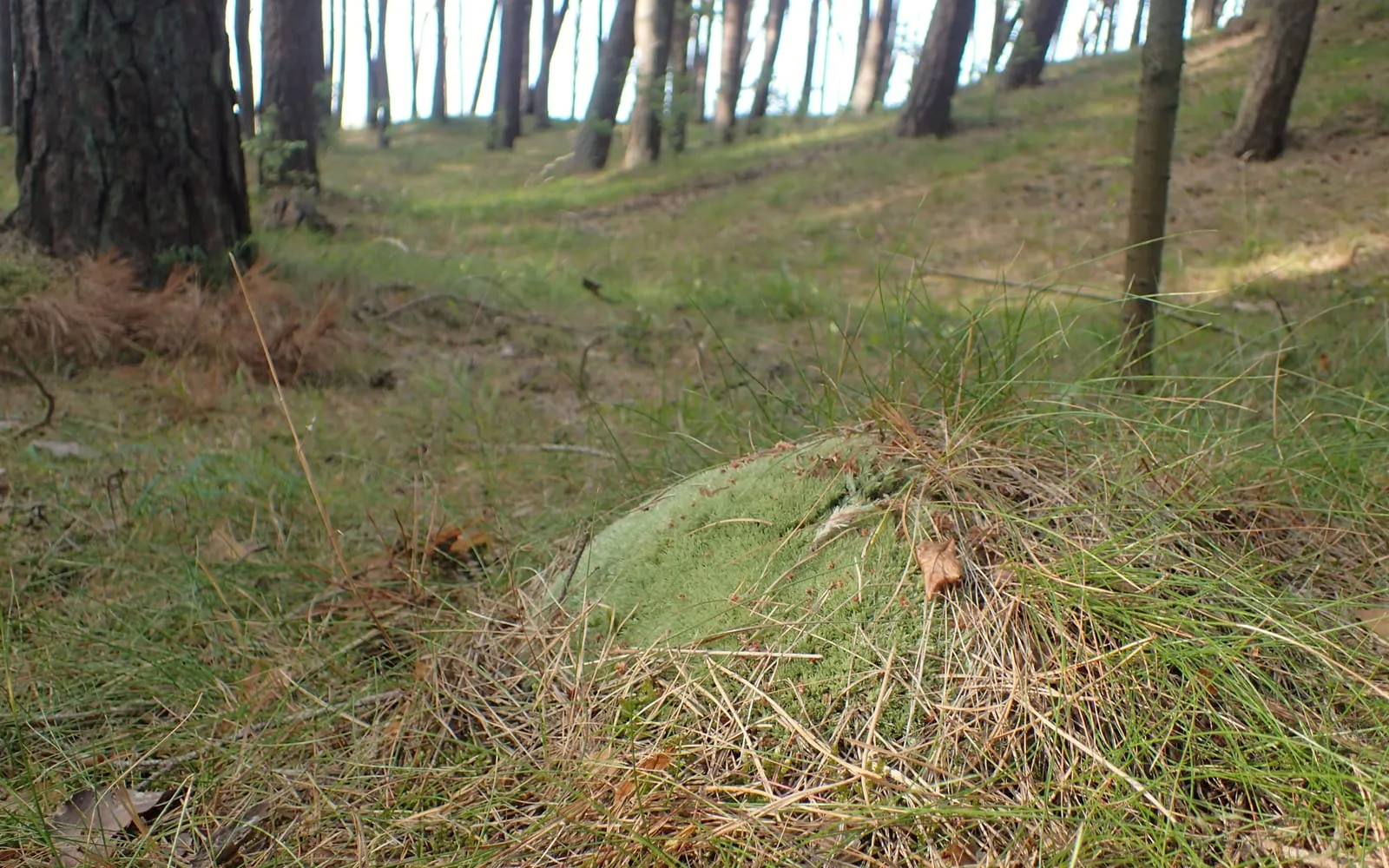
White cushion moss forms neat, rounded, pale green hummocks in acidic woodland, prized by gardeners building a shaded rockery or Japanese-style moss garden for the distinctive pillow-like shape it holds even as it grows, quite unlike the flatter mats formed by many other common mosses. Its pale, slightly bluish-green colour, brightening almost to white when dry, gives the species both its common name and a useful visual cue for judging how much moisture it currently holds.
Individual cushions can persist and slowly enlarge for many years in undisturbed acidic woodland, and old, well-established hummocks are sometimes moved whole, with a portion of their base substrate intact, when creating a new moss garden, since the species establishes much faster this way than from small fragments.
Appearance and character
Densely packed upright stems, each covered in small, narrow, pale whitish-green leaves, build up into a rounded, springy cushion that holds its shape well even when handled, unlike the flatter, less structured mats of many other mosses. The colour shifts noticeably with hydration: a well-watered cushion looks a fuller, slightly bluer green, while a dry one pales toward silvery white as the leaf cells lose water.
Each leaf contains large, empty, water-storing cells alongside narrower photosynthetic ones, a structural similarity to sphagnum that gives this moss some of the same water-holding capacity, though it is found in drier, better-drained situations than a true bog moss would tolerate.
Where it is from
Acidic woodland, heathland and decaying wood across Europe, North America and East Asia, typically in the dappled shade of coniferous or mixed woodland, often growing directly on old stumps and fallen logs as well as on acidic soil.
Its tolerance of growing on decaying wood as readily as on soil reflects an adaptable, opportunistic habit within its acidic, shaded habitat preference, and explains why it often turns up on old tree stumps in a garden alongside more conventional soil-based mossy patches.
How it grows
A perennial moss that grows outward and upward from the edges and surface of an established cushion, gradually enlarging over years rather than spreading rapidly across open ground. Individual cushions can fuse with neighbouring ones over time, eventually forming a more continuous mossy carpet from what began as several separate hummocks.
Because each cushion holds a reserve of water within its dense structure, established plants tolerate short dry periods much better than their delicate appearance might suggest, drawing on this internal reserve before showing visible stress.
Through the seasons
Spring: Active growth resumes as temperatures rise and rainfall is typically reliable in most temperate climates.
Summer growth can slow in hot or dry conditions, with cushions paling as they lose water, though they generally green up again quickly once rain or watering resumes.
Autumn growth often picks up again as temperatures cool and moisture becomes more consistent.
Winter the moss persists through frost with little visible damage, remaining a useful source of winter green in a shaded garden.
Care difficulty
Moderate. Established cushions are fairly forgiving of short dry spells, but the plant has a firm requirement for acidic soil that, if not met, prevents it establishing at all regardless of how carefully it is watered. Testing and, if necessary, amending soil pH before planting matters more than any ongoing routine.
Watering
Regular watering during dry spells keeps cushions looking their best pale green colour rather than the silvery white of a dehydrated one, though established plants recover well from brief drought thanks to the water reserve held within their dense structure. Avoid prolonged waterlogging, since this species prefers well-drained acidic ground over the constantly saturated conditions a true bog moss favours.
Warning signs, diseases and pests
This moss has few significant pests or diseases in cultivation. The most common issue is failure to establish at all, which is almost always down to unsuitable soil chemistry rather than any pathogen; alkaline or neutral soil, particularly where lime has been applied for other plants nearby, prevents this species taking hold regardless of how much water and shade it is given.
A cushion that has turned uniformly brown and crumbly, rather than the pale silvery colour of simple dehydration, has likely died rather than merely dried out, and is best removed and replaced with a fresh, healthy piece on properly prepared acidic ground.
Growing environment
Partial to full shade suits it well, ideally beneath trees that create the kind of dappled woodland light this species experiences naturally. Acidic, well-drained soil is essential, and testing soil pH before attempting to establish a colony is worthwhile, since no amount of watering or shade compensates for soil that is too alkaline.
Feeding
None is appropriate. This moss is adapted to acidic, nutrient-poor conditions, and fertiliser is more likely to encourage competing weeds or algae than to benefit the moss itself.
Troubleshooting
A newly planted patch has failed to establish. Check the soil pH first; this is the most common reason for failure, and correcting alkaline or neutral soil with an acidic amendment before replanting usually resolves it.
Cushions have turned pale, almost white. This is usually simple dehydration rather than a sign of disease. Water the area and expect the colour to recover to a fuller pale green within a few days.
A cushion has turned brown and crumbly rather than pale. This generally indicates the moss has died rather than merely dried out. Remove it and replant with fresh material once the underlying soil conditions have been checked and corrected if needed.
Growth is very slow even in apparently good conditions. This is a naturally slow-growing moss, and modest, gradual enlargement of an established cushion over each growing season is the normal pace to expect rather than a sign that anything is wrong.
A cushion moved from a mature woodland site has failed to settle in. Transplanting a larger, established cushion complete with some of its original base substrate generally succeeds far more reliably than moving a small, bare fragment, since the moss suffers less root and structural disturbance this way. Keep a newly moved cushion consistently damp and shaded for several weeks while it reconnects with the surrounding soil.