
Outdoor plant
Bogbean
Menyanthes trifoliata
Also known as Buckbean, Marsh trefoil
How to grow bogbean, Menyanthes trifoliata, at a pond margin or bog garden. Planting depth, its fringed spring flowers, and why it needs poor, boggy ground.
At a glance
- Difficulty
- Moderate
- Water
- Constantly wet, boggy soil or shallow water
- Light
- Full sun to light shade
- Hardiness
- USDA 3-9, RHS H7, hardy to -30 C
- Type
- Hardy aquatic perennial
- Height
- 15-30 cm above water
- Native to
- Europe, Northern Asia, North America
Very hardy and adapted to cold, nutrient-poor bogs, fens and shallow pond margins across the whole northern temperate zone. It struggles more with rich, fertile soil than with cold, since a nutrient-poor upbringing in peaty ground has left it a poor competitor once other plants have enough food to grow faster and shade it out.
Hardiness zones describe winter cold alone. Summer heat, humidity, rainfall and the length of the growing season decide as much, so treat the range as the outer limit rather than as a recommendation.
Not known to be toxic
- Safe to eat
- The dried, ground rhizome has a long history as a bitter tonic and, in times of famine, a bread substitute once thoroughly leached of its bitterness
Bogbean has no toxicity listing from the RHS or the ASPCA. It is genuinely bitter raw, which has historically limited how much of it anyone or anything eats, but the bitterness is a matter of unpalatability rather than a warning sign; herbalists have used the dried leaf and rhizome as a bitter tonic for centuries with no toxic dose established. It is a safe choice at a pond visited by pets or children.
Source: RHS
About
Bogbean is a low, creeping plant of cold northern bogs and fen edges, grown in gardens for its unusual fringed white flowers in late spring and for the fact that it thrives in the poor, waterlogged ground that defeats most other plants. Despite the name, it is not related to the bean family at all; the name comes from the three-part leaf, which resembles a broad bean leaflet.
It is a plant for the awkward wet corner of a garden rather than the ornamental centrepiece of a pond, and it earns its place by growing well somewhere little else will.
Appearance and character
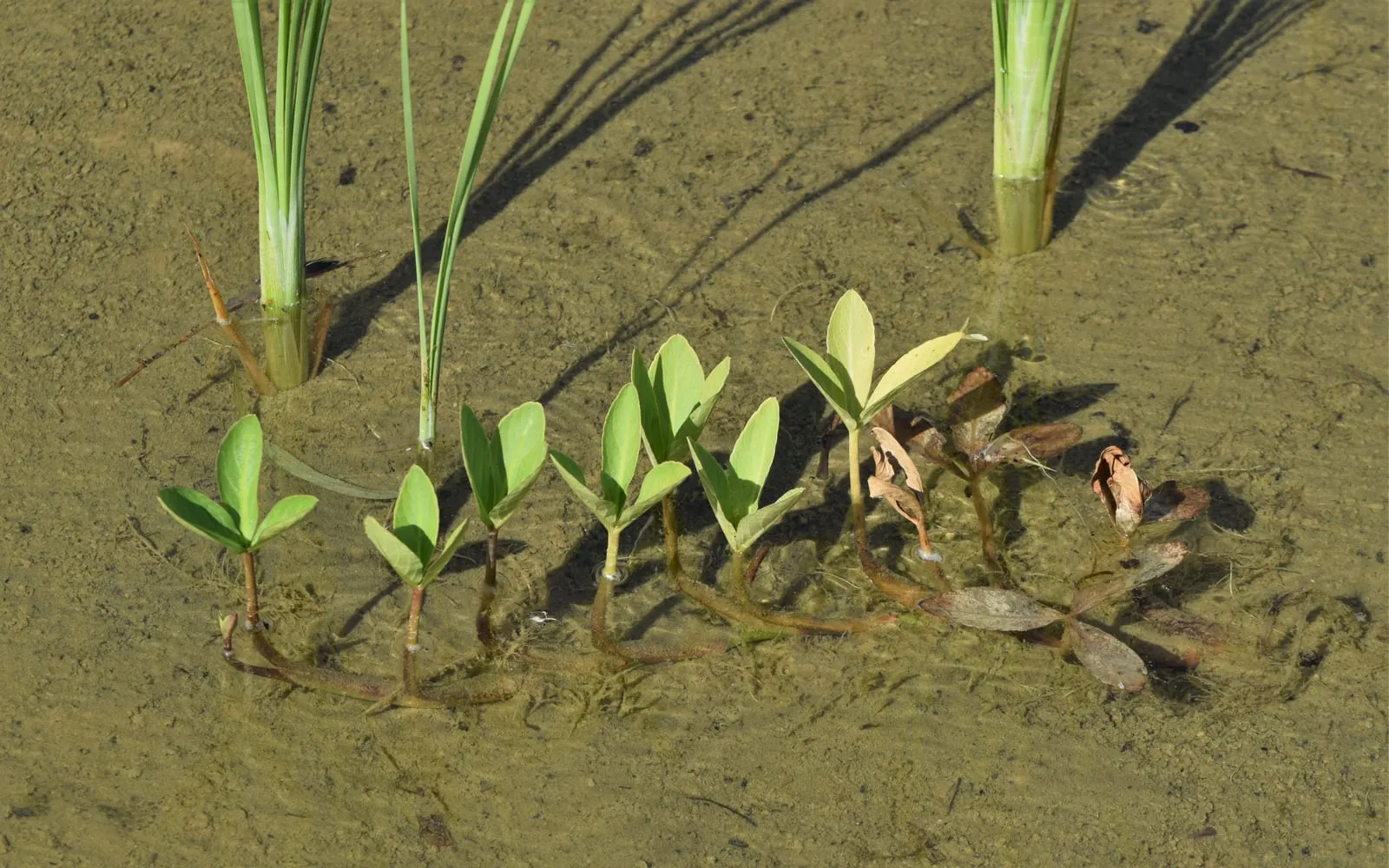
Leaves are divided into three broad, oval leaflets on a long stalk, held just above the water or mud, giving the plant its clover-like or bean-like look from a distance. They arise in a loose row along a thick, creeping rhizome that floats or lies just on the surface of soft mud.
Flowers open in April and May on short spikes above the leaves, each one white flushed with pink on the outside and, unusually, fringed with fine white hairs along the inner surface of each petal, a texture unlike almost any other British native plant. The effect at close range is delicate and a little strange, closer to a sea anemone than a typical garden flower.
Where it is from
Cold bogs, fens, shallow lake margins and wet moorland pools across the whole northern temperate zone: Europe, northern Asia and North America. It is a plant of nutrient-poor, acidic to neutral wet ground rather than rich garden soil.
That origin in poor ground is the key to growing it well. In its native bogs it survives by tolerating conditions few competitors can, not by out-competing them for nutrients, and it responds badly when given rich soil that lets faster-growing plants crowd it out.
How it grows
A hardy perennial spreading by a thick, buoyant rhizome that creeps across the surface of soft mud or shallow water, rooting as it goes and sending up new leaf and flower stalks at intervals. Growth is steady rather than fast, and a young planting can take two or three seasons to form a dense enough mat to flower well.
Because the rhizome floats and roots loosely rather than anchoring deeply, it is easily separated into small self-contained sections, which is the standard way to propagate and share it.
Through the seasons
Spring is the main event: new leaves emerge as the water warms, followed by the fringed flower spikes through April and May.
Summer growth continues at a gentler pace once flowering has finished, with the rhizome extending across the available wet ground.
Autumn growth slows as temperatures drop, though the leaves often persist later into the year than many other pond marginals.
Winter the rhizome is dormant but fully hardy, surviving hard frost and ice with no protection needed.
Care difficulty
Moderate, and the difficulty is entirely about matching its preference for poor, boggy ground rather than about any complicated routine. Planted in ordinary rich garden soil or a heavily fed pond basket, it is quickly outcompeted and fades. Planted in the cold, nutrient-poor wet corner it prefers, it needs almost no attention at all, which is why gardeners who have grown it for years often describe it as fussy about placement but undemanding once settled.
Watering
Permanently wet is essential, whether that is a shallow pond margin with a few centimetres of standing water or a boggy patch of ground that never dries between rain. It does not tolerate drying out even briefly during the growing season.
Plant directly into boggy soil at a pond edge, or into an aquatic basket filled with a lean, low-nutrient mix rather than standard aquatic loam, which is often too rich for it.
Warning signs, diseases and pests
Few pests trouble bogbean beyond occasional grazing by slugs and snails on young leaves at the waterline, which rarely does lasting damage to an established mat.
The main sign of trouble is the plant fading and being crowded out, which happens in rich soil or a densely planted pond margin where faster growers outcompete it for light and space. There is no disease to treat in this case. The fix is moving it to poorer, less crowded ground, ideally with a season or two of headroom before neighbouring plants close in again.
Yellowing leaves in an otherwise healthy planting are often just the normal autumn die-back rather than a problem.
Growing environment
Full sun to light shade both suit it, and it flowers reasonably well in either. The one condition that matters more than light is nutrient level: poor, peaty or otherwise low-fertility wet ground suits it far better than a rich border soil or a heavily fertilised pond basket.
Cold is never a limiting factor; this is one of the hardiest plants available for a pond margin.
Feeding
None needed, and feeding is more likely to harm this plant than help it. Rich soil or added fertiliser favours faster-growing neighbours that then shade bogbean out, so the best service you can do it is to leave the soil lean and keep it away from heavily fed planting schemes.
Troubleshooting
The plant is fading and being crowded out by neighbours. Almost always a sign the soil is too rich or the planting too dense. Move it to poorer, less crowded wet ground, or give it its own lean aquatic basket away from vigorous companions.
No flowers despite healthy-looking leaves. Young plantings often take two or three seasons to build up enough rhizome to flower freely. Patience is usually the fix rather than any change of care.
Leaves grazed with ragged holes near the waterline. Check for slugs and snails, though damage is rarely serious enough to need more than occasional hand removal.
The rhizome has drifted away from where it was planted. It floats loosely by nature. Anchor it lightly with a stone or a length of wire hoop if it needs to stay in a particular spot, without crushing the rhizome itself.