
Outdoor plant
Alexander
Zanthoxylum flavum
Also known as West Indian Satinwood, Yellow Sanders, Yellowheart
How to grow West Indian satinwood, Zanthoxylum flavum, the Caribbean timber tree behind golden satinwood, now rare through over-cutting.
At a glance
- Difficulty
- Moderate
- Water
- While young and in dry spells; established trees need little
- Light
- Full sun to light shade
- Temperature
- Tropical and frost-tender; keep above about 5 deg C
- Hardiness
- USDA 10-11, RHS H2, hardy to 4 C
- Type
- Slow-growing evergreen tree
- Height
- Up to 15 m
- Native to
- The Caribbean
A tropical tree of the Caribbean, with no frost tolerance, so it grows outdoors only in warm, frost-free climates and is otherwise a large conservatory or glasshouse subject. It copes with the thin, rocky, limy soils and salt-laden air of its island home and with drought once established, but it grows slowly and will not stand cold.
Hardiness zones describe winter cold alone. Summer heat, humidity, rainfall and the length of the growing season decide as much, so treat the range as the outer limit rather than as a recommendation.
Not known to be toxic
The living tree is not listed as poisonous by the ASPCA or the RHS, and like other members of the citrus family it carries harmless aromatic oils in its leaves and bark. One caution applies to the timber instead of the plant: the fine golden wood, worked as satinwood, produces a sawdust that has irritated the skin and airways of woodworkers, as several tropical cabinet woods do. A child or pet in the garden meets no such hazard from the growing tree.
Sources: RHS potentially harmful garden plants, ASPCA toxic and non-toxic plants
About
West Indian satinwood is a slow-growing Caribbean tree of the citrus family, grown and once heavily felled for high-value cabinet timber. Its golden, lustrous heartwood, called satinwood, was worked into fine furniture, marquetry and veneer through the eighteenth and nineteenth centuries, and West Indian satinwood was rated above the East Indian kind for colour and figure.
That value damaged the species badly. Heavy cutting over centuries stripped the big trees from many islands, and it is now rare or locally endangered across much of its range and protected in places.
The app lists it under the name Alexander, one of several local names for it, alongside yellow sanders and yellowheart. Whatever it is called, it is an aromatic evergreen for a warm climate, and growing one helps conserve a much-reduced tree.
Appearance and character
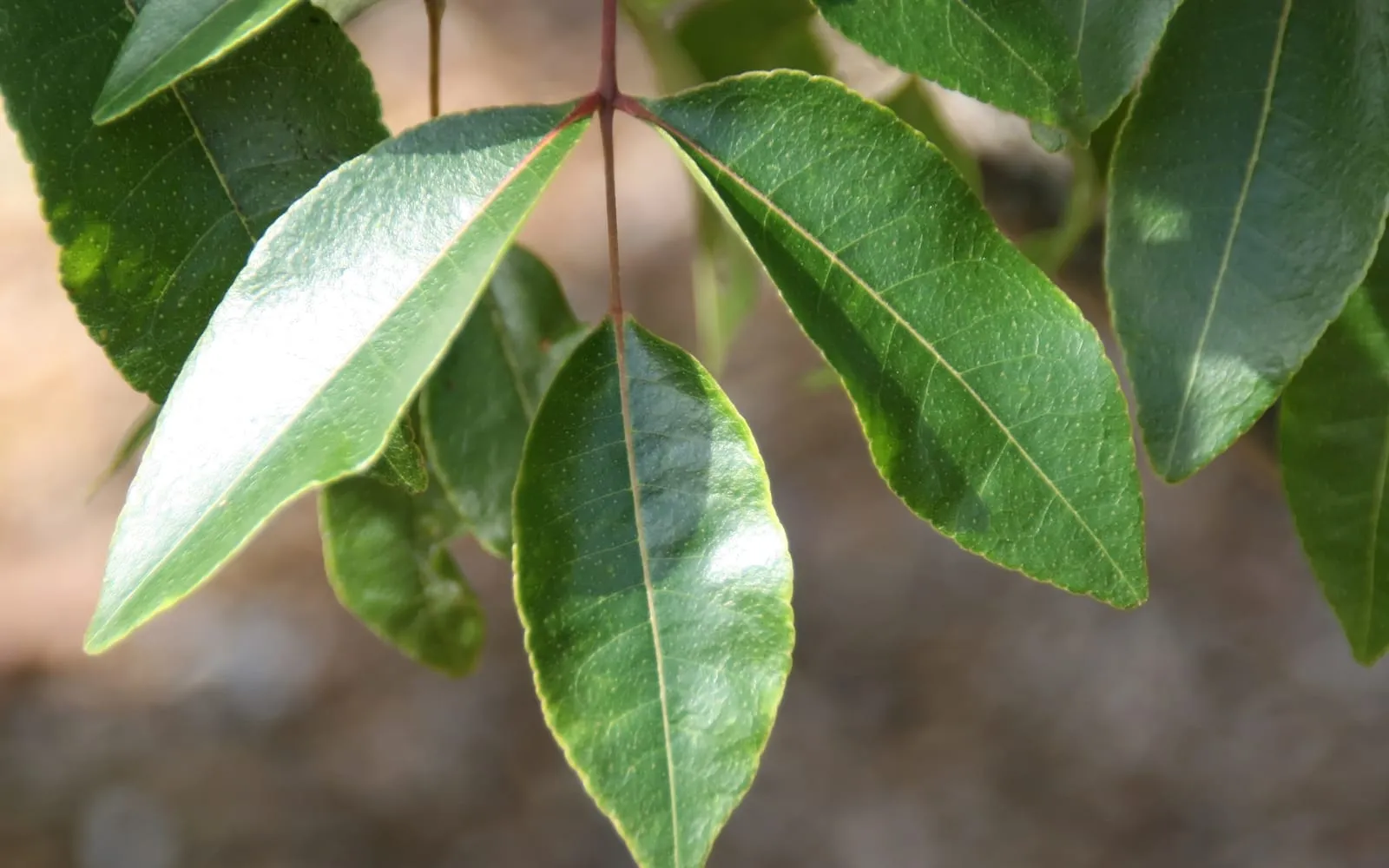
Leaves are pinnate, made up of several small, glossy, dark green leaflets dotted with tiny oil glands that scent the foliage when crushed, in the way of the citrus family generally. The tree is evergreen in its frost-free home.
Bark is smooth and pale grey on younger wood, and the trunk of an old tree is straight and clean, which is part of what made it such a useful timber.
Flowers are small, greenish or cream, borne in loose clusters, with male and female flowers usually on separate trees, so fruit forms only on female specimens.
Fruit is a small dry capsule that splits to shed a shining black seed, aromatic like the rest of the plant.
The heartwood is fine-grained, golden to warm honey-coloured and satiny when polished. It is heavy and slow-grown, which is why it was cut faster than it could replace itself.
Where it is from
Zanthoxylum flavum grows in the West Indies and the Bahamas, in dry coastal and limestone forest on thin, rocky soils, in the warm, frost-free climate of the Caribbean. It once reached the Florida Keys as well.
Its island habitat shapes it. It tolerates poor, rocky, limy ground, salt air and drought, and it grows slowly and densely, building the fine, heavy wood it is known for. What it cannot take is cold, which confines it to tropical and subtropical gardens.
How it grows
It grows slowly into an upright tree with a rounded crown, in full sun or light shade, on free-draining ground. Patience is the main requirement, since even a well-tended tree takes many years to gain size.
Plant it in a warm, sheltered, frost-free spot with good drainage, and water it through its early years to establish a strong root system. Once settled it copes with drought and poor soil like wild trees.
In a climate too cold for it outdoors, it can be grown as a large pot or glasshouse tree kept above about 5 deg C, though its eventual size makes that a commitment. Prune only to shape, in gloves, as the young stems can carry small prickles.
Grow it as a specimen and a conservation plant, not for quick effect. A tree raised in a garden takes pressure off the dwindling wild population and, given decades, becomes a substantial aromatic evergreen.
Through the seasons
Spring brings new growth and the small clusters of pale flowers as the warm season begins.
Summer is steady growth through the heat, and the ripening of capsules on female trees.
Autumn the fruit finishes and the seed is shed. In a tropical climate there is no sharp seasonal break.
Winter the tree continues in a frost-free climate, resting a little in cooler, drier spells, and must be protected from any cold where it is grown near its limit.
Care difficulty
Moderate, with slow growth the real test instead of any fussiness. Given warmth, sun and drainage it is undemanding and tough, but it will not tolerate frost and it takes many years to make a tree, so it suits a patient grower in a warm climate. In a cold region it is only practical under glass, and even there its size is a challenge.
Watering
Water young trees regularly through their first few years to build the roots, and during dry spells, keeping the soil moist but never waterlogged. Good drainage matters, since the tree is adapted to fast-draining rocky ground.
An established tree in a suitable climate needs little watering, drawing on deep roots and coping with drought as it does in the wild. A container specimen dries faster and needs more regular attention.
Warning signs, diseases and pests
Slow growth is the thing most likely to disappoint, and it is normal for a dense, fine-timbered hardwood. There is no way to hurry it, and a healthy young tree that seems to sit still is usually doing exactly what the species does.
Pests are few on an established tree. Scale insects may occasionally appear on stressed or container-grown plants and can be treated with horticultural oil.
The living tree poses no toxic hazard. The one caution is for anyone working the timber, whose fine dust can irritate skin and airways, as with other tropical cabinet woods.
Growing environment
Full sun to light shade suits it, with strong light giving the densest, healthiest growth. It came from open and lightly wooded island habitats and does not want deep shade.
The soil should be free-draining, and the tree is well suited to thin, rocky, limy ground and tolerant of coastal salt. Rich, heavy, wet soil is less suitable than the lean conditions of its native range.
Give it a warm, frost-free, sheltered position with room to reach a fair size over time. In a marginal climate, a large container that can be moved under cover for winter is the only practical way to grow it.
Feeding
Feed young trees a balanced fertiliser once or twice in the growing season to support steady establishment. Mature trees in the ground need little, having adapted to poor soils, and heavy feeding does nothing to overcome the species’ naturally slow growth.
A container specimen benefits from a regular dilute feed in the growing season, since watering washes nutrients from the limited compost.
Troubleshooting
Why is it growing so slowly? Because it is a slow, dense-timbered hardwood by nature. Even a healthy, well-fed tree gains size only gradually, and there is no way to speed it. This is a tree for the long term.
Can I grow it outside the tropics? Only under glass. It has no frost tolerance and needs to stay above about 5 deg C, so in a cold climate it is a large conservatory or glasshouse tree instead of a garden one.
Is this the wood used for satinwood furniture? Yes. The golden heartwood is the West Indian satinwood prized for fine furniture, marquetry and veneer, and over-cutting for that timber is why the tree is now rare in the wild.
Why does my tree set no seed? It may be male, or a female with no male nearby, since the sexes are usually on separate trees. Both are needed in the vicinity for a female to fruit.
Is it related to citrus? Yes. It belongs to the citrus family, Rutaceae, so its leaves and bark are aromatic, and it sits close to the prickly-ashes such as lime pricklyash.
Alexander problem guides
Not sure what is wrong? See the common vegetable pests guide.