
Outdoor plant
Kawa'u
Zanthoxylum dipetalum
Also known as Hawaiian Prickly-ash, A'e
How to grow kawa'u, Zanthoxylum dipetalum, the rare Hawaiian prickly-ash tree with aromatic pinnate leaves, and how to grow it in a frost-free climate.
At a glance
- Difficulty
- Moderate
- Water
- While young and in dry spells
- Light
- Full sun to light shade
- Temperature
- Tropical and frost-tender; keep above about 7 deg C
- Hardiness
- USDA 10-12, RHS H2, hardy to 7 C
- Type
- Slow-growing evergreen tree
- Height
- 3 to 8 m
- Native to
- Hawaii
An island tree of the Hawaiian forests, with no frost tolerance, so it grows outdoors only in warm, frost-free climates and is a glasshouse plant anywhere colder. It is used to the mild temperatures, free-draining volcanic soils and seasonal rainfall of dry to middle-elevation Hawaiian forest, and it grows slowly, which suits its role as a long-lived native tree.
Hardiness zones describe winter cold alone. Summer heat, humidity, rainfall and the length of the growing season decide as much, so treat the range as the outer limit rather than as a recommendation.
Not known to be toxic
Kawa'u is not listed as a poisonous plant, and like others in the citrus family it has aromatic oils in its leaves and bark, which smell of citrus when crushed. Young stems can bear small prickles, so the physical thorns are the main caution. It is a rare native tree grown mainly for conservation and interest instead of for any edible or medicinal part.
Sources: RHS potentially harmful garden plants, ASPCA toxic and non-toxic plants
About
Kawa’u is a rare prickly-ash tree found only in Hawaii, one of a small group of native Hawaiian members of the citrus family that the islanders call a’e. It is a slow-growing evergreen with aromatic, glossy, pinnate leaves, and it belongs to the dry and middle-elevation forests of the main islands.
It is most important as a conservation plant. Like much of the Hawaiian flora it has declined as native forest has been cleared and as feral pigs, goats and invasive plants have displaced it, and it is now uncommon and locally threatened. Growing it in cultivation, especially in native-plant restoration, helps conserve the species.
For a grower in a frost-free climate it is an unusual evergreen with the citrus-scented foliage of its family. Elsewhere it is a glasshouse rarity, grown by collectors of island and prickly-ash plants alongside relatives such as the mainland American prickly-ash.
Appearance
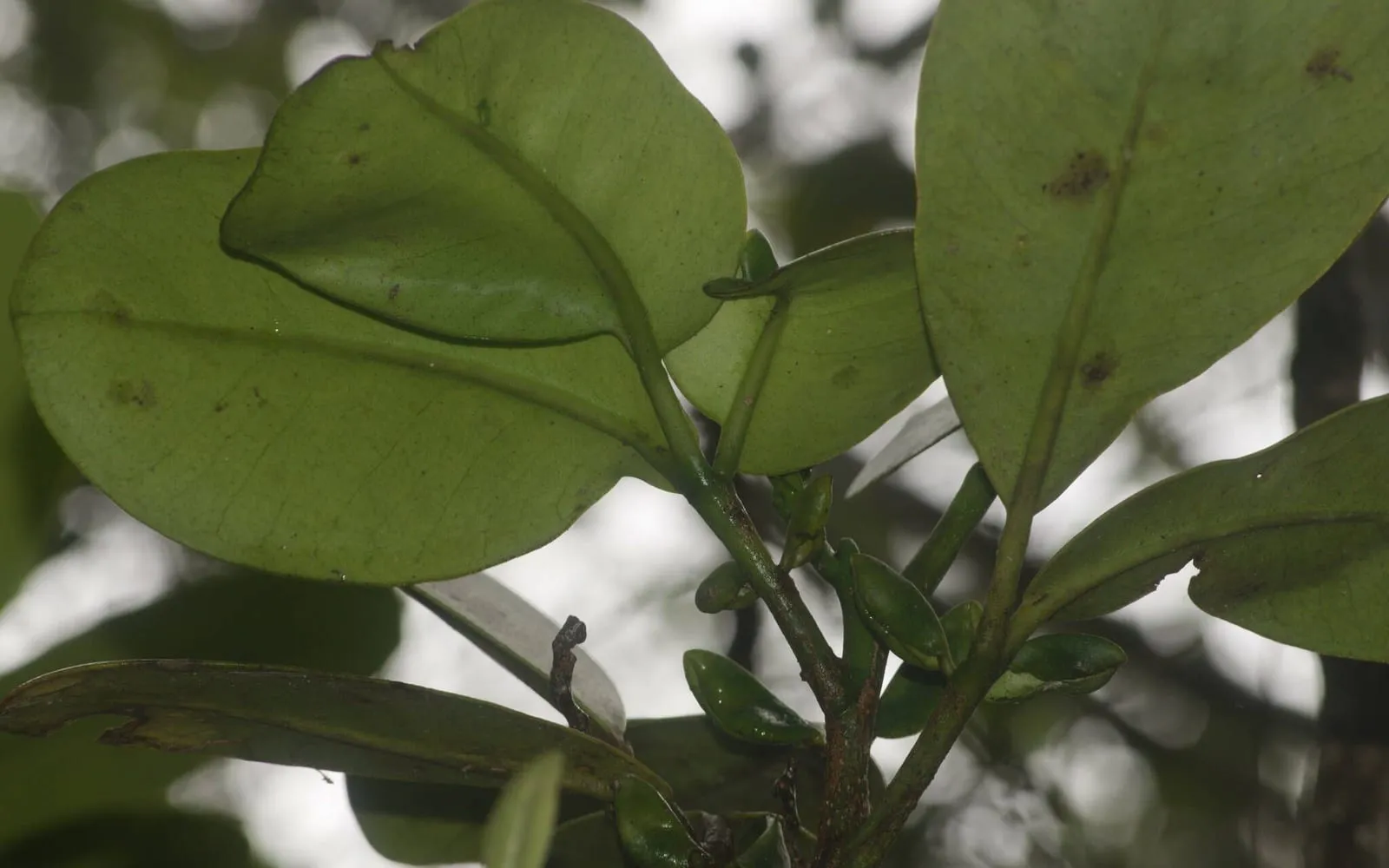
Leaves are pinnate, with several firm, glossy leaflets set along a central stalk, dotted with the tiny oil glands of the citrus family and aromatic when crushed. The foliage is the tree’s most attractive feature in cultivation.
Stems on young growth can carry short prickles, the feature that gives the prickly-ashes their name, though older wood is often less thorny.
Flowers are small and greenish to cream, borne in clusters, with male and female flowers on separate trees, so only females bear fruit. The two known varieties of the species differ in the hairiness of their leaves and shoots.
Fruit is a small dry capsule that splits to release a shining black seed, aromatic like the rest of the plant.
The habit is that of a small upright tree, reaching some three to eight metres, slow-growing and long-lived, like many forest species rather than a fast pioneer.
Where it is from
Zanthoxylum dipetalum is endemic to the Hawaiian Islands, meaning it grows naturally nowhere else on Earth, in dry to mesic forest on several of the main islands, on free-draining volcanic soils.
That limited range explains both its needs and its vulnerability. It is adapted to mild island temperatures, sharp drainage and a seasonal rhythm of rain, and it has no tolerance of frost or of the grazing animals and aggressive weeds introduced to the islands, which is much of why it has become scarce.
How it grows
It grows slowly into an upright evergreen tree in full sun or light shade, on free-draining ground, in a frost-free climate. Given the right warmth and drainage it is not difficult, just slow.
Plant it in a warm, sheltered spot with good drainage, and water it through its early years while the roots establish. Once settled it copes with the drier spells of its native seasonal climate.
Where frost is a risk it needs to be grown under glass, kept above about 7 deg C, as a container tree. Handle young growth with care for the small prickles, and prune only to shape.
Treat it as a long-term conservation plant or specimen tree. Sourcing it may mean going through a native-plant nursery or restoration programme, since it is rare in the trade as well as in the wild.
Through the seasons
Spring brings new growth and the small clusters of pale flowers as the warm season strengthens.
Summer is slow, steady growth through the warmth, with capsules ripening on female trees.
Autumn is when the fruit finishes and the seed is shed, with growth easing as conditions cool a little.
Winter growth continues in a frost-free climate, and the tree must be kept warm where it is grown near its cold limit.
Care difficulty
Moderate, with rarity and slow growth the main obstacles instead of any fussiness in the plant. Given warmth, sun and drainage it is undemanding, but it grows slowly, will not stand frost, and is hard to obtain, so it is a plant for a patient grower in a warm climate or a glasshouse.
Watering
Water young trees regularly through their early years and in dry spells, keeping the soil moist but never waterlogged, since the roots need sharp drainage. This support matters most while the tree is establishing.
An established tree in a suitable climate is fairly drought-tolerant, reflecting the seasonal dryness of its native forest, and needs little routine watering. A container plant dries faster and needs closer attention.
Warning signs, diseases and pests
Scarcity and slow growth are the main frustrations, not disease. A young tree that grows little in its first years is behaving normally for a slow forest species, and extra feeding will not make it fast.
In the wild the threats are habitat loss and introduced animals instead of garden pests, and a cultivated tree in good conditions is largely trouble-free. Watch container plants for scale insects on stressed growth.
The small prickles on young stems are the only real hazard to handle, so wear gloves when pruning or planting.
Growing environment
Full sun to light shade suits it, matching the open to lightly wooded forest it comes from. Strong light gives the healthiest growth, and it does not want deep shade.
The soil should be free-draining, and the tree is well suited to rocky, volcanic ground of the kind found on its native islands. Heavy, wet soil is a poor fit.
Give it a warm, frost-free, sheltered position, or a large container that can be kept under glass for winter in a colder climate. As a native Hawaiian plant it is well suited to island restoration and dry-forest planting where the climate allows.
Feeding
Feed young trees a balanced fertiliser once or twice in the growing season to support steady establishment. Mature trees need little, being adapted to the lean, free-draining soils of Hawaiian forest, and heavy feeding will not speed their slow growth.
A container specimen benefits from a regular dilute feed through the growing season, since watering flushes nutrients from the limited compost.
Troubleshooting
Where can I get one? Usually only through a native Hawaiian plant nursery or a restoration programme, since kawa’u is rare in cultivation as well as in the wild. It is not a plant found in general garden centres.
Will it grow outside Hawaii? Only in a frost-free climate outdoors, or under glass elsewhere. It has no cold tolerance and needs to stay warm, so a cold-region grower must treat it as a glasshouse tree.
Why is it so rare in the wild? Habitat loss and the introduced pigs, goats and invasive plants that have altered Hawaiian forests have all reduced it. Growing it in cultivation is one way to help conserve the species.
Does it have thorns? Young stems can carry small prickles, in the way of the prickly-ashes, though older wood is often smoother. Handle new growth with gloves.
Is it related to lemons and oranges? Yes. It belongs to the citrus family, so its leaves are aromatic, and it sits among the prickly-ashes such as lime pricklyash and West Indian satinwood.
Kawa'u problem guides
Not sure what is wrong? See the common vegetable pests guide.