
Outdoor plant
Dotted Pricklyash
Zanthoxylum punctatum
Also known as Dotted Prickly-ash
How to grow dotted pricklyash, Zanthoxylum punctatum, the aromatic Caribbean shrub with gland-dotted leaves, thorns and a peppery scent.
At a glance
- Difficulty
- Moderate
- Water
- While establishing, then rarely
- Light
- Full sun
- Temperature
- Frost-tender; happiest in warm, frost-free climates
- Hardiness
- USDA 10-11, RHS H2, hardy to 4 C
- Type
- Evergreen or semi-evergreen shrub or small tree
- Height
- 2 to 6 m
- Native to
- The Caribbean
A shrub of warm Caribbean coasts and dry forest, with little frost tolerance, so it grows outdoors only in warm, frost-poor climates and needs glasshouse protection anywhere colder. It is at home in heat, strong light, salt air and thin, rocky, limy soils, and copes well with drought once its roots are established.
Hardiness zones describe winter cold alone. Summer heat, humidity, rainfall and the length of the growing season decide as much, so treat the range as the outer limit rather than as a recommendation.
Not known to be toxic
Dotted pricklyash is not listed as a poisonous plant, and its aromatic, peppery oils are the harmless kind found across the citrus family. The prickles on its stems are the main hazard, catching skin and clothing, so the risk is scratches, not swallowing. The pungent fruit and foliage are used as flavouring by some in its range, but it is not a plant to browse casually.
Sources: RHS potentially harmful garden plants, ASPCA toxic and non-toxic plants
About
Dotted pricklyash takes its name from its leaves, which have tiny translucent oil glands that show as pale dots when a leaflet is held to the light. Those glands hold the pungent, peppery, citrus-like oils that scent the whole plant when it is crushed, marking it clearly as a member of the citrus family.
It is a thorny, bushy evergreen shrub or small tree of the warm Caribbean, at home on dry coasts and in limestone forest. Smaller and less widespread than the lime pricklyash of the American mainland, it fills a similar niche as a tough, aromatic, well-armed shrub of hot, dry ground.
For most gardeners it is a plant for a frost-free climate, grown for its aromatic foliage and its value as a dense, thorny shrub. In its range the pungent fruit and leaves have some use as a local flavouring, close as it is to the true pepper of the genus.
Appearance and character
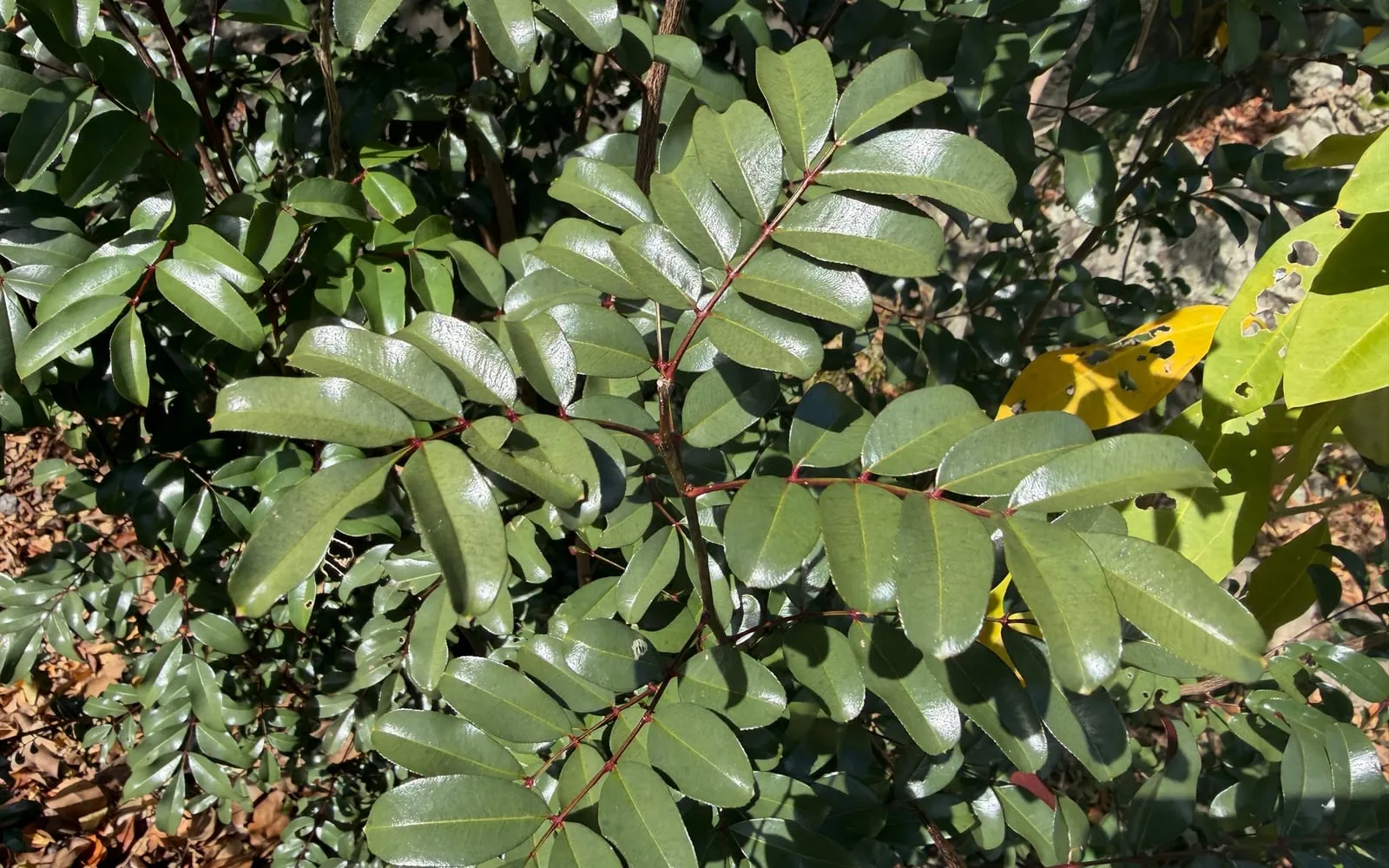
Leaves are pinnate, of several small leaflets studded with clear oil-gland dots that name the species, glossy and aromatic, giving off a sharp peppery scent when bruised. Holding a leaflet to the light to see the dots is the clearest way to identify it.
Prickles arm the stems, sharp and catching, in the way of the prickly-ashes, and they make the shrub both a useful barrier and awkward to handle.
Flowers are small, greenish or cream, in modest clusters, with male and female flowers usually on separate plants, so only females carry fruit.
Fruit is a small, rough, aromatic capsule that splits to release a shiny black seed, pungent and peppery to the taste.
The habit is bushy and twiggy, building into a rounded shrub or small tree of two to six metres, denser in full sun and more open in shade.
Where it is from
Zanthoxylum punctatum grows in the Caribbean and neighbouring warm coasts, in dry forest, coastal scrub and rocky thickets, on thin limestone soils in a hot, frost-free climate. It is a plant of lean, sun-baked ground.
Those conditions set what it needs. It thrives on heat, strong light and sharp drainage, tolerates salt air and drought, and needs very little once established, but it has no defence against frost, which keeps it to warm climates.
How it grows
It grows into a dense, thorny shrub in full sun on free-draining soil, needing little once its roots are established. In its warm home it holds its aromatic leaves through the year.
Plant it in a warm, sunny, sheltered spot with good drainage, and water it through the first dry season to establish it. After that it is drought-tolerant and largely self-reliant in a suitable climate.
Site it away from paths and seating, because the prickles catch anyone brushing past, and prune it in gloves and long sleeves to shape it or thicken a barrier. It takes clipping well and can be kept as a dense boundary shrub.
Where frost threatens it must be grown under glass as a container plant, kept above about 4 deg C, though its natural place is an open, hot, dry garden in a frost-free region.
Through the seasons
Spring brings fresh growth and the small clusters of greenish flowers as the warm season builds.
Summer is steady growth through the heat, with aromatic capsules ripening on female plants.
Autumn fruit ripens and seed is shed, with growth slowing as the season turns.
Winter the shrub holds its leaves and rests in a frost-free climate, and it must be protected from any cold where it is grown near its limit.
Care difficulty
Moderate, and easy where the climate suits it. Given warmth, full sun and sharp drainage it is tough, drought-hardy and little troubled, needing only space and careful handling around its prickles. Cold is the limit: it will not take frost, so outside warm climates it needs protection under glass.
Watering
Water a young plant through its first dry season to settle the roots, then water only in prolonged drought. The shrub is adapted to dry, rocky ground and suffers more from waterlogging than from a rainless spell.
An established plant in a warm climate needs no routine watering, and a container specimen under glass needs only enough to keep the compost from drying out completely, more in the growing season and little in winter.
Warning signs, diseases and pests
The prickles are the main handling issue, sharp enough to catch skin and clothing, so wear gloves and long sleeves to handle the plant and keep it clear of paths and seating.
Pests are few on a healthy shrub, its aromatic oils and thorns deterring most. Scale insects may settle on stressed or container-grown plants and can be treated with horticultural oil if they build up.
The aromatic oils and peppery fruit are not known to be poisonous, so beyond the thorns the plant needs no special handling measures.
Growing environment
Full sun suits it, matching the open, sunny coasts and thickets it comes from. In shade it grows thin and sparse and loses much of its density.
The soil should be free-draining, and the shrub is well suited to thin, rocky, limy ground and tolerant of coastal salt. Rich, heavy, wet soil suits it far less than lean, dry conditions.
Use it where its density and thorns are useful, as a barrier or boundary shrub or a tough aromatic plant for a hot, dry corner, and keep it away from where people pass close by.
Feeding
Feed little. On the poor, rocky soils it favours it needs almost nothing, and a light spring feed is enough where the ground is very thin. Rich feeding produces soft growth of no use to a plant grown for toughness and aroma.
A container plant under glass benefits from an occasional dilute feed in the growing season, since watering washes nutrients from the limited compost.
Troubleshooting
How do I know it is this species and not another prickly-ash? Hold a leaflet to the light and look for the clear, dotted oil glands that give the plant its name, and crush it for the sharp peppery scent. The gland dots are its clearest mark.
It is covered in sharp prickles. That is normal for a prickly-ash and is part of its value as a barrier shrub. Handle it in gloves and long sleeves and site it away from paths.
Can I use the fruit as a pepper? The pungent fruit and leaves are used as a local flavouring in its range, but this is not a recognised commercial seasoning. Grow it as an aromatic shrub rather than as a kitchen crop.
Will it survive frost? Not readily. It has little cold tolerance and needs a warm, frost-free climate outdoors, so in a cold region it must be grown under glass as a container plant.
Why does my plant set no fruit? It is probably male, or a lone female with no male nearby, since the sexes are usually on separate plants. Both are needed for a female to fruit.
Dotted Pricklyash problem guides
Not sure what is wrong? See the common vegetable pests guide.