
Houseplant
Wax Begonia
Begonia semperflorens
Also known as Begonia semperflorens, Begonia cucullata, Clubbed Begonia
How to grow Begonia semperflorens, the wax begonia, the everblooming bedding plant that flowers for months indoors or out, quick from seed.
At a glance
- Difficulty
- Easy
- Water
- When the top few centimetres of mix have dried
- Light
- Bright indirect light to light shade
- Temperature
- Warm; keep above about 13 deg C
- Humidity
- Average to high
- Hardiness
- USDA 10-12, RHS H1b, hardy to 13 C
- Type
- Perennial
- Height
- 15-30 cm
- Native to
- South America
A tender tropical foliage plant from South America, growing in warm, humid, shaded to filtered light. It needs warmth, humidity and bright indirect light, and it cannot take frost or chill. It is safest above about 13 deg C, and cold, wet compost or dry air spoils it.
Hardiness zones describe winter cold alone. Summer heat, humidity, rainfall and the length of the growing season decide as much, so treat the range as the outer limit rather than as a recommendation.
Harmful if eaten
- Do not eat
- All parts, most concentrated in the roots and underground stems
- Harm from
- Eating it and handling it
- Affects
- People, cats, dogs and horses
The ASPCA lists begonias as toxic to cats, dogs and horses. The whole plant holds soluble calcium oxalates, most concentrated underground, and chewing it can burn the mouth and cause drooling and vomiting. Horses and other grazing animals that eat a large amount risk kidney damage. The RHS rates begonias as mildly harmful if eaten and a possible skin irritant. Keep it out of reach of pets and small children, and wash your hands after cutting stems.
Sources: ASPCA toxic and non-toxic plants, RHS potentially harmful garden plants
About
Begonia semperflorens is the everblooming wax begonia, the neat, long-flowering plant sold by the tray for summer beds and window boxes and also kept indoors year-round. Its species name means always-flowering, and the plant opens a steady succession of small single or double blooms for months. Bred from wild South American stock into many compact strains, it forms a tidy, rounded plant with shiny leaves and plenty of flowers. It is undemanding, quick from seed and often the first begonia people grow.
What it looks like
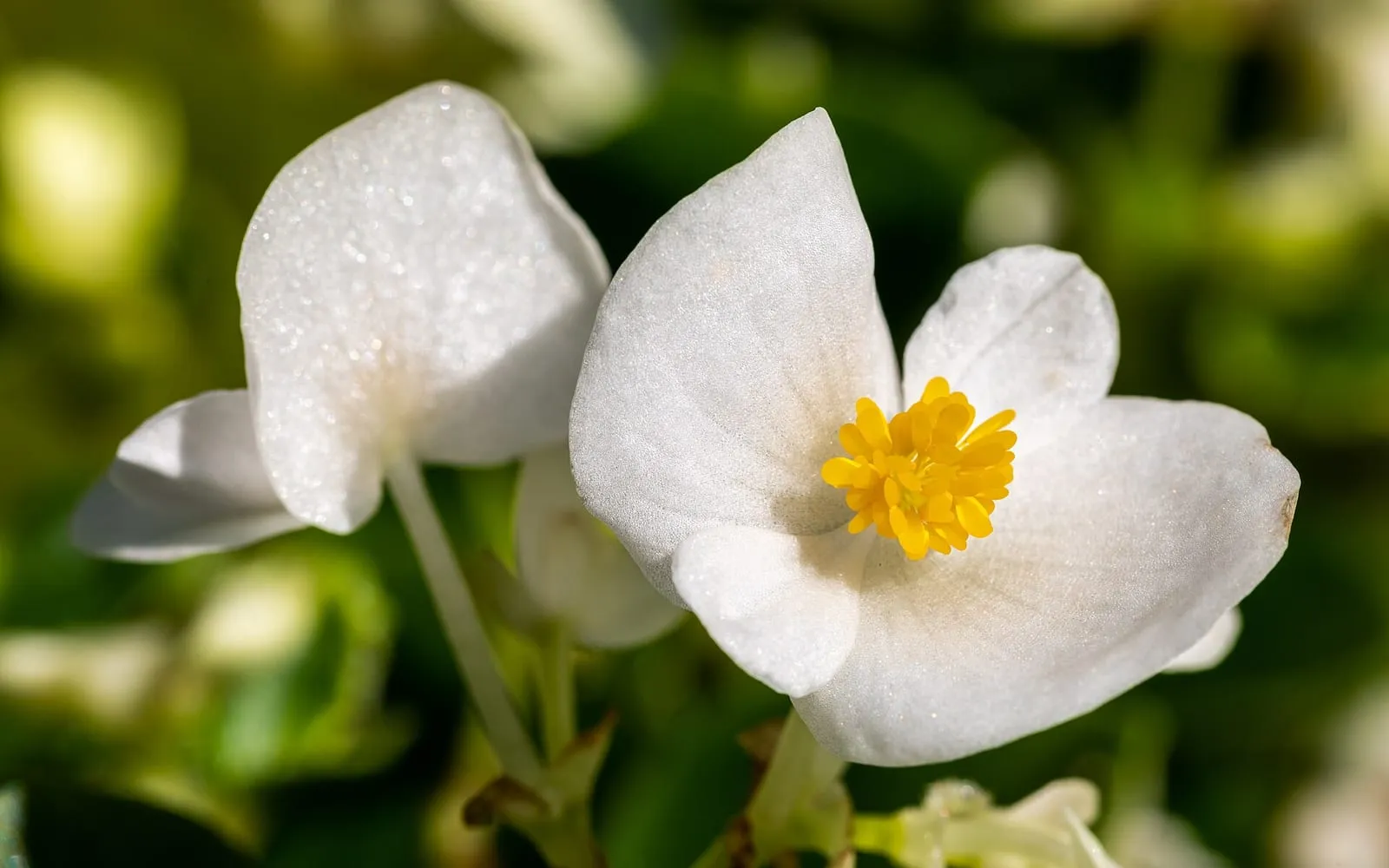
The leaves are small, rounded and thick, with a glossy surface that gives the plant its common name. They are fresh green in some strains and deep bronze or mahogany-red in others. The bronze-leaved kinds take stronger light, while the green-leaved ones prefer a little more shade. The whole plant is fleshy and brittle, building a dense low dome. Flowers in white, pink, rose and scarlet sit just above the leaves in repeated flushes. Each cluster carries separate male and female blooms, with the female flowers backed by a little winged seed capsule.
Where it comes from
The wild ancestors of the wax begonia grow in the warm, humid lowlands and forest edges of South America, in moist air and the soft light beneath taller plants. That background explains the care. It needs steady warmth free of frost, moisture at the root, humid air and light that is bright without scorching. In frost-free climates it flowers almost year-round outdoors; in colder ones it is grown as summer bedding or kept as a houseplant through winter. In the wild the plant ranges from Bolivia and southern Brazil into Paraguay, Uruguay and northern Argentina. It has escaped cultivation across many warm regions and now grows as a naturalised weed in Florida, Hawaii, Cuba and Mauritius, where weed assessments mark it a vigorous coloniser of damp, disturbed ground.
Light for the best flowers
Bright light brings the heaviest flowering and the strongest leaf colour, especially in the bronze-leaved strains, which take a few hours of gentle sun. The green-leaved kinds flower well in bright, indirect light and scorch in strong sun, so match the plant to the position. In too little light, the flowers thin out and the stems stretch and flop. A bright windowsill out of the strongest midday rays, or a lightly shaded spot outdoors in summer, keeps it flowering freely.
Watering
Water when the surface has dried but the compost below is still barely moist, wetting it through and pouring off whatever collects beneath, since the fleshy stems rot fast in cold, standing water. Let the top settle towards dry between drinks instead of keeping it constantly soaked. Through the bright, warm, flowering months it drinks steadily; in winter, kept cooler and dimmer, it needs far less. Aim the water at the compost and keep it off the crowded flowering crown, where trapped moisture rots the blooms.
Warmth, air and humidity
Comfortable room warmth suits it, and it should not sit below about 13 deg C for long. Moderately moist air keeps the leaves plump and the flowering steady, while very dry heated rooms brown the leaf tips and slow the bloom. Good air movement around the dense growth matters, since still, damp conditions among crowded flowers invite grey mould. Pick off spent blooms and any yellowing leaf to keep the plant tidy and flowering.
Feeding for continuous bloom
A plant that flowers for months needs regular feeding. Give a balanced liquid fertiliser at half strength every couple of weeks through the growing season, switching to a feed richer in potassium if flowering flags. Overfeeding pushes soft leaf at the expense of flower, so keep the doses moderate. Withhold food through winter and start again as growth and flowering pick up in spring.
Propagation
Cuttings root quickly. Take a short stem tip, trim it below a joint and set it in damp compost or a glass of water, and it roots readily in warmth. Seed is the commercial route and is dust-fine, sown on the surface of moist compost and kept warm and bright. Sow thinly and prick out the tiny seedlings with care. Lift and pot up a favourite bedding plant before the first frost to carry it through winter indoors.
Keeping it healthy
Grown warm, bright and airy, the wax begonia avoids most problems. Grey fuzz on faded flowers or damaged leaves is botrytis, brought on by damp, stagnant air; improve ventilation and clear away the affected parts. Mealybugs sometimes shelter in the leaf joints as white specks and can be dabbed off with dilute alcohol. In dry air spider mites may fine-speckle the leaves; higher humidity and a rinse help remove them. Blackened, collapsing stem bases mean the root ball has been kept cold and sodden.
The year in brief
Spring restarts strong growth and flowering; sow seed, take cuttings and resume feeding.
Summer is the peak of bloom; water freely, feed regularly and deadhead to keep it neat, bedding it out once frost has passed.
Autumn slows the plant as light drops; lift bedding plants before frost, reduce water and raise the humidity as heating comes on.
Winter is a cooler, quieter rest; keep it above chilling cold, water lightly and hold off feeding.
Questions growers ask
Why has grey mould appeared among the flowers? Damp, still air is the cause. Improve ventilation, remove spent blooms and let the surface dry more between waterings.
Which flowers best, the green or the bronze form? Both flower well; the bronze-leaved strains take more sun and stronger light, the green-leaved ones prefer a little shade.
How often does it need watering? When the surface has dried, freely through the flowering months and sparingly in winter.
How do I make more? Root a short stem cutting in water or damp compost, or sow the fine seed on moist compost in warmth.
Is it a risk to pets? Yes, mildly. The ASPCA lists begonias as toxic to cats, dogs and horses because of soluble oxalates, so keep it away from chewing pets.
Wax Begonia problem guides
Not sure what is wrong? See the common houseplant pests guide.