
Houseplant
Brazilian Begonia
Begonia hirtella
Also known as Begonia hirtella
How to grow Begonia hirtella, the brazilian begonia, a tropical American begonia with downy stems and sprays of tiny white flowers.
At a glance
- Difficulty
- Easy
- Water
- When the top few centimetres of mix have dried
- Light
- Bright indirect light to light shade
- Temperature
- Warm; keep above about 13 deg C
- Humidity
- Average to high
- Hardiness
- USDA 10-12, RHS H1b, hardy to 13 C
- Type
- Perennial
- Height
- 30-60 cm
- Native to
- tropical America
A tender tropical foliage plant from tropical America, growing in warm, humid, shaded to filtered light. It needs warmth, humidity and bright indirect light, and it cannot take frost or chill. It is safest above about 13 deg C, and cold, wet compost or dry air spoils it.
Hardiness zones describe winter cold alone. Summer heat, humidity, rainfall and the length of the growing season decide as much, so treat the range as the outer limit rather than as a recommendation.
Harmful if eaten
- Harm from
- Eating it and handling it
- Affects
- People, cats, dogs and horses
Begonia hirtella, the brazilian begonia, is toxic to cats, dogs and horses. The whole plant contains soluble calcium oxalates, most concentrated in the underground parts, and chewing it can burn the mouth and cause drooling and vomiting. The RHS rates begonias as mildly harmful if eaten and a possible skin irritant. Keep it out of reach of pets and small children, and wash your hands after cutting stems.
Sources: ASPCA toxic and non-toxic plants, RHS potentially harmful garden plants
About
Begonia hirtella is a soft, fast-growing member of the vast begonia genus, kept indoors for its pale green foliage rather than for large flowers. The Latin name hirtella means slightly hairy, and it fits: fine bristles cover the stems and fringe the leaf edges, giving the plant a faintly downy feel under the fingers. From tropical America it has travelled into glasshouses and shady gardens across the warm parts of the world, where it seeds itself freely into damp corners and neighbouring pots. As a windowsill plant it stays modest, roots quickly and tolerates the occasional missed watering.
Leaves, stems and bloom
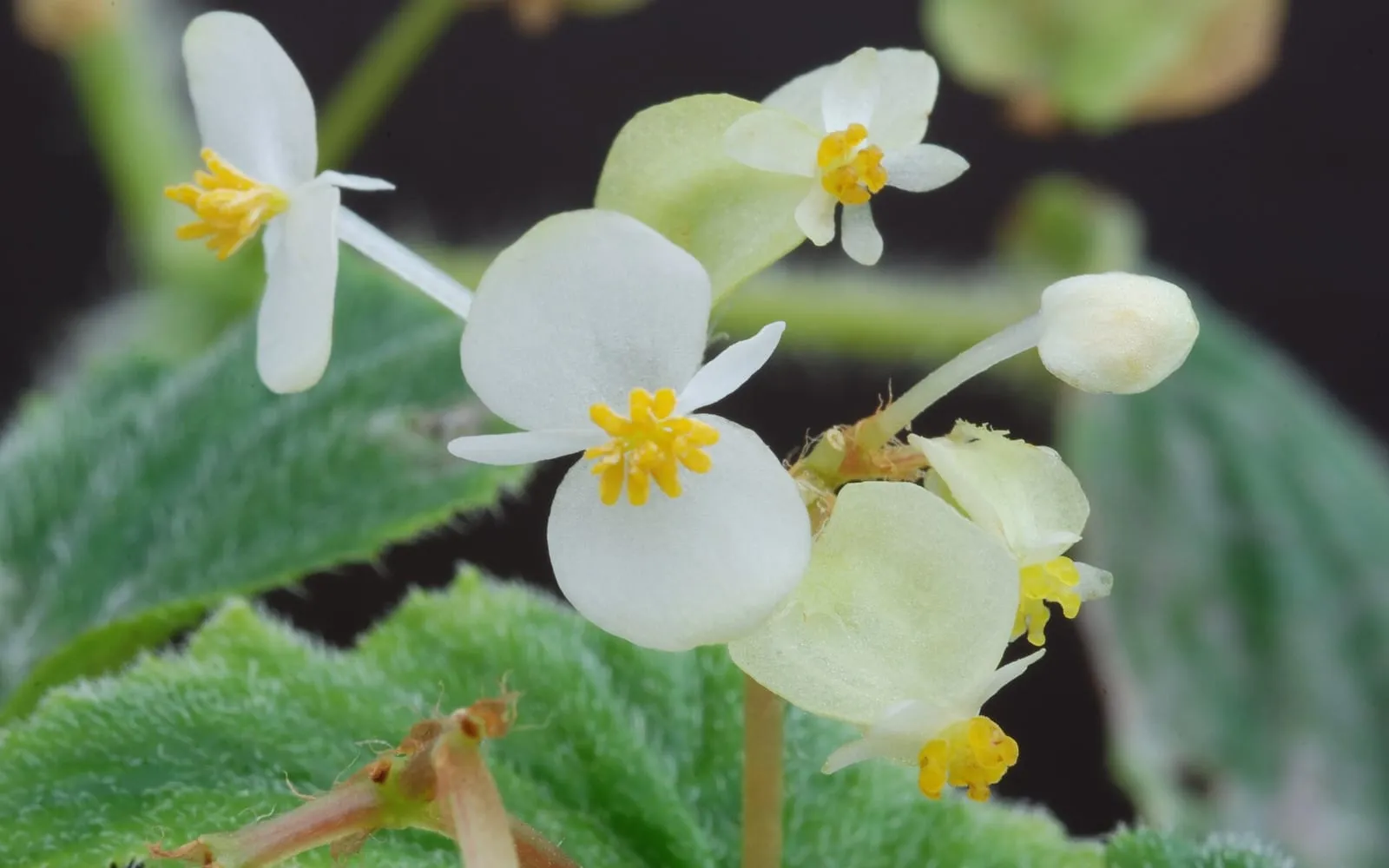
Each leaf is lopsided in the classic begonia manner, one half of the blade running lower down the stalk than the other. The blades are thin, mid to light green and roughly oval, their margins picked out with soft hairs that glisten in low sun. Growth is compact and bushy. Sprays of tiny white flowers, each barely the width of a fingernail, open through the warmer half of the year. As with the whole genus, male and female blooms sit apart on the same plant; you can tell the females by the small three-winged seed capsule swelling behind their petals.
Its wild home
In the wild this begonia grows on shaded, moist ground in tropical America, often at the foot of trees or along the damp margins of clearings. Give it even warmth, air that never dries out entirely, and light filtered as it would be beneath a leafy canopy. Those forest-floor conditions explain most of the care.
Light and position
Give the plant strong light with the harsh midday sun screened off. An east window, or a spot a metre back from a brighter one, suits it. Scorching sun bleaches and crisps the thin leaves within days, while a gloomy corner produces long, weak stems. Turn the pot every week or so, since the shoots bend towards the brightest glass and the plant soon grows one-sided if left facing the same way.
Watering through the year
Water once the top two or three centimetres of the mix feel dry, then wet the whole root ball and let the surplus run away. Through spring and summer that may mean a drink twice a week; in the cool, dim months it can drop to once every ten days or so. Cold compost left sodden rots the fleshy stem bases from below, so err towards the dry side whenever the room is chilly. Tepid water poured onto the compost, instead of over the crown, keeps the hairy leaves from marking.
Warmth and humidity
Ordinary room warmth suits it, and nights below about 13 deg C cause problems. Central heating dries the air far below its wild conditions, and the first sign is a papery brown rim to the leaves. Standing the pot on a wide tray of moist pebbles, or grouping it among other foliage plants, raises the local moisture without wetting the roots. Keep it clear of radiators and of cold draughts from doors and single-glazed windows.
Feeding
From the first flush of spring growth until early autumn, give a balanced liquid feed at half the label strength every second or third watering. This species produces weak, floppy stems if it is overfed, so a lean diet gives a sturdier plant. Stop feeding altogether once growth stalls for the winter, and begin again only when new leaves appear.
Propagation
Few houseplants root as readily. Snap off a healthy shoot tip below a node, strip the lowest leaf and stand it in water or push it into damp, gritty compost, and roots usually form within a fortnight in warmth. The plant also sets fine seed in abundance and will colonise any bare, moist compost nearby, so seedlings often appear of their own accord. Division of a crowded clump in spring is a third method, useful when an old plant has sprawled beyond its pot. Keep new cuttings warm and shaded until they root. Direct sun at this stage wilts the thin leaves before the small stems can replace lost moisture. A clear cover helps if the room air is dry.
Pests and troubles
Grown warm and humid, this is a healthy plant. Trouble almost always comes from the air or the water. Dry, still air encourages spider mites, which stipple the leaves and spin faint webbing in the leaf joints; higher humidity and an occasional rinse under a tepid tap keep them down. Mealybugs may hide in the leaf axils as white woolly tufts and are wiped off with a cotton bud dipped in dilute alcohol. Yellowing lower leaves that fall away usually signal a root ball kept too wet and too cold.
Care through the seasons
Spring starts new growth; resume feeding, step up watering and pinch the tips to build a bushy shape.
Summer brings the strongest growth and the flush of white flowers; keep the compost evenly moist and the air humid.
Autumn slows things down as the light fades; ease back on water and taper the feed.
Winter is a resting spell; keep the plant well above chilling cold, water sparingly and keep it ticking over until the days lengthen.
Common questions
Why are the leaf edges turning brown and papery? The air is too dry. Raise the humidity around the plant and move it away from any heat source.
How much light does it want? Bright, filtered light suits it; keep it out of direct summer sun, which scorches the thin leaves.
How often should I water it? Whenever the top few centimetres have dried, watering freely in growth and much less when the room is cool.
How do I make more plants? Root a shoot-tip cutting in water or damp compost, sow the fine seed, or split a large clump in spring.
Is it safe around cats and dogs? No. The ASPCA lists begonias as toxic to cats, dogs and horses because they contain soluble oxalates, so keep it out of reach of pets that nibble.
Brazilian Begonia problem guides
Not sure what is wrong? See the common houseplant pests guide.