
Houseplant
Elm-Leaf Begonia
Begonia ulmifolia
Also known as Begonia ulmifolia
How to grow Begonia ulmifolia, the elm-leaf begonia, a bristly, shrubby South American begonia with rough, toothed leaves like an elm's.
At a glance
- Difficulty
- Easy
- Water
- When the top few centimetres of mix have dried
- Light
- Bright indirect light to light shade
- Temperature
- Warm; keep above about 13 deg C
- Humidity
- Average to high
- Hardiness
- USDA 10-12, RHS H1b, hardy to 13 C
- Type
- Perennial
- Height
- 40-80 cm
- Native to
- tropical South America
A tender tropical foliage plant from tropical South America, growing in warm, humid, shaded to filtered light. It needs warmth, humidity and bright indirect light, and it cannot take frost or chill. It is safest above about 13 deg C, and cold, wet compost or dry air causes problems.
Hardiness zones describe winter cold alone. Summer heat, humidity, rainfall and the length of the growing season decide as much, so treat the range as the outer limit rather than as a recommendation.
Harmful if eaten
- Harm from
- Eating it and handling it
- Affects
- People, cats, dogs and horses
The ASPCA lists the genus Begonia as toxic to cats, dogs and horses, and has no separate entry for Begonia ulmifolia, so the rating follows the genus. The whole plant holds calcium oxalates, most concentrated in the underground parts, and chewing it can burn the mouth and cause drooling and vomiting. The RHS rates begonias as mildly harmful if eaten and a possible skin irritant. Keep it out of reach of pets and small children, and wash your hands after cutting stems.
Sources: ASPCA toxic and non-toxic plants, RHS potentially harmful garden plants
An introduction
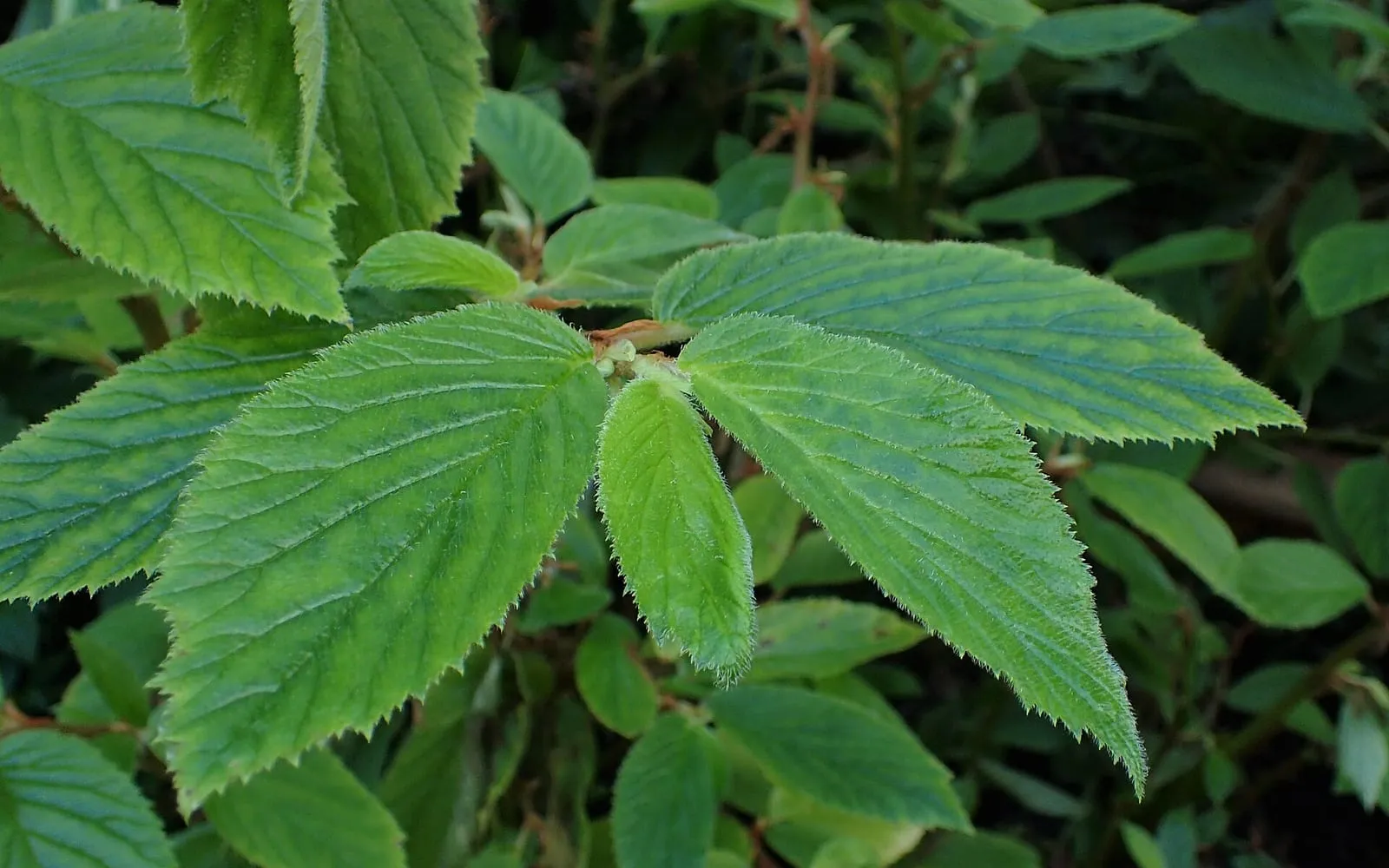
Begonia ulmifolia takes both its Latin and its common name from foliage that resembles the leaf of an elm tree, with a rough, sandpapery surface and a strongly toothed edge. Where most begonias are prized for smooth or patterned leaves, this one is grown for texture and for its upright, shrubby build. It comes from tropical South America, and in a large pot indoors it makes a leafy, bushy specimen that can reach a metre if left unpruned. The whole plant has a bristly, almost hairy feel, unusual among cultivated begonias.
Foliage and form
Each blade is narrow, pointed and lopsided at the base, veined in a sunken herringbone pattern and scattered with short stiff hairs that make it harsh to the touch. Fresh green when young, the leaves deepen and dull with age. The stems are cane-like, branching and self-supporting for a while before the weight of foliage bends the oldest of them. Small white flowers open in modest sprays through the year, but they are minor compared with the bold leaves; as in all begonias the male and female blooms are separate, the female backed by a little winged fruit. The overall effect is closer to a textured foliage shrub than to a flowering pot plant, and most growers remove the sparse bloom to keep growth focused on leaves.
Its native ground
In the wild it grows in the warm, humid forests of tropical South America, rooting in leaf litter where light reaches the understorey in shifting patches. Indoors it needs steady warmth well clear of frost, air kept reasonably moist, and bright light filtered before it becomes scorching.
Positioning it for light
Set the plant where it receives plenty of bright, diffused light, such as near an east or north-east window, or shaded from the midday glare of a sunnier one. The rough leaves stand a little more sun than the thin-leaved begonias, but hot direct rays through summer glass still bleach and blister them. Too little light and the canes bolt upwards with widely spaced leaves and a bare base. Rotate the plant now and then so it fills out evenly instead of leaning to the window.
The watering routine
Let the top few centimetres of the mix dry before watering, then soak the pot fully and drain it. In active growth from spring to autumn it may need water often; through the darker months, when growth halts, cut back sharply and keep the root ball only just short of dry. The main danger is a cold, waterlogged pot, which rots the fibrous roots and topples the stems, so lean towards underwatering whenever warmth is lacking.
Warmth and moisture in the air
Normal living-room warmth suits it, with a lower limit of about 13 deg C. Below that, it may shed leaves. Because central heating strips moisture from the air, the leaf tips brown in a dry room, and standing the pot on damp gravel or grouping it with other plants can raise humidity enough to prevent it. Keep it out of the direct blast of radiators and away from cold draughts.
Feeding the growth
Feed every two to three weeks through spring and summer with a balanced liquid fertiliser diluted to half its recommended strength. This is a leafy plant, and steady, moderate feeding keeps the foliage large and well coloured without forcing the soft, weak growth that heavy feeding brings. Ease off through autumn and give nothing over winter, resuming only when new shoots appear.
Pruning and propagation
An unchecked plant grows tall and gaunt, so shorten the canes by up to a third in spring to force branching and a bushier shape; the prunings can be used as cuttings. Trim a shoot to just below a node, remove the lowest leaves and root it in damp, gritty compost kept warm and covered, where it roots in a few weeks. A pot that has filled with roots benefits from moving up one size in spring, into an open mix with added grit or bark so water never sits around the base of the canes. Older clumps can be divided at repotting time. The rough leaves also root if pinned flat to moist compost, a slower method.
Health and pests
Kept warm and humid, elm-leaf begonia grows strongly. Fine mottling and dulling of the leaves, with faint webbing in the joints, usually means spider mites brought on by dry air; raise the humidity and sponge the foliage. Mealybugs hide as white woolly specks in the leaf axils and can be removed with an alcohol-dipped bud. Powdery mildew can dust the leaves in still, damp, crowded conditions, so keep air moving around the plant. Soft, blackened stem bases mean the roots have been left cold and sodden.
Season by season
Spring starts the main growth; prune the canes, take cuttings and begin feeding again.
Summer brings full, leafy growth; water freely, feed regularly and keep the air from drying out.
Autumn slows the plant as light fades; reduce watering and let the feed tail off.
Winter is a rest; hold it well above chilling cold, water lightly and leave it until spring growth starts.
Frequently asked
Why has my plant grown tall and bare at the base? Too little light and no pruning. Move it brighter and cut the canes back in spring to force fresh, low growth.
Does it need direct sun? No. Bright but filtered light gives the best leaves; strong summer sun scorches even these rough blades.
How do I know when to water? When the top few centimetres feel dry, soaking it in growth and watering only lightly through winter.
What is the easiest way to propagate it? A stem cutting rooted in warm, damp compost, taken from spring prunings.
Is it dangerous to pets? Mildly. Begonias contain calcium oxalates and the ASPCA lists the genus as toxic to cats and dogs, so keep it beyond the reach of pets inclined to chew.
Elm-Leaf Begonia problem guides
Not sure what is wrong? See the common houseplant pests guide.