
Houseplant
Humble Begonia
Begonia humilis
Also known as Begonia humilis
How to grow Begonia humilis, the humble begonia, a tiny tropical American begonia that races from seed to flower and self-seeds freely.
At a glance
- Difficulty
- Easy
- Water
- When the top few centimetres of mix have dried
- Light
- Bright indirect light to light shade
- Temperature
- Warm; keep above about 13 deg C
- Humidity
- Average to high
- Hardiness
- USDA 10-12, RHS H1b, hardy to 13 C
- Type
- Perennial
- Height
- 15-30 cm
- Native to
- tropical America
A tender tropical foliage plant from tropical America, growing in warm, humid, shaded to filtered light. It needs warmth, humidity and bright indirect light, and it cannot take frost or chill. It is safest above about 13 deg C, and cold, wet compost or dry air spoils it.
Hardiness zones describe winter cold alone. Summer heat, humidity, rainfall and the length of the growing season decide as much, so treat the range as the outer limit rather than as a recommendation.
Harmful if eaten
- Harm from
- Eating it and handling it
- Affects
- People, cats, dogs and horses
Begonia humilis, the humble begonia, is toxic to cats, dogs and horses. The whole plant holds oxalates, most concentrated in the underground parts, and chewing it can burn the mouth and cause drooling and vomiting. The RHS rates begonias as mildly harmful if eaten and a possible skin irritant. Keep it out of reach of pets and small children, and wash your hands after cutting stems.
Sources: ASPCA toxic and non-toxic plants, RHS potentially harmful garden plants
About
Begonia humilis is one of the smallest begonias in cultivation, a low, short-lived plant whose species name means lowly or dwarf. It comes from the warm, wet parts of tropical America and behaves almost as an annual, going from seed to flower to seed within a single season and replacing itself from the seedlings it scatters. Where showy begonias are kept for years, this one is grown as a fresh, ferny little pot plant that is easy to replace and hard to lose entirely, since it usually leaves seedlings behind. It does best with light care rather than fuss.
Its size and shape
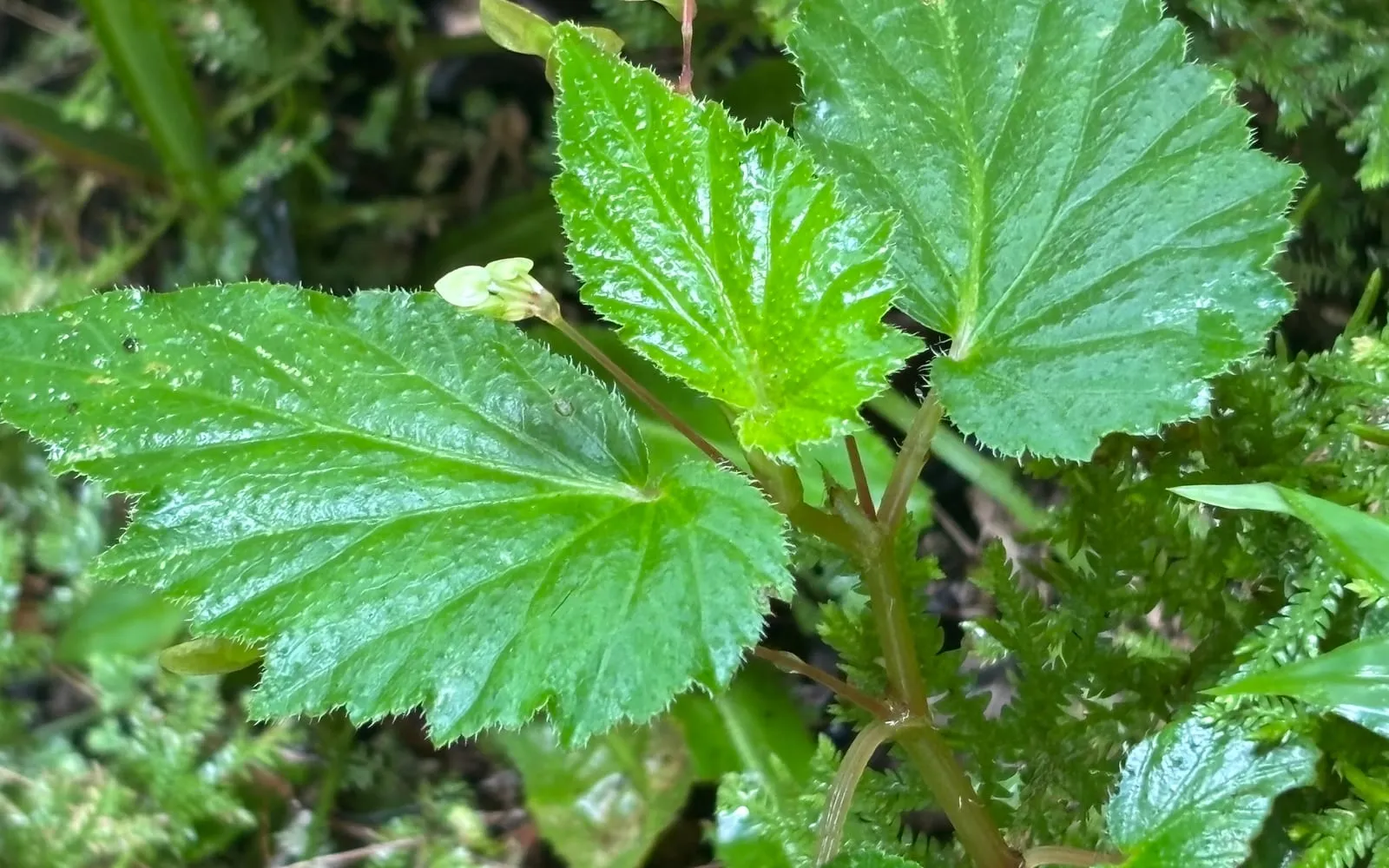
The plant makes a small tuft of soft, watery stems seldom more than a hand’s span tall, with little lopsided leaves that are thin, bright green and softly hairy along their toothed edges. The leaves and stems can look almost translucent when the light shines through them. Tiny white or faintly pink flowers open in small clusters near the shoot tips over a long season. Each cluster carries separate male and female blooms as begonias do, with the female flower attached to a minute winged capsule that soon ripens fine seed.
Where it grows wild
In nature it colonises damp, shaded ground, stream sides and the wet bases of walls and banks across tropical America, appearing wherever bare, moist soil holds its seed. Its native range reaches from Jamaica and Trinidad across the north of South America to Bolivia and northern Brazil, and the plant has carried itself well beyond the Americas by that free seeding, growing wild now as a naturalised weed in Madagascar, Reunion, the Seychelles and Tanzania. It is a plant of warmth, moisture and broken light rather than drought or sun. Give it those conditions in a pot and it grows fast and flowers freely; without them it sets seed early and fades.
Light for a small plant
Bright, gentle light suits it, such as an east-facing sill or a spot just out of the reach of stronger sun. The thin leaves scorch quickly in direct summer rays through glass, curling and browning, while in a dark place the stems stretch and topple. A well-lit position without harsh sun keeps it low and leafy. Because it is small, it fits on a shelf under a grow light or in the front of a windowsill group.
Watering little and often
Keep the compost lightly and evenly moist through the growing season, watering as soon as the surface dries, since a small plant in a small pot dries out fast and wilts hard when neglected. Water gently onto the compost instead of over the soft foliage. In the cooler, darker months, when growth slows, cut back and let the surface dry more between drinks. A tiny root ball left cold and sodden rots quickly, so use a free-draining mix and never leave the pot standing in water.
Warmth and humidity
Comfortable indoor warmth suits it, and it will not take a chill, so keep it above about 13 deg C. Its thin, hairy leaves lose water quickly, so dry heated air browns them and shortens its life; a humid spot such as a bright bathroom, or a stand on damp pebbles, keeps the leaves in better condition. Move a little air around it so the crowded soft stems do not sit damp and rot.
Feeding
Because it grows and flowers fast, feed it lightly and regularly instead of heavily. A balanced liquid fertiliser at a quarter to half strength every couple of weeks through the warm season keeps the leaves green and the flowers coming. This small, soft plant becomes weak and floppy if overfed, so keep the dose gentle and stop once growth slows for winter.
Propagation
Seed is the natural route and the easiest, since the plant sows itself and fresh seed scattered on damp compost germinates fast in warmth. Watch for the volunteer seedlings that appear in nearby pots and pot them on. Soft stem-tip cuttings root in days in a glass of water or a pot of damp compost, giving new plants from a leggy specimen. Keeping a young plant coming along each year is the simplest way to keep it, given its short life.
Health and troubles
Grown warm and humid, it is an easy, healthy plant, though its soft growth is prone to a few problems if the air or water is wrong. Spider mites appear in dry air, speckling the leaves, and raised humidity with a gentle rinse helps deter them. Grey mould can rot the crowded soft stems in still, damp, cold conditions, so keep it airy. Sudden collapse usually means the little root ball has rotted in cold, wet compost. A plant that yellows and fades in late season is often setting seed and reaching the end of its short cycle.
The year at a glance
Spring brings fast fresh growth from seed and cuttings; pot on seedlings and start light feeding.
Summer is the season of leaf and flower; keep it evenly moist, humid and out of harsh sun.
Autumn slows the plant as light fades; ease off water and feed, and collect or let it drop its seed.
Winter is a slower spell; keep any plant above chilling cold, water sparingly and raise a fresh batch if the old one fades.
Questions and answers
Why is my plant fading after a good summer? It is short-lived and may be setting seed and reaching the end of its cycle. Sow the seed or root a cutting to keep it going.
How much light does it need? Bright but indirect; direct sun scorches the thin leaves and deep shade makes it leggy.
How often should I water it? Little and often in growth, keeping it lightly moist, and much less in the cool months.
What is the easiest way to keep it going? Let it self-sow, pot on the seedlings, or root a soft cutting in water.
Is it a risk to pets? The oxalates in begonias burn the mouth, and the underground parts hold the most, so keep it away from pets inclined to chew.
Humble Begonia problem guides
Not sure what is wrong? See the common houseplant pests guide.