
Houseplant
Fern Begonia
Begonia foliosa
Also known as Begonia foliosa
How to grow Begonia foliosa, the fern begonia, a South American shrub with hundreds of tiny leaves on arching stems, good for hanging baskets.
At a glance
- Difficulty
- Easy
- Water
- When the top few centimetres of mix have dried
- Light
- Bright indirect light to light shade
- Temperature
- Warm; keep above about 13 deg C
- Humidity
- Average to high
- Hardiness
- USDA 10-12, RHS H1b, hardy to 13 C
- Type
- Perennial
- Height
- 30-60 cm
- Native to
- South America
A tender tropical foliage plant from South America, growing in warm, humid, shaded to filtered light. It needs warmth, humidity and bright indirect light, and it cannot take frost or chill. It is safest above about 13 deg C, and cold, wet compost or dry air spoils it.
Hardiness zones describe winter cold alone. Summer heat, humidity, rainfall and the length of the growing season decide as much, so treat the range as the outer limit rather than as a recommendation.
Harmful if eaten
- Harm from
- Eating it and handling it
- Affects
- People, cats, dogs and horses
The ASPCA lists begonias as toxic to cats, dogs and horses because of soluble calcium oxalate crystals, which are most concentrated in tubers and are also present in the stems and leaves. Chewing the plant can irritate the mouth and cause drooling and vomiting, and a child that chews it may be affected in the same way. The sap can irritate skin, so wear gloves when cutting stems. Keep it out of reach of pets and small children.
Sources: ASPCA toxic and non-toxic plants, RHS potentially harmful garden plants
About this begonia
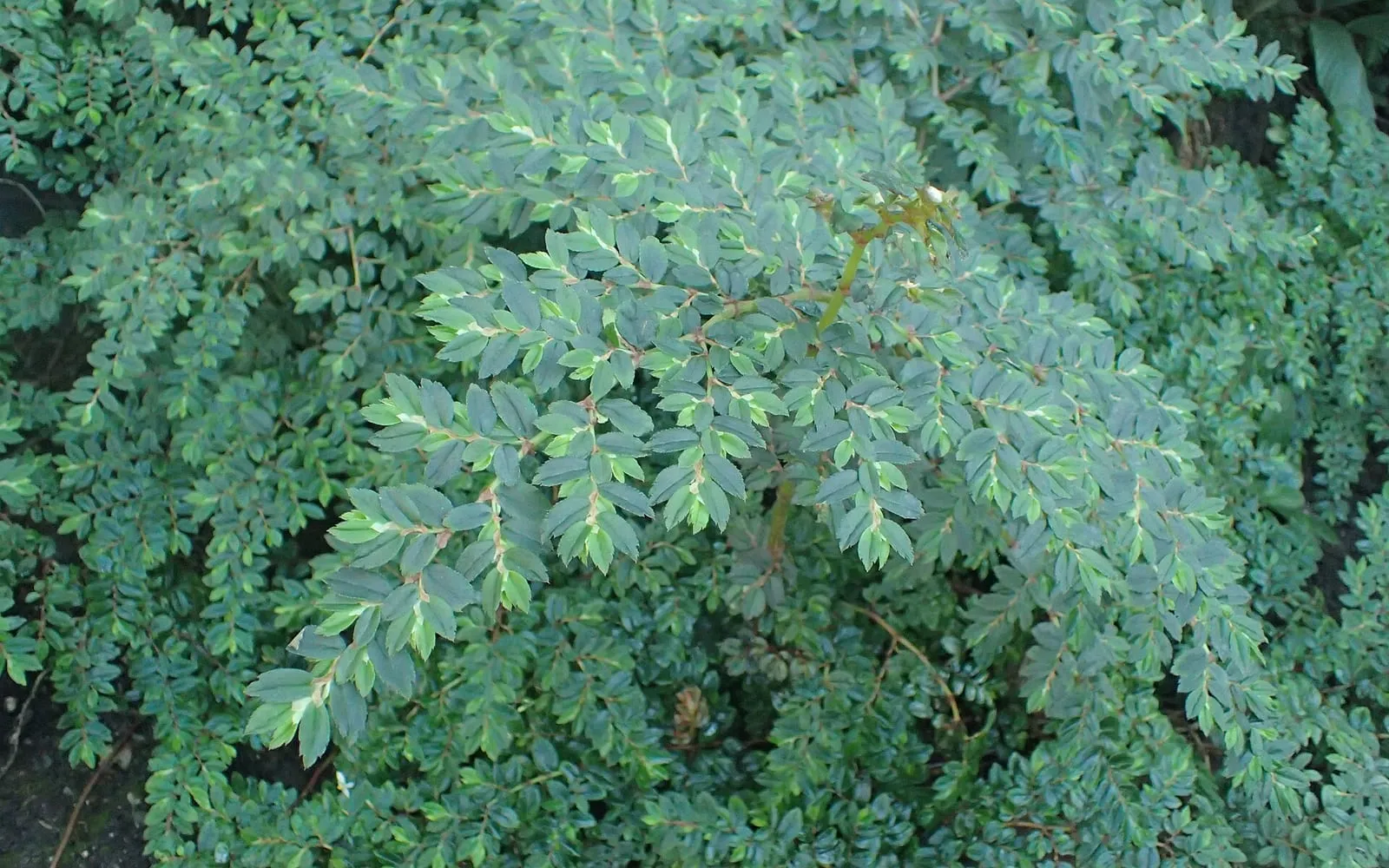
Begonia foliosa looks less like a typical begonia than a small, leafy fern. It carries hundreds of tiny leaves along slender, arching stems, which gives the plant its common name. Up close, the leaflets are still the small, lopsided blades of a true begonia. It comes from the mountains of South America and grows into a mounded, cascading shrub that suits a hanging basket or a raised pot. A red-flowered form, sometimes sold as the fuchsia begonia, has bright pendant blooms among the foliage; the ordinary form has small, pale flowers.
Its leaves and shape
The leaflets are minute, glossy, oval and set in two neat ranks along wiry stems, packed close enough to hide the wood behind them. New stems shoot upright, then bend under their own weight into overlapping sprays. In the red-flowered kind, waxy scarlet flowers hang from the leaf joints through much of the year; the plain species has small white or pink-tinged flowers instead. Even at this small scale the flowers keep the family habit of separate males and females on the one plant, with the female bloom carrying a small winged pod.
Native setting
In the wild it grows on shaded banks and rocks in the humid mountain forests of South America, in cool, moist, moving air rather than heat. That cloud-forest origin means it likes warmth without stuffiness, humidity around its leaves and a bright but sheltered position. Aim for a cool, damp, shaded position.
Where to stand it
Bright, filtered light keeps the growth dense and the flowering steady. An east-facing spot, or a place just out of the direct line of a brighter window, gives the plant what it needs. Strong midday sun through glass scorches the fine leaves, and deep shade thins the fronds and drops the lower leaflets. Do not crowd it against glass, where leaves can chill overnight. In a bright room away from the harshest rays, it fills out into a rounded mass of green. Turn a hanging plant occasionally so every side grows evenly.
Watering the fine roots
With so many small leaves, this begonia loses water quickly, yet its roots dislike sitting wet. Water once the top of the compost has dried, wetting it right through and letting it drain freely. In warm growing weather it may need watering every few days; in winter, when it rests, it needs little. A basket dries faster than a pot, so check it more often in summer heat. Cold, sodden compost rots the fibrous roots and makes the leaflets drop, so keep the balance towards moist instead of wet, and never leave water pooling beneath it.
Warmth and humidity
Keep it in comfortable warmth and above about 13 deg C, out of cold draughts. The dense mass of thin leaves suffers first when the air dries, browning and dropping the smallest leaflets, so this plant does best in a humid setting. Mist rarely does much on its own; a pebble tray, a group of leafy plants, or a naturally moist room does far more. Keep some air moving through the mound so the crowded stems do not stay damp and stagnant.
Feeding
Feed fortnightly through spring and summer with a balanced liquid fertiliser at half strength, which keeps the many small leaves green and the flowering going. Stop feeding over winter, when growth pauses, and start again as new shoots lengthen. The soft stems flop if overfed, so keep the dose gentle.
Cutting back and propagating
Left alone the plant grows open and bare at the centre, so shear it over lightly after a flush of growth to keep it bushy and full; the trimmings root easily. Push a few stem tips, trimmed below a joint, into damp compost and keep them warm and covered. They usually root within a couple of weeks. Several tips potted together in one small container give a full plant far faster than a single cutting left to fill out on its own. Layering an arching stem by pinning it to a neighbouring pot of compost is another simple route, as is dividing a large old plant at repotting.
Health and pests
Kept humid and airy, fern begonia is a healthy plant. Its main pest in a dry room is the spider mite, which stipples the fine foliage grey and leaves faint webbing between the leaflets; higher humidity and a gentle rinse keep them at bay. Mealybugs occasionally cluster where the stems fork and can be wiped off with dilute alcohol. Grey mould can take hold in damp, crowded, still conditions, so thin and ventilate the plant. Bare, blackened stems at the base usually mean the roots have chilled and rotted.
Through the seasons
Spring starts strong new growth; trim to shape, take cuttings and resume feeding.
Summer is the main period for growth and flowers; water regularly, feed and keep the air moist as it dries out.
Autumn slows growth; cut back on water and taper the feed as light drops.
Winter is a cool rest; keep it above chilling cold, water lightly and let the crowded stems dry between drinks.
Questions and answers
Why is my plant dropping its smallest leaves? Dry air is the usual cause. Raise the humidity around it and keep it clear of radiators and draughts.
How much light should it have? Bright but indirect; keep it out of strong sun, which scorches the tiny leaves, and out of gloom, which thins the fronds.
When do I water it? When the top of the compost has dried, often in summer, especially in a basket, and sparingly in winter.
What is the best way to make more? Root a few stem-tip cuttings in warm, damp compost, or layer an arching stem into a nearby pot.
Is it toxic to animals? Yes, mildly. The ASPCA lists begonias as toxic to cats, dogs and horses because of soluble calcium oxalates, so keep it out of reach of pets that nibble foliage.
Fern Begonia problem guides
Not sure what is wrong? See the common houseplant pests guide.