
Houseplant
Viviparous Agave
Agave vivipara
Also known as Agave vivipara
How to grow Agave vivipara, the viviparous agave, a narrow-leaved rosette that raises ready-rooted plantlets on its flower stalk.
At a glance
- Difficulty
- Easy
- Water
- When the whole mix has dried out
- Light
- Full sun to bright light
- Temperature
- Warm; keep frost-free, above about 5 deg C
- Humidity
- Low to average
- Hardiness
- USDA 10-12, RHS H1c, hardy to 5 C
- Type
- Perennial
- Height
- 60-120 cm
- Native to
- Aruba, Bonaire and Curacao
A dryland agave from the hot, semi-arid southern Caribbean islands, where frost never occurs. It is frost tender and safest above about 5 deg C, needs full sun and sharp drainage, and rots in cold, wet compost.
Hardiness zones describe winter cold alone. Summer heat, humidity, rainfall and the length of the growing season decide as much, so treat the range as the outer limit rather than as a recommendation.
Harmful if eaten
- Do not eat
- The leaves and sap
- Harm from
- Eating it and handling it
- Affects
- People, cats and dogs
Agaves carry a sap with calcium oxalate crystals and saponins. The ASPCA lists Agave as toxic to cats and dogs, which may drool, vomit or get a skin rash after chewing or brushing against it. On human skin the sap can cause redness, itching and blistering in sensitive people, so wear gloves and eye protection when cutting or removing pups. The sharp terminal spine and toothed leaf margins are a further hazard.
Sources: ASPCA toxic and non-toxic plants, RHS potentially harmful garden plants
About
The name refers to the way it reproduces. When Agave vivipara flowers, the spent stalk does more than shed seed. Along its branches it sprouts hundreds of tiny plantlets, or bulbils, each a miniature clone of the parent. These drop away and root wherever they land, so one dying rosette can leave many young plants around it.
The species grows on the dry southern Caribbean islands off the Venezuelan coast, and for a long time the name was also applied to Agave angustifolia of Mexico and Central America, a separate species that is often sold as this one. It makes a slender, radiating rosette of narrow grey-green leaves, undemanding and quick to establish.
In cultivation it is easy to increase. It suckers from the base, produces bulbils when it blooms, and stores water in its leaves. Good light, sharp drainage and warmth cover its needs. A cold, waterlogged pot is the main thing it cannot survive.
Appearance and character
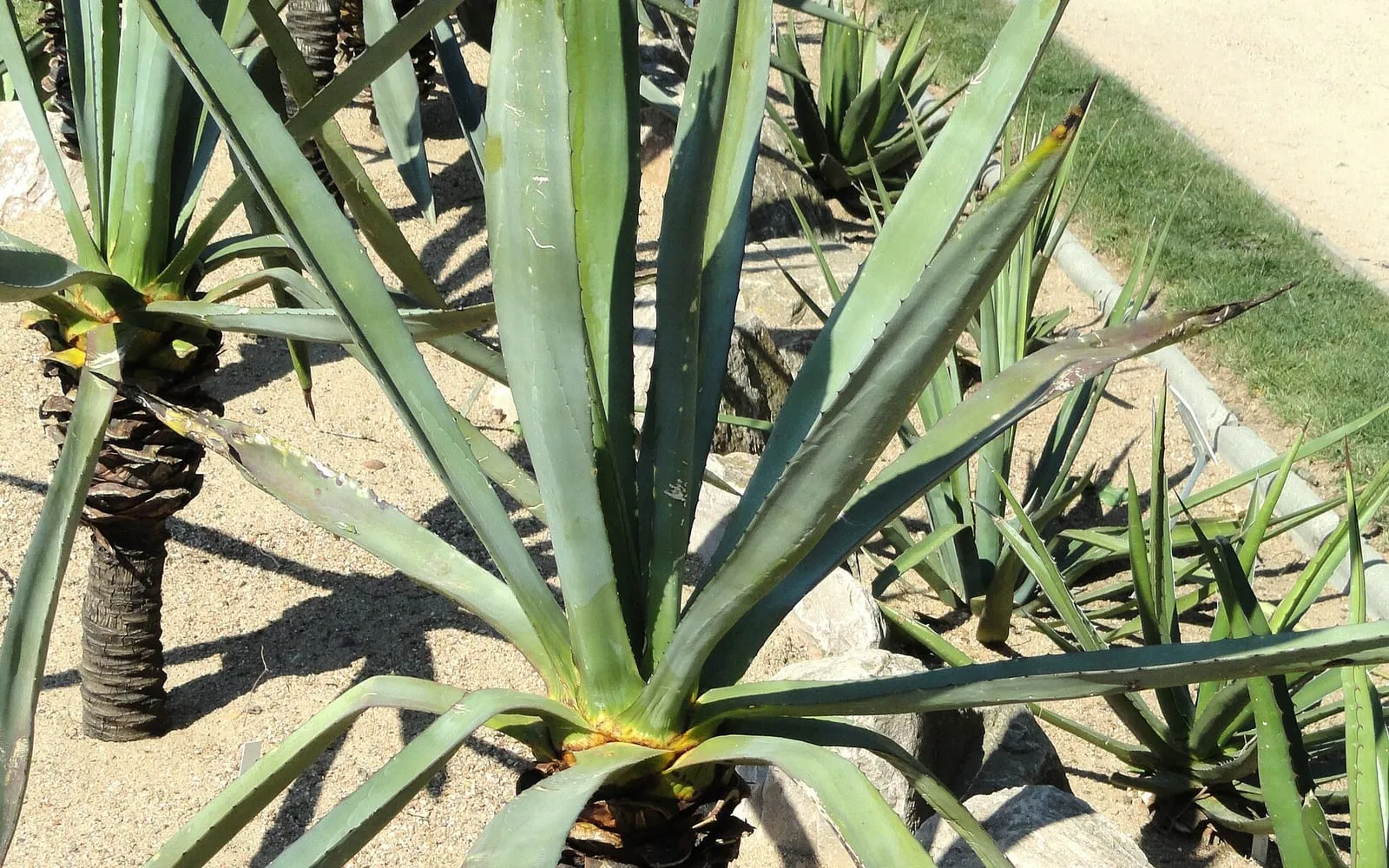
The leaves are long, narrow and stiff, grey-green with a thin pale margin set with evenly spaced teeth. Each blade ends in a sharp brown terminal spine, and the rosette widens as the plant ages.
Pups gather at the base as the plant matures, so a lone rosette builds into a spreading clump that divides freely. That readiness to sucker, along with the bulbils it later produces, makes the species one of the easiest agaves to bulk up.
Any one rosette flowers just once and then dies, but its two ways of increasing mean the plant is not usually lost. The tall, branched stalk carries both flowers and, later, plantlets, though a container specimen rarely gets that far.
Where it is from
This agave grows on rocky slopes and in dry scrub on Aruba, Bonaire and Curacao. The air stays hot through a marked wet-and-dry cycle, the stony ground sheds water quickly, and frost never occurs.
That habitat gives the basic pot culture. It thrives in good light in compost that dries between waterings, and it has little tolerance for cold, sodden roots.
How it grows
Through the warm months the leaves lengthen and pups push up round the base, then growth slows as the light declines. In bright conditions the leaves stay stiff, slim and cleanly edged; in a dim corner they slacken and the pale rim fades.
Give it a coarse, free-draining compost and water once the surface has dried. The leaves store water, so a dry interval passes without harm, whereas a crown left sitting in damp turns to rot.
Warmth keeps it going, and as a frost-tender plant it needs to stay above roughly 5 deg C. Breaking off a rooted pup is the fastest increase, and where a plant has flowered, the bulbils it scatters pot up much like seedlings.
Through the seasons
Spring restarts growth as light returns. Increase watering and lift any spare pups for potting.
Summer brings the strongest growth. Water once the surface dries, and give the rosette full, direct light.
Autumn slows the plant. Reduce feeding and let the compost dry longer between waterings as the light drops.
Winter is a warm, dry rest. Water only now and then, and keep the clump clear of cold and wet.
Care difficulty
Easy, and quick to multiply where light and drainage suit it. Its pups, bulbils, stored water and low feeding needs make it forgiving. The danger is a cold, waterlogged pot rotting the roots, so keep it dry in winter. Its teeth and end-spines need room away from passers-by.
Watering
Once the top few centimetres have dried, water it through until water runs from the base, then let the pot finish draining. The leaves hold a reserve, so a dry gap suits the plant, while roots left standing in wet begin to rot.
Water very little through the cold months, when a chilled root run does the most harm. Read the compost instead of the calendar, since standing wet troubles this agave far more than a dry spell.
Warning signs, diseases and pests
Rot from a cold, waterlogged root run shows first as a soft patch low on the rosette or a crown that lifts loose when nudged. Improve the drainage, cut the watering hard, especially when it is cold, and keep it bright and warm.
Mealybugs wedge into the crowded leaf bases and pups, and spider mites appear when the air is dry. Check down into the clustered rosettes and treat any early colony with a wipe and a suitable spray.
Browning tips on the slim leaves point to dry air or uneven watering. Steadier watering and a little more humidity help.
Growing environment
Bright, direct light is what it needs. In it the leaves stay slim, stiff and cleanly outlined; in shade they sprawl and the rosette loses its shape.
Treat it as frost tender. Give it a warm position, clear of cold draughts, above roughly 5 deg C. A sunny sill or a light-filled room keeps it going, and a spell outdoors in high summer suits it well.
Set it in a light, fast-draining, gritty compost in a pot that empties freely, and leave the clump room to spread. Grip the pot to move it so the spined tips stay off your hands.
Feeding
One or two doses of a weak, balanced feed across the growing months keep the clump strong. Too much feed makes the leaves soft and overlong, so keep it weak.
Skip feeding in winter. Fresh gritty compost supports a new plant for a while, so feeding can wait until spring.
Troubleshooting
Why is my viviparous agave going soft at the base? A chilled, wet root run is the usual cause. Get the drainage sorted, water far less, and keep it warm.
How much light does it need? All the direct light you can spare. Shade opens the rosette and pales the leaf edges.
How often should I water it? Once the top of the compost dries, and only sparingly in winter, going by the mix instead of a fixed day.
How do I propagate it? Break a rooted pup off the clustering base, or pot up the bulbils a flowering plant sheds.
Is it safe around pets? The sap is a mild irritant and the ASPCA lists Agave as harmful to cats and dogs, so keep chewers off it and watch the leaf spines.
Viviparous Agave problem guides
Not sure what is wrong? See the common houseplant pests guide.