
Houseplant
Barril
Agave karwinskii
Also known as Agave karwinskii
Growing Agave karwinskii, an unusual trunk-forming Mexican agave of narrow grey leaves, known from the mezcal country of Oaxaca.
At a glance
- Difficulty
- Easy
- Water
- When the top few centimetres of mix have dried
- Light
- Bright light to full sun
- Temperature
- Warm; tolerates a light frost when dry, keep above about 5 deg C in a pot
- Humidity
- Low to average
- Hardiness
- USDA 9b-11, RHS H3, hardy to -3 C
- Type
- Perennial
- Height
- Up to 3 m
- Native to
- Mexico
An agave from the dry uplands of southern Mexico, storing water in thick leaves against drought. It needs strong light, warmth and sharp drainage, and takes a brief light frost only when dry. Keep a potted plant above about 5 deg C, since cold, wet compost rots its roots and crown.
Hardiness zones describe winter cold alone. Summer heat, humidity, rainfall and the length of the growing season decide as much, so treat the range as the outer limit rather than as a recommendation.
Toxic if eaten
- Do not eat
- The leaves and sap
- Harm from
- Handling it, eating it and sap in the eyes
- Affects
- People, cats and dogs
Agave karwinskii, the barril, has not been assessed by the ASPCA under its own name. Agave americana is listed as toxic to cats, dogs and horses, and the same irritant chemistry runs through the genus. The sap carries calcium oxalate crystals and saponins, which can blister or inflame skin and burn the mouth, and sap in the eye is painful and needs rinsing. A pet or child that chews a leaf may drool, vomit or have diarrhoea. Wear gloves and eye protection when cutting it, and wash any sap off skin.
Sources: ASPCA toxic and non-toxic plants, RHS potentially harmful garden plants
About
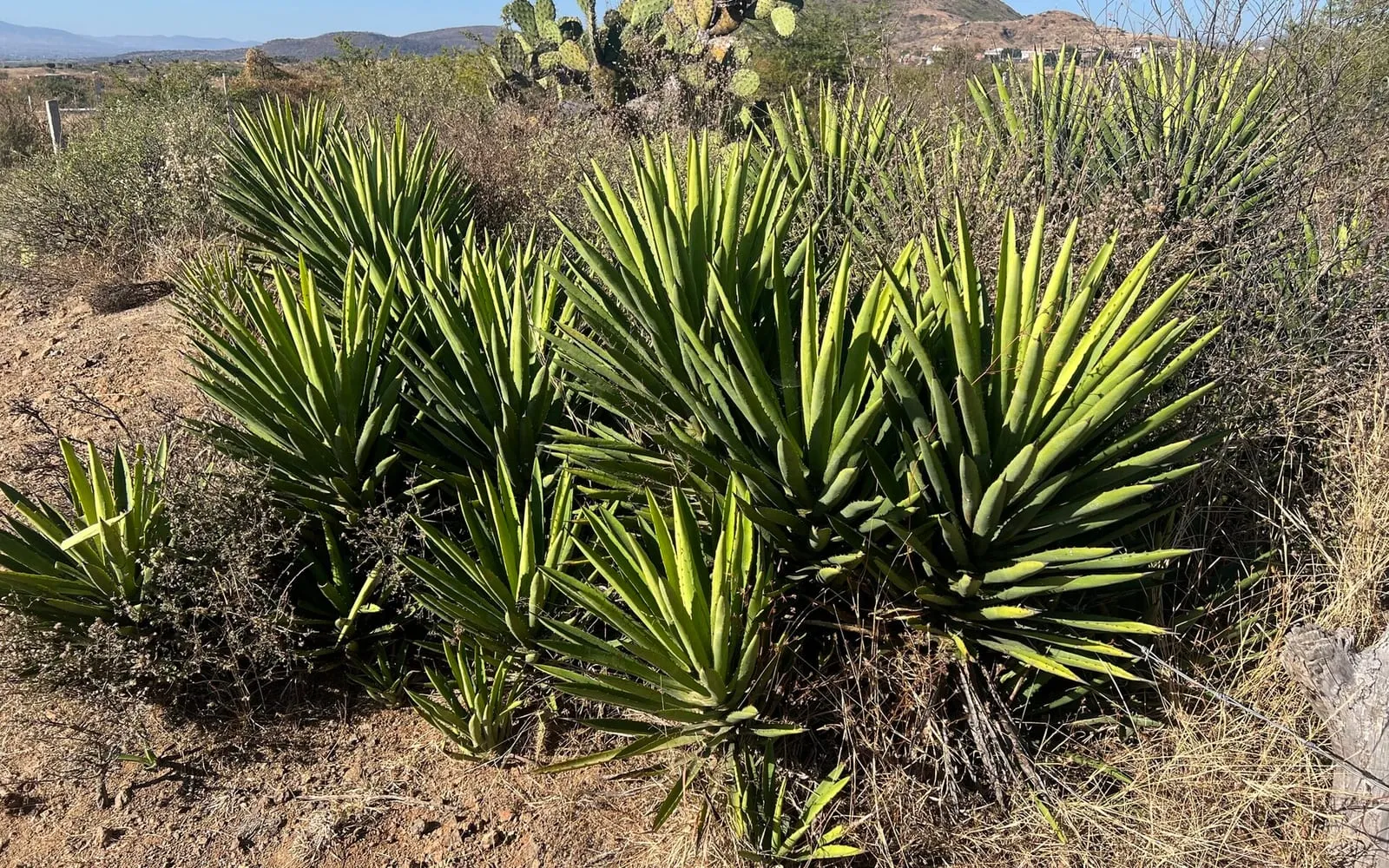
Barril is one of the more unusual agaves. Instead of sitting flat on the ground, it lifts its rosette on a woody trunk that thickens and lengthens with age. In its homeland it grows in long files along dry hillsides, each plant clonally linked to the next, so a stand can look like a row of small palms crowned with narrow grey leaves. Growers know it from the mezcal trade, where several regional forms are cut and roasted, and its architectural, slightly bristly outline makes it useful as a slow pot plant.
Appearance and character
The rosette is made of stiff, narrow leaves, greyish to a soft blue-green, edged with small dark teeth and finished with a sharp terminal spine, so handle the plant carefully. As lower leaves die and the stem lengthens, the plant develops its distinctive short trunk, sometimes ringed with old leaf bases. It suckers freely, producing young plants around the base that build the plant into a clump over time. Like all agaves it is monocarpic, so a mature rosette flowers once, on a tall branched spike, then dies, leaving its offsets to replace it.
Where it is from
The plant comes from the semi-arid uplands of southern Mexico, chiefly Oaxaca and Puebla, growing on stony, sun-baked slopes among thorn scrub. Rainfall there is seasonal and modest, the soil is thin and mineral, and the plant stores water in its fleshy leaves and trunk to get through the dry months. Frost is rare there, so a hard freeze is beyond what it is adapted to handle. Those conditions point to strong light, sharp drainage and a dislike of sitting wet.
How it grows
Growth comes in the warm season, when the rosette produces fresh leaves from the centre and the stem gains a little height, then slows through the cooler, darker months. It is single-trunked and produces pups at the base. Left alone it forms a small colony; lifted and split, those pups make easy new plants and are the usual way it is increased.
The trunk forms slowly, so a young plant can spend years as a low rosette before it looks tree-like. Avoid overpotting during that stage; a tight, draining pot is safer than a large pot of damp mix.
Through the seasons
Spring starts growth as warmth returns, the point at which to resume regular watering and a first light feed.
Summer is the main growing season; give bright light or gentle sun and a good soak whenever the top of the mix has dried.
Autumn slows things down, so ease back on water and stop feeding as the light fades.
Winter is a warm, dry rest above about 5 deg C, kept barely moist and well away from hard frost.
Care difficulty
Easy and tough, since it is adapted to dry places. The two ways to go wrong are cold and wet: a chilly, sodden pot rots the roots and the base of the trunk, and prolonged cold below its comfort zone damages the leaves. Give it light, warmth and a gritty mix that drains at once, water with restraint, and it can grow for years between repottings.
Watering
Through the warm months, water when the top few centimetres of compost have dried, soaking the pot and then letting it dry down again before the next drink. The thick leaves and trunk store plenty, so it tolerates a missed watering far more readily than an excess. As temperatures drop, cut right back and keep it only just moist through winter, since cold combined with wet compost is what rots agaves. Always empty the saucer; standing water at the roots is the easiest route to trouble.
Warning signs, diseases and pests
A base or trunk that turns soft, dark and foul is rot, brought on by cold wet compost, and it calls for cutting away all affected tissue and letting the plant dry thoroughly. In warm, dry, still air spider mites may stipple and dull the leaves, while mealybugs settle in the leaf axils and among the pups; treat both early, mites with better air and a rinse, mealybugs with dilute alcohol on a brush. Ragged brown scars usually come from rough handling against the spines instead of from any disease.
Growing environment
Stand it in the brightest spot you have, where it will take direct sun and hold its tight, grey rosette; poor light draws the leaves long, soft and floppy. Warmth suits it year round, and it needs dry air. Pot it in a free-draining succulent mix heavy on grit and pumice, in a container only a size larger than the roots, and site it where its sharp spine tips will not catch passers-by. Repot infrequently, mainly to divide off crowded pups.
Feeding
A dilute balanced feed once or twice through the growing season keeps the rosette full and the pups coming, and that is enough. Feed only when the plant is in active growth, and give nothing over the winter rest. Newly potted or freshly divided plants should be left unfed until they have rooted and started to grow. Heavy feeding pushes soft, over-large leaves that lose the firm, compact character of a well-grown agave.
Troubleshooting
Why are the leaves floppy and pale? Too little light is the usual cause; move it somewhere brighter, and new leaves will come firmer and greyer.
How much sun can it take? Plenty. Bright light to full sun keeps it compact, though ease a shaded plant into strong sun over a week or two to avoid scorch.
How often should I water it? When the top few centimetres of mix have dried in summer, and only sparingly through winter.
How do I make more plants? Detach the rooted pups that form around the base and pot them separately; this is far easier than raising it from seed.
Is the barril safe with animals? Its sap is an irritant and the spines are sharp, so, as the toxicity note above sets out, keep it clear of pets that chew and wash any sap off your skin.
Barril problem guides
Not sure what is wrong? See the common houseplant pests guide.