
Houseplant
Desert Agave
Agave deserti
Also known as Agave deserti
How to grow Agave deserti, the desert agave, a clumping grey rosette of the American southwest deserts with a stout spine and a single late bloom.
At a glance
- Difficulty
- Easy
- Water
- When the mix has dried right through
- Light
- Full sun to bright light
- Temperature
- Tolerates light frost when dry; keep dry in cold weather
- Humidity
- Low
- Hardiness
- USDA 9-11, RHS H3, hardy to -7 C
- Type
- Perennial
- Height
- 30-60 cm
- Native to
- southwestern North America
A desert agave from the Sonoran, Mojave and Colorado deserts and Baja California, where winters are cold and dry and summers are hot. It takes a short frost of several degrees below freezing if the ground is dry, but cold, wet compost rots it. Zones do not show that winter wet, instead of cold, is what kills it.
Hardiness zones describe winter cold alone. Summer heat, humidity, rainfall and the length of the growing season decide as much, so treat the range as the outer limit rather than as a recommendation.
Harmful if eaten
- Do not eat
- The leaves and sap
- Harm from
- Eating it and handling it
- Affects
- People, cats and dogs
Agaves carry a sap with calcium oxalate crystals and saponins. On skin it can cause redness, itching and dermatitis, and eating the leaves causes mouth irritation, drooling, vomiting and diarrhoea. The ASPCA lists Agave (as Agave americana) as toxic to cats and dogs, and this page applies that genus-level entry to Agave deserti. The spined tip and teeth can also puncture skin. Wear gloves when handling or repotting, wash sap off skin, and keep chewing pets away.
Sources: ASPCA toxic and non-toxic plants, RHS potentially harmful garden plants
About
Agave deserti is well named, growing on some of the driest ground in North America across the Sonoran, Mojave and Colorado deserts and down into Baja. It forms a modest grey rosette that clumps outward over the years, and it has a long human history behind it.
Indigenous peoples of the southwest roasted the swollen hearts of mature plants in earth ovens for food, and harvested the tough leaf fibres, so the species carries centuries of use in the desert economy. That same toughness makes it an undemanding plant to keep, storing water in its leaves and tolerating long dry spells.
The care is simple where the conditions match its home. It needs strong light, a footing that drains fast and warmth in a pot, and it will not survive a chilly, waterlogged root run. Grown lean and bright, it needs little from a keeper beyond cautious watering.
Appearance and character
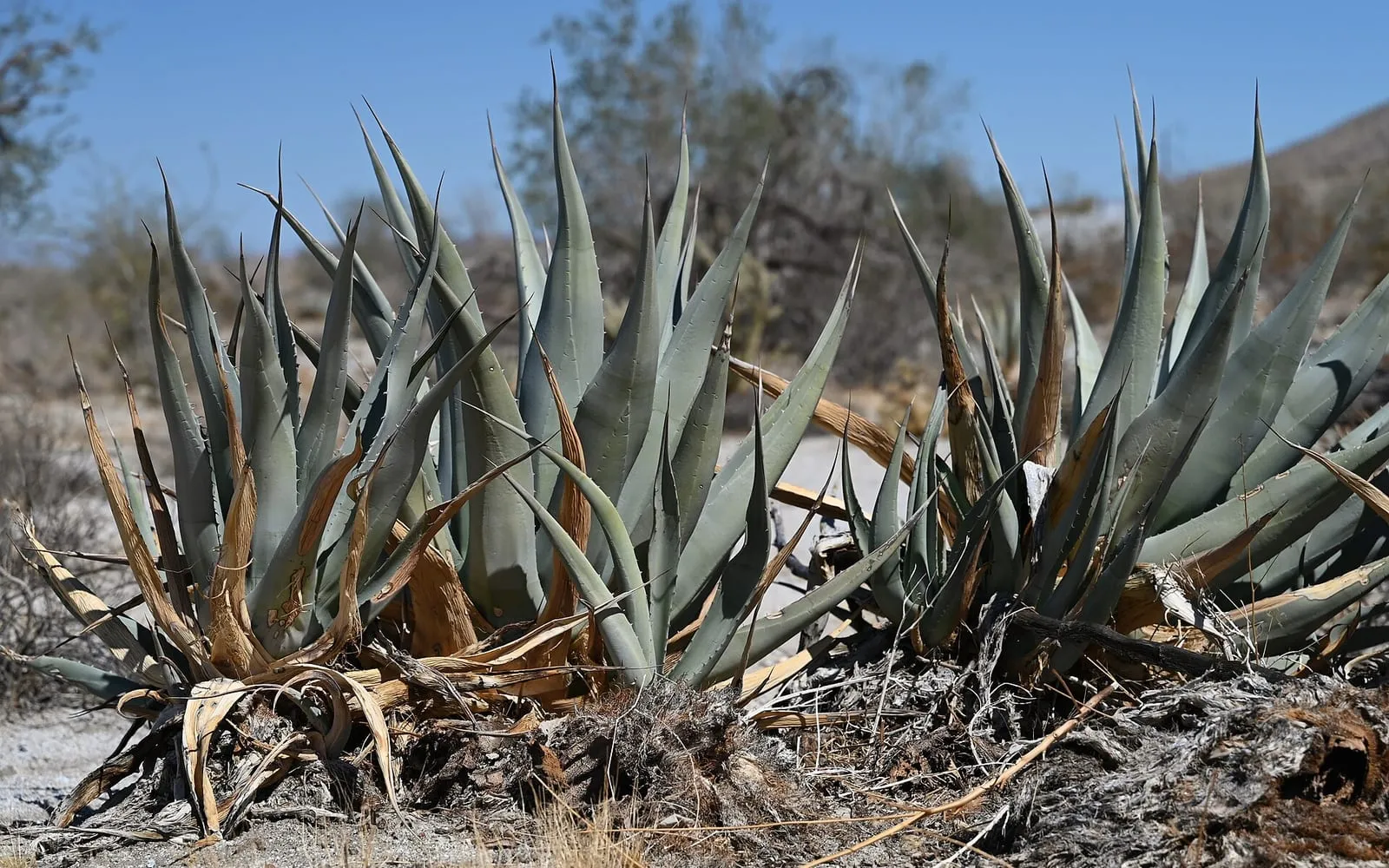
The leaves are stiff, greyish and moderately broad, tapering to a hard point, with pale margins set with small curved teeth. A stout terminal spine finishes each blade, and the whole rosette holds a chalky, subdued tone that suits dry, bright settings.
Offsets rise on short underground runners around the parent, so a single rosette gradually assembles into a loose colony. That habit lets the plant spread across desert gravel in the wild and fill a pot or a dry bed in cultivation.
Like the rest of the genus it flowers once and dies. After many years a tall, sparsely branched stalk carries clusters of yellow blooms high above the rosette, and once seed is set the flowered plant dies, leaving its pups to continue. A potted specimen almost never reaches that point.
Where it is from
Canyon walls, gravel fans and stony slopes across the arid American southwest are its habitat, in a land where rain arrives in a few brief bursts and long dry periods follow. Desert winters turn cold, yet the earth stays dry, and standing water is not part of the plant’s normal conditions.
In a pot, copy those conditions as closely as you can. Give it strong light and a stony compost that drains as soon as you water, and never let a cold container sit wet. Warmth, sun and grit suit it best.
How it grows
The warm months are when it grows, widening the rosette and producing pups at its foot, and the cool months are for rest. Give it enough light and the leaves harden and hold their grey; keep it too shaded and they green up and the centre draws out thin.
Its home is a coarse, stone-laced compost. Once potted, leave the watering until the blend has dried right to the bottom, since the swollen leaves store enough water for long dry spells indoors. Steady damp causes rot.
It takes a light frost if the compost is dry, though a cold, wet pot is beyond it. The simplest increase is to detach one of the many pups, already rooted, and start it in fresh grit.
Through the seasons
Spring rouses the plant as the light climbs. Ease the watering back in and split off any crowded pups.
Summer is its main growing season. Water only once the blend has dried out, and set it where nothing shades the sun.
Autumn brings slower growth. Lengthen the dry spells between waterings and stop feeding.
Winter needs almost no water. Keep the plant dry, bright and protected from cold wet compost.
Care difficulty
Desert agave is easy if you keep it bright and dry. Its stored water, ready supply of pups and low feeding needs make it forgiving. A cold, wet pot is the main danger, so keep it almost bone dry in winter, and keep its teeth and hard tip away from reaching hands.
Watering
Push a finger into the pot and wait until the grit has dried all the way down before you water; then soak it and let the surplus drain away. The leaves store water, so it tolerates a long dry spell and rots only where the roots stay wet.
Cut watering to a bare minimum through winter, when a chilled and saturated pot can kill the plant. If a watering feels premature, wait; this desert plant handles dryness far better than standing damp.
Warning signs, diseases and pests
The classic failure is rot from a cold, sodden root run, shown by a soft, discoloured base or a rosette gone wobbly in its pot. Fix the drainage, water far less, especially when it is cold, and keep it under strong light.
Dry indoor air can encourage spider mites, and mealybugs hide around the base of the pups. Part the clustered rosettes to inspect, and treat any small colony before it spreads.
Browned leaf tips generally mean scorching, very dry air or erratic watering. Even out the watering and improve airflow.
Growing environment
Give it as much direct light as you can. Under full sun the rosette stays close and the leaves stay firm; in shade the form sags and the grey washes thin.
It is hardier than most agaves and takes a light frost when dry, so outside it needs shelter from winter rain instead of from cold. Keep a potted plant dry in winter. A blazing sill or a bright glasshouse suits it, and it can spend a hot summer outside.
Root it in a light, sharp, gritty compost in a pot that drains fast, and let the clump have space to broaden. Carry it by the pot to spare your hands the spined leaves.
Feeding
A thin, balanced feed once or twice in the growing season is enough. Overfeed and the leaves flop and stretch, spoiling the neat rosette, so keep the strength down.
Withhold feed while it rests over winter. A repot into fresh grit keeps it supplied, so the pot itself does more than bottled feed.
Troubleshooting
Why is my desert agave going soft? A chilled, wet root run. Fix the drainage, water far less, and keep it warm and bright.
How much light does it need? All the direct sun you can manage. Shade opens the rosette and fades the leaves.
How often should I water it? Once the compost has dried through, and barely at all in winter, judged by the mix.
How do I propagate it? Pull a rooted pup away from the parent and pot it on its own.
Is it safe around pets? The sap irritates mildly and the ASPCA lists Agave as harmful to cats and dogs, so keep chewers away and mind the teeth and tip.
Desert Agave problem guides
Not sure what is wrong? See the common houseplant pests guide.