
Houseplant
Thread-Leaf Agave
Agave schidigera
Also known as Agave schidigera
How to grow Agave schidigera, the thread-leaf agave, a slim Mexican rosette edged with curling white threads. It is mildly toxic.
At a glance
- Difficulty
- Easy
- Water
- Once the mix has dried through
- Light
- Full sun to bright light
- Temperature
- Hardy to about -9 deg C if kept dry; keep the compost dry in winter
- Humidity
- Low
- Hardiness
- USDA 8-10, RHS H4, hardy to -9 C
- Type
- Perennial
- Height
- 30-60 cm
- Native to
- Mexico
A rosette succulent from the dry highlands of western and central Mexico. It survives dry frost to about -9 deg C but not cold combined with wet, so it needs sharp drainage and shelter from winter rain where frosts occur. It needs full sun and long dry spells.
Hardiness zones describe winter cold alone. Summer heat, humidity, rainfall and the length of the growing season decide as much, so treat the range as the outer limit rather than as a recommendation.
Harmful if eaten
- Do not eat
- The leaves and sap
- Harm from
- Eating it and handling it
- Affects
- People, cats and dogs
Agave schidigera, the thread-leaf agave, carries a mildly irritant sap, and the ASPCA lists Agave as toxic to cats and dogs because of its saponins and calcium oxalate crystals. A pet or child that chews it may drool or have a mild stomach upset, and the sap can cause a rash on skin. Keep it away from pets that chew, and wash the sap off skin.
Sources: ASPCA toxic and non-toxic plants, RHS potentially harmful garden plants
About
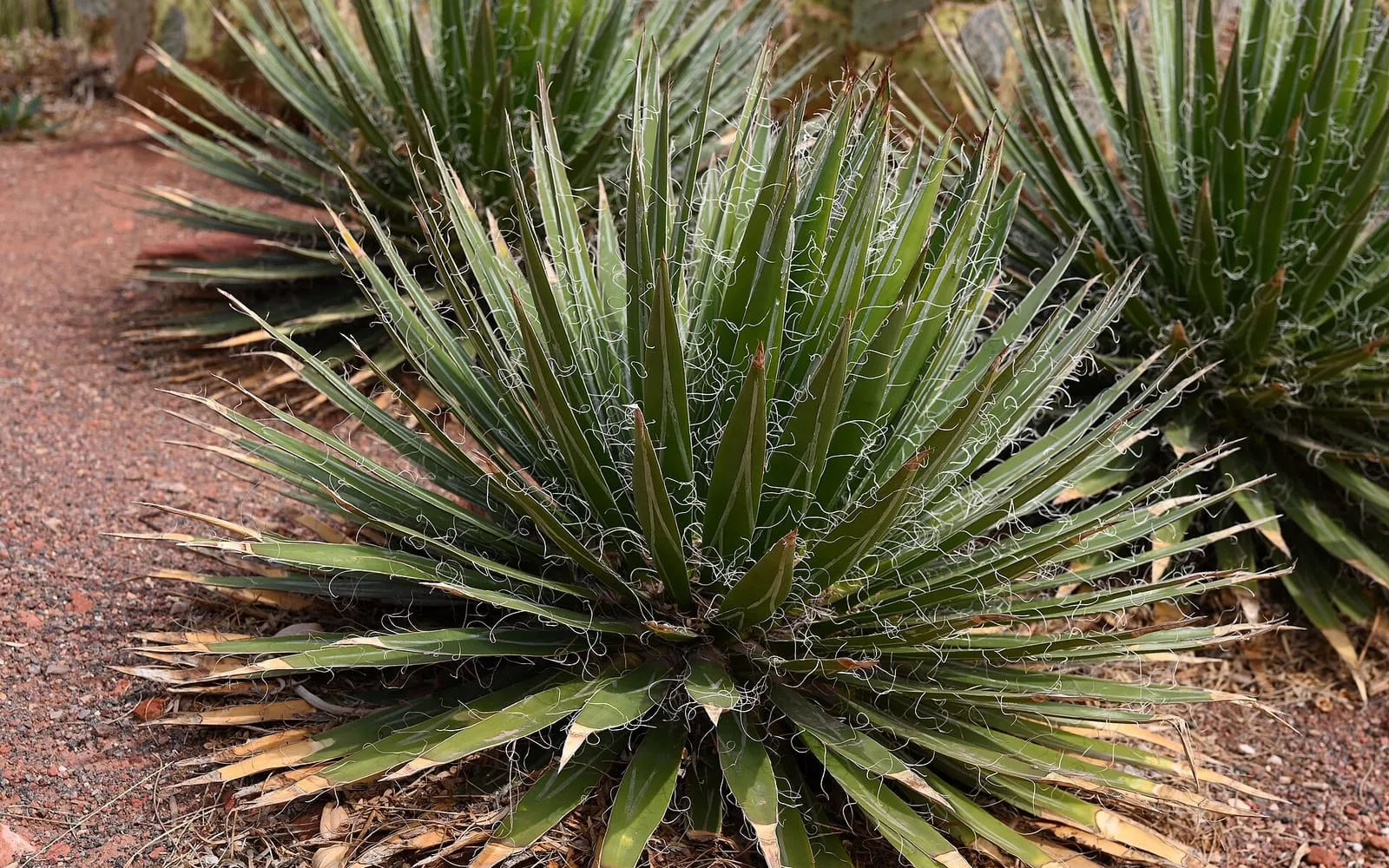
Agave schidigera has narrow leaves edged with fine white threads. The filaments peel from the margins and curl, framing the rosette with a pale fringe. The epithet points at those splinter-thin threads, which are the plant’s main feature.
It grows on rocky ground across western and central Mexico as a lone, tidy rosette close kin to the filament-fringed Agave filifera. It stays small enough for a windowsill, and growers often choose the tightest, most heavily fringed clones for their neat pattern.
Little about its care is fiddly. The leaves store water, and the plant mainly needs sun, quick drainage and restrained watering. Chill it in a damp pot, though, and the roots rot.
Appearance and character
Each leaf is slim and firm, dark green, its faces scored with pale lines pressed in by neighbouring leaves while still folded in the bud. Instead of ordinary teeth, the margins carry curling white threads, and the blade ends in a fine spine.
The rosette keeps close and even, and the plant tends to grow alone instead of massing into a cluster. That tidy, single form is much of why it fits a shelf where a spreading agave would soon take too much room.
One flowering ends its life. Years on, a tall spike rises from the centre, seed follows, and the exhausted rosette fades. Behind glass that finale rarely arrives, so the fringed rosette is the display for its whole span.
Where it is from
It comes from the stony highlands of western and central Mexico, on volcanic and limestone slopes at middle elevations. The year turns warm with a long dry spell, and a downpour drains through the loose soil almost as soon as it lands.
On a windowsill, that means strong light and a mix that drains as soon as you water. It has no tolerance for a chilled, waterlogged container, so warmth, sun and grit are the conditions to copy.
How it grows
Fresh leaves stack up across the warm half of the year, and once the light thins the whole plant slows. In strong light the blades stiffen and the threads curl; without it, the leaves go soft and the threads droop straight.
Pot it in a chunky, quick-draining compost. Then hold back until the mix has gone dry to its depths, letting the leaves use their stored water through dry spells, because standing moisture rots the roots.
Wet cold rots it faster still in a pot. Dry frost does little harm, since it survives about minus 9 deg C outdoors where the compost stays dry, but keep a pot under cover through a wet winter. Pups are rare, which leaves seed as the route to more, and seedlings grow slowly.
Through the seasons
Spring starts growth as daylight builds. Start the odd watering again and shift a tight rosette into fresh grit.
Summer is the main growing season. A drink follows each time the mix dries out, under the brightest light you can find.
Autumn slows growth. Lengthen the dry spells and drop the feed as the sun weakens.
Winter is a dry rest. A rare sip keeps it going, well away from cold and damp.
Care difficulty
Undemanding, and orderly on a shelf because it usually keeps to one rosette. Its stored water and low feeding needs mean there is little to do. The main risk is a chilled, sodden root run, so keep it dry through winter. The end-spine is sharp, so set it beyond arm’s reach.
Watering
Let the grit dry from top to bottom, then flood the pot and empty the saucer. The leaves carry the rosette through drought, and wet roots are more dangerous than thirst.
In the cold months, almost stop watering, since a cold, wet pot rots it. If you are unsure, wait a few more days.
Warning signs, diseases and pests
The main threat is a chilled, saturated root run, showing as a mushy heart or a rosette that lets go of the compost when touched. Loosen the drainage, cut the water right down, chiefly in winter, and stand it somewhere warm and lit.
Dry rooms invite mealybugs into the leaf folds and spider mites onto the undersides. Look into the creases and deal with a small colony before it spreads.
Scorched tips usually trace to fierce sun through glass or irregular watering. Shade against the noon sun, water more evenly, and new leaves should come in cleaner.
Growing environment
Give it bright, direct light. In strong light the rosette stays tight and the threads curl; in shade it sprawls and the threads slump.
It tolerates dry frost down to about minus 9 deg C, but frost on wet compost kills it. Indoors, a cool bright room through winter suits it, and a warm summer outside agrees with it.
Grow it in a lean, fast-draining, gritty compost in a pot that empties at once, and turn it now and then for balance. Carry it by the pot so the spine stays off your hand.
Feeding
A pair of weak, balanced feeds through the warm months is enough. Too much feed makes the leaves swell and run long, spoiling the neat rosette, so keep the strength low.
Do not feed while it rests in winter. A move into fresh grit gives it enough until warmth returns.
Troubleshooting
Why is my thread-leaf agave caving in at the middle? A chilled, wet pot. Loosen the drainage, cut the water right back, and warm it up.
How much light does it need? As much direct light as you can give it. Shade makes the rosette sprawl and the threads droop.
How often should I water it? After the mix dries right through, and barely at all in winter, taking the cue from the compost.
How do I propagate it? From seed, given how seldom it puts out pups.
Is it safe around pets? The sap stings a little and the ASPCA counts Agave among plants that harm cats and dogs, so bar the chewers and respect the end-spine.
Thread-Leaf Agave problem guides
Not sure what is wrong? See the common houseplant pests guide.