
Houseplant
Tubergen Squill
Scilla mischtschenkoana
Also known as Scilla mischtschenkoana
How to grow tubergen squill, Scilla mischtschenkoana, a hardy bulb from the Caucasus and Iran with pale ice-blue, dark-striped flowers in late winter.
At a glance
- Difficulty
- Easy
- Water
- While in leaf and flower; dry when dormant
- Light
- Full sun to bright light
- Temperature
- Fully hardy; needs winter cold
- Humidity
- Average
- Hardiness
- USDA 4-8, RHS H6, hardy to -20 C
- Type
- Perennial
- Height
- 10-15 cm
- Native to
- the Caucasus, Iran
A bulb from cold mountain country in the Caucasus and Iran, flowering as the snow melts and resting dry through summer. It needs a cold winter and a dry summer rest, and it sulks in hot, humid climates with mild winters.
Hardiness zones describe winter cold alone. Summer heat, humidity, rainfall and the length of the growing season decide as much, so treat the range as the outer limit rather than as a recommendation.
Toxic if eaten
- Do not eat
- All parts, the bulb most of all
- Harm from
- Eating it
- Affects
- People, cats and dogs
Scilla mischtschenkoana, the tubergen squill, is toxic if eaten. Like other squills its bulb and leaves contain cardiac glycosides (bufadienolides), and swallowing them can cause drooling, vomiting, diarrhoea and, in larger amounts, a slow or irregular heartbeat. The bulb holds the most, and a dog that digs up and chews bulbs is the usual victim. Keep bulbs and plants away from pets and children, and wash your hands after handling them. A pet that has eaten bulbs needs a vet, or a poison information service for a person.
Sources: NC State Extension on Scilla, ASPCA toxic and non-toxic plants, RHS potentially harmful garden plants
About
Among the earliest bulbs of the year, tubergen squill opens its pale, ice-blue flowers in late winter, often as the snow is still going. Scilla mischtschenkoana carries a mouthful of a botanical name and a tidier garden one, the latter honouring the Dutch nursery of Van Tubergen that introduced it and once listed it as Scilla tubergeniana.
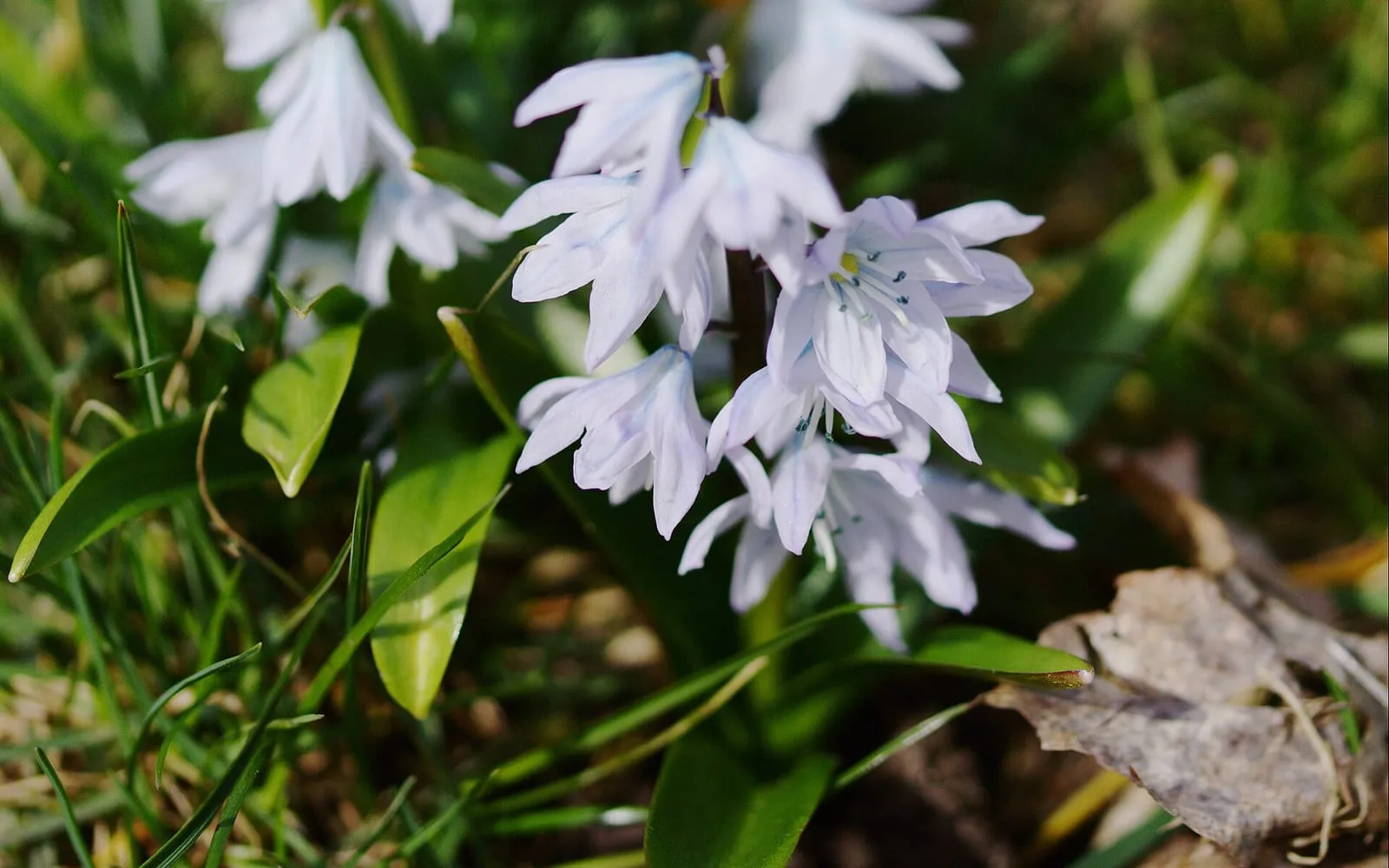
The flowers are the main feature, a soft silvery-blue so pale it can look almost white, each petal marked down the middle with a darker blue stripe. Low, hardy and quick to settle, it is one of the easiest small bulbs to naturalise in a sunny or lightly shaded spot, spreading gently over the years into drifts that flower before most of the garden has woken.
Appearance and character
The bulb sends up a few broad, glossy, channelled green leaves that appear with the flowers instead of ahead of them, forming a low, fresh tuft in late winter. Several short flower stems rise from a single bulb, opening in succession so the display lasts for weeks.
Each stem carries a small raceme of star-shaped flowers in the palest silvery-blue, every petal ruled with a deeper blue central line that gives the bloom a striped look at close range. The flowers sit low, barely clearing the leaves, and a naturalised patch makes a pale blue spread across the late-winter ground.
Where it is from
Scilla mischtschenkoana is native to the Caucasus and northern Iran, growing on mountain slopes and in meadows that are wet with snowmelt in late winter and spring and dry through summer. It comes from high, continental country with cold winters, so it is thoroughly hardy and used to flowering the moment the snow retreats.
That origin shapes its behaviour. It grows and flowers early, drawing on winter and spring moisture from melting snow, then dies back and rests dry through the summer. Its tolerance of cold is far greater than that of the Mediterranean and island squills, and it naturalises readily in cool-temperate gardens where they would struggle.
How it grows
The leaves and flowers push up together in late winter, the succession of short stems keeps the display going for several weeks, and by late spring the foliage yellows and the bulb settles into summer dormancy. Growth is early and quick, then over well before midsummer.
Plant the small bulbs in autumn, a few centimetres deep, in free-draining soil in sun or light shade, whether in a border, rock garden or grass to naturalise. The bulb increases freely by offsets and self-sows where happy, so a planting thickens into a drift on its own. Lift and divide a congested clump during dormancy if you want to spread it faster.
Through the seasons
Winter is when the leaves and pale blue flowers push up in the season’s last weeks, sometimes through lingering snow.
Spring continues the flowering into the early weeks, after which the leaves work on to feed the bulb.
Summer is dry dormancy, the foliage gone and the bulb resting until the cycle begins again.
Autumn is planting and dividing time, and cool, moist weather starts the roots working below ground.
Care difficulty
One of the easiest small bulbs to grow, hardy and adaptable, needing only free-draining soil and a position in sun or dappled shade. It needs almost no attention once planted and naturalises without fuss. The rare failure comes from waterlogged ground that rots the bulb, or from a starved, overcrowded clump that flowers thinly until it is divided and refreshed.
Watering
In open ground the bulb needs little or no watering, drawing on winter and spring moisture and resting dry in summer as it would on its native slopes. Water only in an unusually dry spring while the leaves and flowers are active.
Keep it dry through the summer dormancy, when a waterlogged bulb is at greatest risk of rot. In a pot, water through the late-winter and spring growth, then withhold water once the leaves fade and store the bulb dry until autumn. Free-draining soil does most of the work of keeping the bulb sound.
Warning signs, diseases and pests
Rot from wet, badly drained soil is the chief risk, most likely on a bulb sitting in wet ground through its summer rest, and it shows as a bulb that fails to reappear. Improve the drainage and keep the resting bulb dry; a rotted bulb is beyond saving.
Slugs and snails may graze the young leaves and low flowers in mild, damp late-winter spells, so protect emerging growth with grit where they are a problem. The bulb is otherwise trouble-free and needs no routine attention against pests or disease.
Growing environment
A position in full sun or light, dappled shade suits it, and it is happy in a border, rock garden, or short grass where it can naturalise. Unlike the tender island squills, it needs no protection from cold, being built for hard mountain winters.
The soil should be free-draining but need not be rich; the bulb thrives in ordinary garden ground so long as water does not stand around it in summer. Heavy, wet clay is the one soil to avoid or to improve with grit, and drainage counts for far more than shelter with this hardy plant.
Feeding
Feeding is rarely necessary in reasonable garden soil, where an annual autumn mulch of leaf mould or well-rotted compost keeps a naturalised colony going. A weak, balanced liquid feed while the leaves are green can help a pot-grown bulb or a planting in poor ground build up for the next year.
Stop feeding once the leaves start to fade, and give nothing during the summer rest. As with the other squills, heavy nitrogen encourages soft leaf at the expense of flowers.
Troubleshooting
When does it flower? Very early, in late winter, among the first bulbs of the year and sometimes pushing up through late snow.
Why is it called tubergen squill? After the Van Tubergen nursery that introduced it to gardens, which is also behind its old name Scilla tubergeniana.
Is it hardy? Yes, thoroughly so. It comes from cold mountains in the Caucasus and Iran and withstands hard winters far better than the tender island squills.
How do I get more plants? It increases by offsets and self-sown seed; lift and divide a clump during dormancy to spread it faster.
Is it safe around pets? No. The bulb and leaves contain cardiac glycosides that can upset the stomach and the heart rhythm, so keep them away from pets that dig or chew.
Tubergen Squill problem guides
Not sure what is wrong? See the common houseplant pests guide.