
Houseplant
Single-Leaved Squill
Scilla monophyllos
Also known as Scilla monophyllos
How to grow single-leaved squill, Scilla monophyllos, a small Iberian and Moroccan bulb with one broad leaf per bulb and a loose spike of blue spring stars.
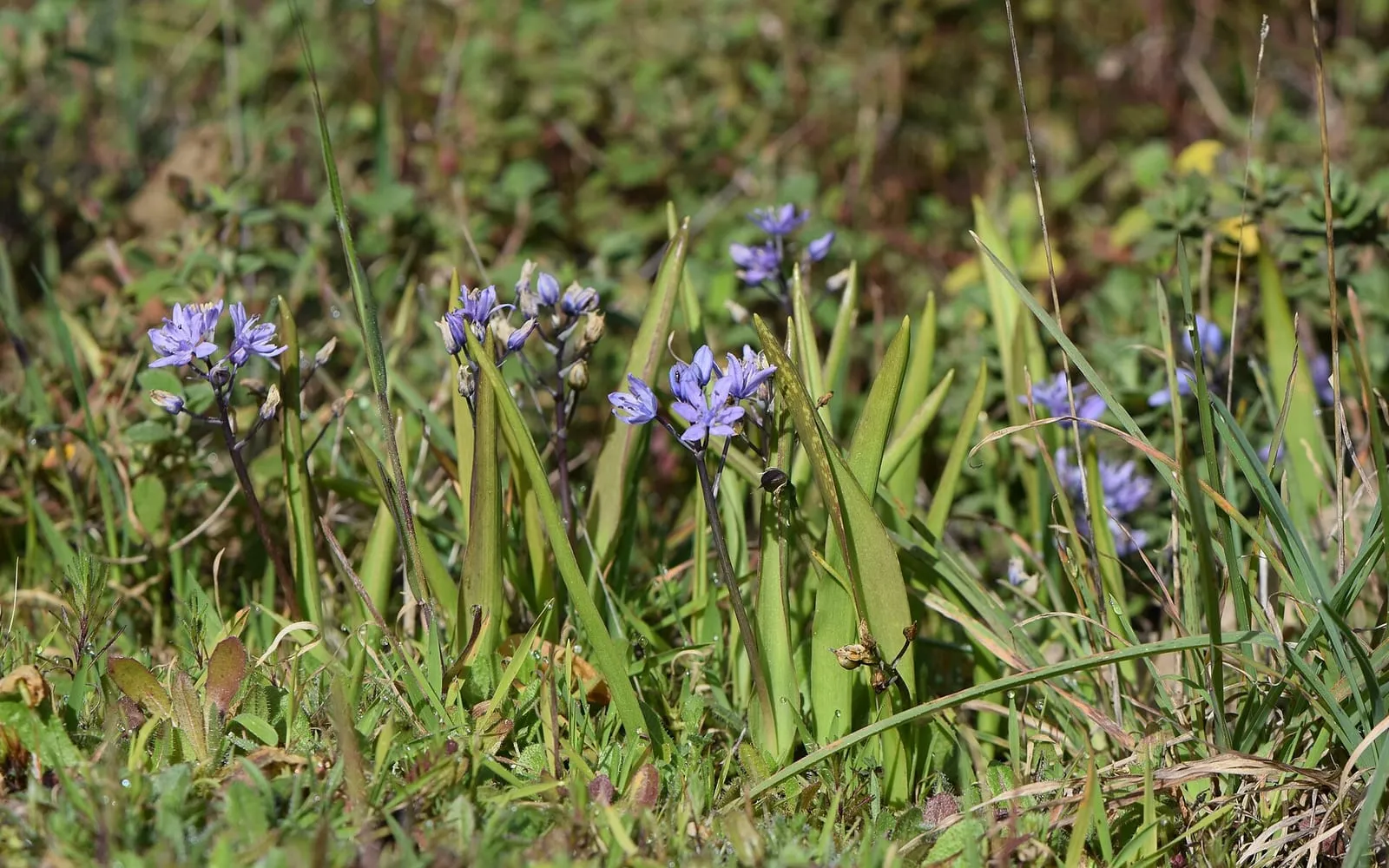
At a glance
- Difficulty
- Easy
- Water
- While in leaf and flower; dry when dormant
- Light
- Full sun to bright light
- Temperature
- Tolerates light frost, to about -5 deg C
- Humidity
- Average
- Hardiness
- USDA 8-10, RHS H3, hardy to -5 C
- Type
- Perennial
- Height
- 10-20 cm
- Native to
- southwestern Europe, North Africa
A bulb from Portugal, western Spain and Morocco, where winters are mild and wet and summers are dry. It tolerates light frost but is not a bulb for hard winters, so grow it in a pot under cover where winters fall much below -5 deg C. It needs a dry summer rest, and no published hardiness rating exists for this species, so the range is an estimate from its habitat.
Hardiness zones describe winter cold alone. Summer heat, humidity, rainfall and the length of the growing season decide as much, so treat the range as the outer limit rather than as a recommendation.
Toxic if eaten
- Do not eat
- The bulb most of all, and the leaves
- Harm from
- Eating it
- Affects
- People, cats and dogs
Scilla monophyllos, the single-leaved squill, has not been analysed in its own right, so this rating follows the genus. Squills and their close relatives in the hyacinth group can contain cardiac glycosides and irritant compounds, and swallowing the bulb or leaves can cause drooling, vomiting, diarrhoea and, in larger amounts, an irregular heartbeat. The bulb holds the most. Keep bulbs and plants away from pets and children, and wash your hands after handling them.
Sources: ASPCA toxic and non-toxic plants, RHS potentially harmful garden plants
About
The easiest way to recognise this squill is its single leaf. Scilla monophyllos usually raises one broad leaf from each bulb, occasionally two, while most other squills produce a tuft of several. That solitary leaf, sheathing the flower stem at its base, is the feature the species name records and the quickest way to tell the plant apart in growth.
It is a small bulb from the western fringe of the Mediterranean, carrying loose spikes of blue star-shaped flowers in spring above that lone leaf. In cultivation it is grown as a modest pot or rock-garden bulb, following the standard cycle of spring growth and flower and a dry summer rest below ground.
Appearance and character
Each bulb produces a single leaf, broad and strap-shaped, that wraps around the base of the flowering stem and is often still expanding as the flowers open. The occasional bulb offers a second leaf, but the one-leaf habit is the plant’s defining look and gives it its name.
The flower stem is slender and carries a short, loose raceme of small six-pointed flowers in clear blue to blue-violet, each held on a fine stalk so the head looks open rather than crowded. It is a small plant overall, a few inches high in flower, better appreciated up close in a pot or trough than massed from a distance.
Where it is from
Scilla monophyllos is native to the western Iberian Peninsula, across Portugal and western Spain, and to north-western Africa in Morocco. It favours open woodland, heathy ground and damp grassland on acidic, sandy soils, in a region with an Atlantic-tinged Mediterranean climate of wet winters and dry summers.
Its life follows that pattern. The leaf and flower stem grow through the mild, moist late winter and spring. The bulb builds its reserves while the ground is damp, and the dry summer sends it into dormancy. It is used to acidic, free-draining ground that is wet in the cool season and parched in the warm one, and it grows best when that seasonal swing is reproduced.
How it grows
The single leaf and the flower stem emerge together in early spring, the flowers open over a couple of weeks, and by early summer the leaf yellows and the small bulb goes dormant. Growth is compact and the plant never needs much space.
Plant the small bulbs in autumn, a few centimetres deep, in a gritty, slightly acidic, free-draining mix in a pot, trough or sharp rock-garden pocket, and water as growth begins. The bulb makes offsets slowly, so a clump builds up over years; lift and separate it during dormancy when it grows crowded. Seed is the other route and gives larger numbers, though flowering-sized bulbs take a few years to develop.
Through the seasons
Spring brings the lone leaf and the flower stem up together, and the blue stars open above the freshly grown foliage.
Summer is dormancy, the single leaf withered and the small bulb resting dry until autumn.
Autumn is the time to plant and to settle established bulbs, with cool moisture starting fresh roots.
Winter passes with the bulb at rest or barely stirring, waiting on the lengthening, milder days of early spring.
Care difficulty
This is easy in a gritty, acidic mix that drains freely, and forgiving of neglect through its summer rest. The main pitfalls are soil that is too limy or too wet in summer. Sharp drainage, an acid-leaning compost and a dry dormancy keep it healthy, and its small size suits a windowsill pot or an alpine trough.
Watering
Water through the spring growing season while the leaf and flowers are active, keeping the mix lightly moist and allowing the surface to dry between waterings. The bulb is adapted to dry summers and cannot abide a waterlogged root run.
Cut back as the leaf begins to yellow in early summer, then withhold water through the dormant months so the resting bulb stays dry. Summer wet is the main cause of a bulb rotting away unseen, so err towards dryness once the foliage has gone. Rain-soft or lime-free water suits this acid-loving plant if your tap water is hard.
Warning signs, diseases and pests
A bulb that rots and fails to reappear has usually been kept wet during its summer rest. Improve the drainage and keep the bulb drier through dormancy. Alkaline soil can also weaken it over time, showing as poor, yellowish growth, which an acidic, gritty mix prevents.
Slugs and snails may nibble the single soft leaf in damp spring weather, and losing that one leaf sets a bulb back badly, so protect emerging growth with grit. Aphids occasionally cluster on the flower stem; rub them off or treat a heavy infestation early.
Growing environment
Give it a bright position with sun for much of the day, which keeps the single leaf sturdy and encourages flowering. A pot, trough or raised rock-garden bed shows the small plant off and lets you control the soil.
The compost should be gritty, sharply drained and on the acidic side, reflecting the sandy heathland soils of its homeland. Avoid limy or heavy ground, and stand a potted bulb somewhere warm and dry once the leaf dies down for its summer rest. Shelter matters less than drainage and the right soil reaction.
Feeding
Feed sparingly while the leaf is green in spring, using a weak, balanced, lime-free liquid feed once or twice, which is enough to build the small bulb for next year. Fresh compost supports a newly potted bulb without any extra feeding in its first season.
Give no feed once the leaf begins to fade, and none at all during dormancy. This is a plant of lean ground, and rich feeding forces soft growth instead of better flowers.
Troubleshooting
Why does it have only one leaf? That is its natural habit, and the reason for the name monophyllos. Most bulbs raise a single broad leaf, with an occasional one producing two.
Why did the bulb rot over summer? Almost always water on a bulb that should be resting dry. Keep the pot dry through dormancy and improve the drainage of the mix.
Does it need special soil? It prefers a gritty, free-draining compost on the acidic side, so avoid lime and hard tap water where you can.
How do I get more plants? Separate the slowly formed offsets during dormancy, or raise fresh bulbs from seed over a few years.
Is it safe around pets? No. Squills can contain cardiac glycosides, so keep the bulbs and plant away from cats, dogs and children, and call a vet or a doctor if a bulb has been eaten.
Single-Leaved Squill problem guides
Not sure what is wrong? See the common houseplant pests guide.