
Houseplant
Pyrenean Squill
Scilla lilio-hyacinthus
Also known as Scilla lilio-hyacinthus
How to grow Pyrenean squill, Scilla lilio-hyacinthus, a shade-loving Pyrenean woodland bulb whose loose, scaly bulb is built more like a lily's.
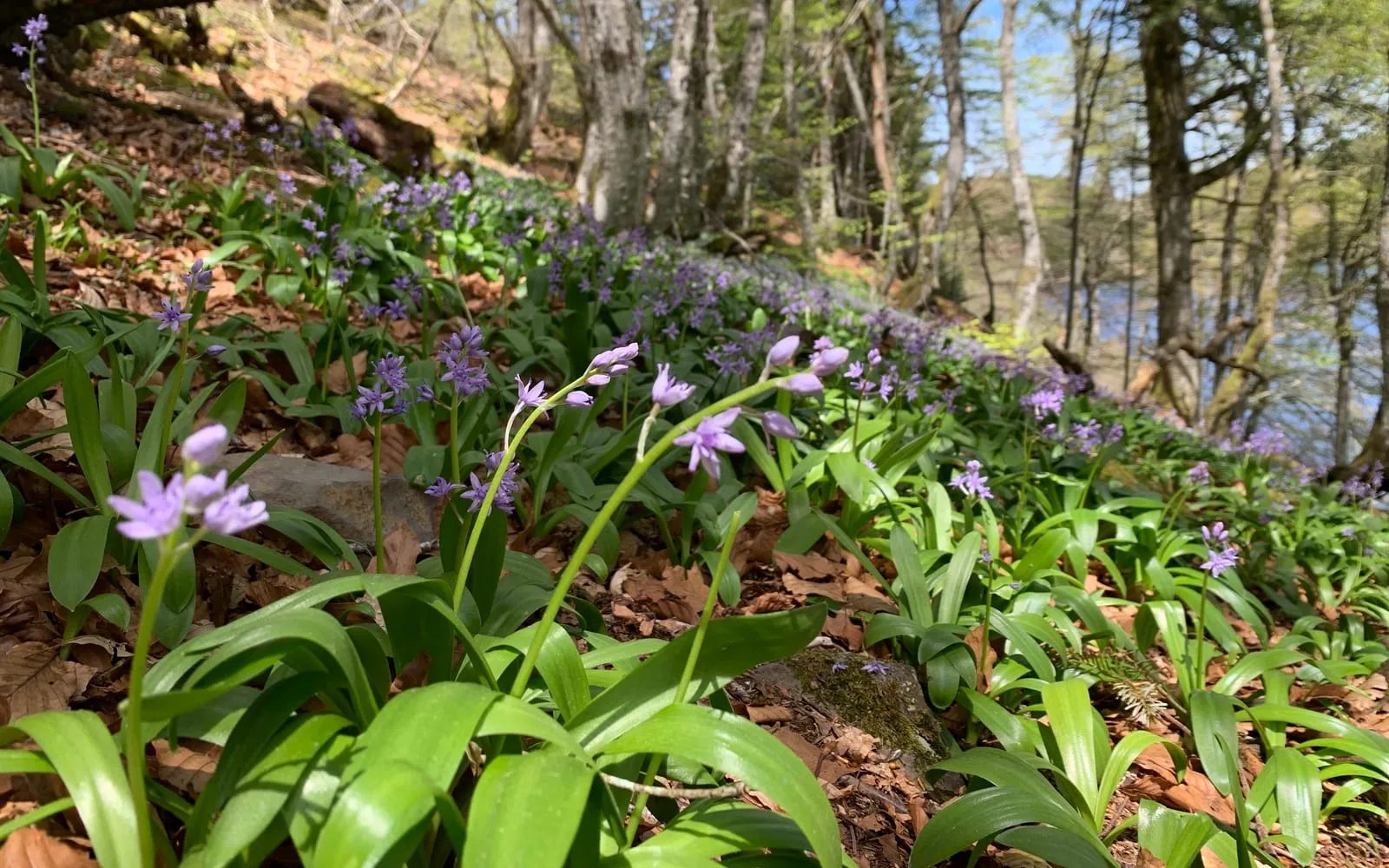
At a glance
- Difficulty
- Easy
- Water
- While in leaf and flower; dry when dormant
- Light
- Partial shade; full sun where the soil stays moist
- Temperature
- Hardy to about -20 deg C
- Humidity
- Average
- Hardiness
- USDA 6-9, RHS H6, hardy to -20 C
- Type
- Perennial
- Height
- 20-40 cm
- Native to
- southwestern Europe
A bulb of the Pyrenees and neighbouring mountains of south-western Europe, fully hardy to about -20 deg C. It needs cool, moist, humus-rich soil in spring and shade once the canopy closes, and it does badly in hot, dry ground in summer.
Hardiness zones describe winter cold alone. Summer heat, humidity, rainfall and the length of the growing season decide as much, so treat the range as the outer limit rather than as a recommendation.
Harmful if eaten
- Harm from
- Eating it
- Affects
- People, cats and dogs
Scilla lilio-hyacinthus, the Pyrenean squill, is toxic if eaten. Like other squills its bulb and leaves can contain cardiac glycosides, and swallowing them can cause drooling, vomiting, diarrhoea and, in larger amounts, an irregular heartbeat. The bulb holds the most. Keep bulbs and plants away from pets and children, and wash your hands after handling them.
Sources: ASPCA toxic and non-toxic plants, RHS potentially harmful garden plants
About
The species name explains the difference. Scilla lilio-hyacinthus means the lily-hyacinth, and the reference is to its bulb, which is built like a lily’s from loose, fleshy, overlapping scales instead of the tight papery tunic almost every other squill carries. Break open a dormant bulb and it looks pale yellow and open-structured, closer to a small lily than to a grape hyacinth.
The plant is a woodland bulb, native to the shaded, damp mountain forests of the Pyrenees and the ranges around them. That origin sets it apart from its dry-slope relatives, since it needs cool shade and steady moisture where they demand baking sun. In a shady spring border or a woodland pocket it forms handsome clumps of broad glossy leaves topped by cones of blue flowers.
Appearance and character
The bulb is large, rounded and yellowish, made of loosely packed scales that peel apart in the hand, and it sits shallow in the leaf litter. From it emerge several broad, bright green, strap-shaped leaves, wider and more lush than the narrow foliage of most squills, forming a bold low rosette early in spring.
The flower stem rises stout and upright through the leaves, carrying a dense, roughly conical head of many small starry flowers in clear blue to lilac, each with spreading pointed petals. The overall effect is fuller and leafier than a typical squill, more of a small blue-flowered woodland perennial than a wispy alpine.
Where it is from
Scilla lilio-hyacinthus is native to south-western Europe, chiefly the Pyrenees and the mountains of northern Spain and southern France, with scattered populations in nearby uplands. It grows in cool beech and mixed woodland, on shaded banks and along stream sides, in leaf-rich soil that stays moist through the growing season.
This is a mountain woodland climate, damp and cool instead of hot and dry, and the plant behaves accordingly. It comes into leaf and flower in spring while the ground is still moist and the tree canopy open, then dies back for summer once the shade closes overhead. Unlike Mediterranean squills, it never wants a scorched summer bake, and a bulb parched hard in dry ground suffers for it.
How it grows
The leaves appear early in spring, the flower cone follows within weeks, and by early summer the foliage yellows and the bulb settles into a shallow dormancy under the leaf litter. Even at rest it prefers ground that stays cool and slightly moist instead of dust-dry.
Plant the scaly bulbs in autumn, shallowly, in humus-rich soil in part or full shade, or pot them in a leafy, moisture-retentive compost. The loose scales give an unusual propagation route. Detach a few plump outer scales from a dormant bulb, as you would from a lily, and pot them up to form new bulblets. Offsets around the parent and fresh seed both work as well.
Through the seasons
Spring is the main display, with leaves unfurling first and the blue cones opening above them while the woodland floor is still bright.
Summer sends the plant into dormancy as the canopy closes and the leaves die back, though the shallow bulb prefers the ground never to dry to dust.
Autumn is planting and settling time, and a cool moist spell may start fresh roots on the resting bulb.
Winter passes with the bulb dormant in the leaf litter, needing only that the soil stays cool and unfrozen at depth.
Care difficulty
Straightforward in the right spot, which for this plant means shade and moisture instead of sun and sharp drainage. Given a cool, leafy, humus-rich position it can persist for years and slowly build into a clump. The commonest mistake is treating it like a sun-loving Mediterranean bulb and planting it hot and dry, where it dwindles and disappears. Shade and a moisture-holding soil are what matter most.
Watering
Keep the soil steadily moist through the spring growing season, since the plant uses plenty of water while leaves and flowers are active and does badly with drying out then. In a pot, water whenever the surface begins to dry, using a compost that holds moisture without turning boggy.
Reduce watering as the leaves fade in early summer, but do not bake the bulb bone-dry as you would a desert squill. A cool, barely moist dormancy suits it, reflecting the damp woodland floor it rests in at home. Waterlogged winter soil, though, still rots the scales, so drainage must remove standing wet.
Warning signs, diseases and pests
A bulb that shrivels or fails to reappear has usually been kept too hot and dry in summer, the opposite of the problem seen with Mediterranean squills. Move it to cooler, shadier, more humus-rich ground. Standing winter water is the other extreme and rots the loose scales, so the soil must drain even while it holds moisture.
Slugs and snails are the main animal pests, drawn to the broad soft leaves in the damp shade the plant favours; trap them or clear their shelter around emerging growth. The plant is otherwise little troubled and needs no routine spraying.
Growing environment
A shaded or part-shaded position suits it best, under deciduous trees or on a north-facing bank, where spring light reaches the leaves before the canopy closes. Deep, leaf-rich, moisture-retentive soil is ideal, the sort that stays cool and damp through spring.
This is one squill that does not want a hot, dry, gritty bed. Improve a thin or sandy soil with leaf mould or garden compost before planting, and mulch the surface each autumn to feed the soil and hold moisture. Shade and soil that never bakes matter more than shelter.
Feeding
Feed lightly. An annual autumn mulch of leaf mould or well-rotted compost gives this woodland bulb most of what it needs, mimicking the steady enrichment of a forest floor. A weak balanced liquid feed once or twice in spring can support a pot-grown plant while the leaves are active.
Avoid strong or high-nitrogen feeds, which force soft leaf and little flower. A newly planted bulb draws enough from good woodland soil to need no extra feeding in its first year.
Troubleshooting
Why is its bulb so different from other squills? It is built like a lily’s, from loose overlapping scales instead of a tight tunic, which is what the name lilio-hyacinthus records and what lets you propagate it from detached scales.
It dwindled after I planted it in a sunny bed. Why? This is a woodland plant that needs shade and moisture, so a hot, dry, sunny site weakens it. Move it somewhere cool, shady and humus-rich.
When does it flower? In mid to late spring, the conical blue heads opening above broad glossy leaves.
How do I make more plants? Detach plump outer scales from a dormant bulb and grow them on like lily scales, or separate the offsets around the parent bulb.
Is it safe around pets? No. The RHS lists it as potentially harmful if eaten and the bulb is the most dangerous part, so keep it away from pets and children that chew or dig.
Pyrenean Squill problem guides
Not sure what is wrong? See the common houseplant pests guide.