
Houseplant
Red-Striped Scilla Houseplant
Scilla haemorrhoidalis
Also known as Scilla haemorrhoidalis, Autonoe haemorrhoidalis, Canary Squill
How to grow the red-striped scilla, Scilla haemorrhoidalis, a frost-tender Canary Islands squill with blood-red flower stalks below blue stars.
At a glance
- Difficulty
- Easy
- Water
- While in leaf and flower; dry when dormant
- Light
- Full sun to bright light
- Temperature
- Hardy to about 0 deg C
- Humidity
- Average
- Hardiness
- USDA 10-11, RHS H3, hardy to 0 C
- Type
- Perennial
- Height
- 15-25 cm
- Native to
- the Canary Islands
A bulbous plant from the Canary Islands, growing and flowering in its season then resting as a dormant bulb. It needs a bright spot, free-draining soil and a proper dormant rest. It grows through the cool, damp months and rests in summer. It tolerates only very light frost, so keep it frost-free.
Hardiness zones describe winter cold alone. Summer heat, humidity, rainfall and the length of the growing season decide as much, so treat the range as the outer limit rather than as a recommendation.
Toxic if eaten
- Do not eat
- Bulb and leaves, the bulb most of all
- Harm from
- Eating it
- Affects
- People, cats and dogs
Scilla haemorrhoidalis, the red-striped scilla houseplant, is toxic if eaten. Squills and their relatives in the Scilloideae, including the Ledebouria that the ASPCA lists as toxic to cats and dogs, contain cardiac glycosides of the bufadienolide type, and swallowing the plant can cause drooling, vomiting, diarrhoea and, in larger amounts, an irregular heartbeat. The bulb holds the most. The ASPCA and RHS lists do not name this exact species, so the rating rests on its close relatives. Keep bulbs and plants away from pets and children, and wash your hands after handling them.
Sources: ASPCA toxic and non-toxic plants, RHS potentially harmful garden plants
About
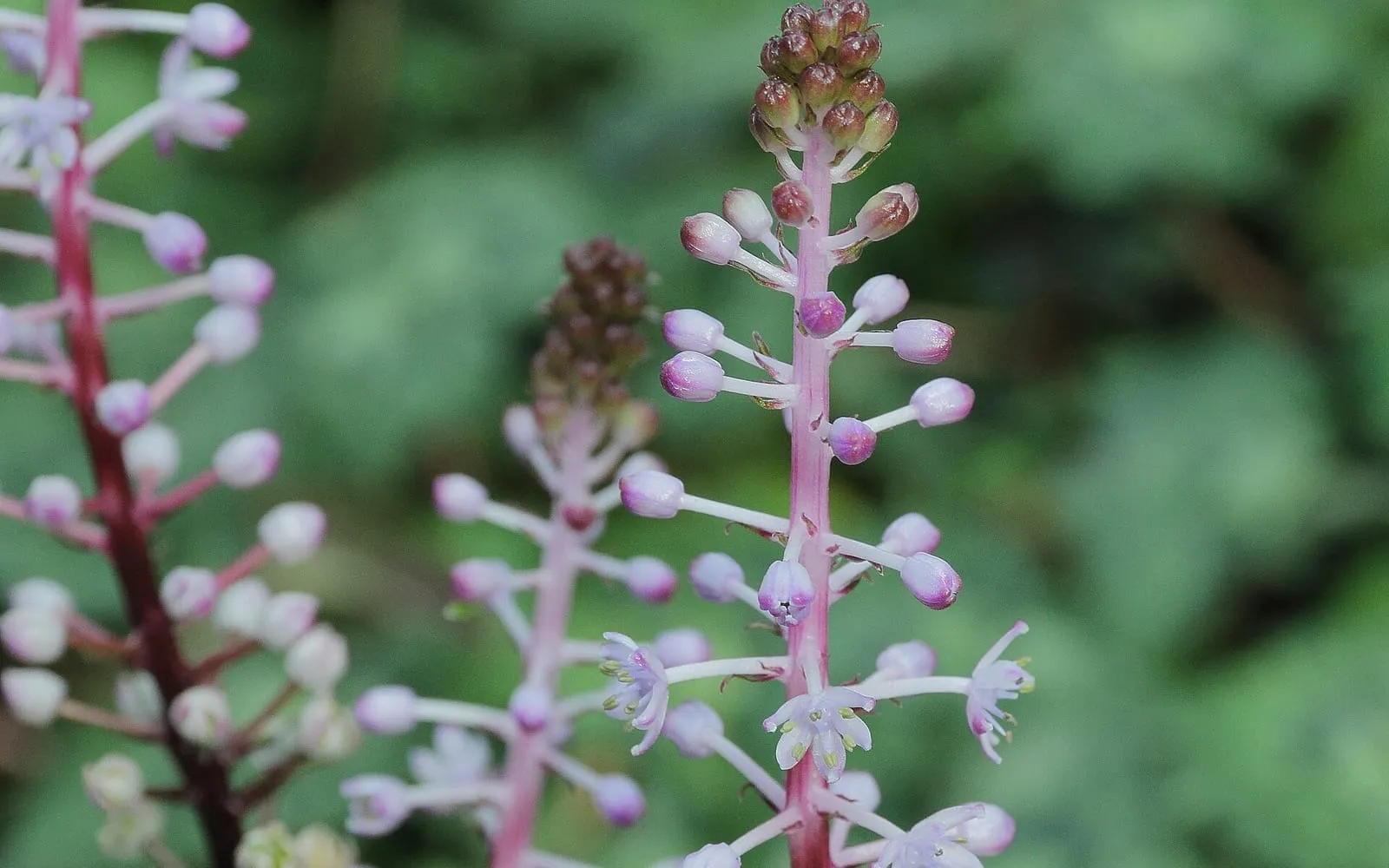
Scilla haemorrhoidalis is a squill found in the wild only in the Canary Islands, and its odd species name refers to its colour. Haemorrhoidalis comes from the Greek for blood-red, and the reference is to the flower stalks and unopened buds, which have a deep reddish tone that contrasts with the blue-violet stars once they open. That red striping in the flowering head is what the common name describes.
As an island plant from a mild, frost-free climate, it is grown under glass or in a pot wherever winters turn cold. It keeps the winter-growing habit of its Atlantic-island home, coming into leaf and flower through the cooler, damper months and resting through the dry warmth of summer. Given a bright spot and that reversed calendar, it makes an unusual and easy pot bulb.
Appearance and character
A rounded bulb sends up a rosette of several broad, fleshy, strap-shaped leaves in autumn, mid to deep green and forming a low tuft before the flower stem appears. The foliage is more substantial than that of a hardy garden squill, suiting a plant that grows through the mild island winter instead of a brief spring.
The flower stem is the plant’s main feature. Its stalk and the individual flower stalks are blood-red, and from them open small six-petalled stars in blue to violet, so the whole head mixes red stems with blue bloom. A well-grown bulb produces a generous raceme, and the colour contrast is what marks it out from the many plainer blue squills.
Where it is from
The species is endemic to the Canary Islands, off the Atlantic coast of north-west Africa, where it grows on rocky slopes and among scrub and open woodland at low to middle altitude. The islands have a mild, largely frost-free climate with rain in the cooler half of the year and a warm, dry summer.
That climate determines the plant’s growth cycle. Autumn and winter rain bring the leaves and then the flowers, spring completes the growing season, and the dry island summer is when the bulb becomes dormant. It has no exposure to hard frost in the wild, so it is treated as tender and kept warm wherever winters are cold.
How it grows
Leaf growth begins in autumn as temperatures ease and moisture returns, the flowers follow through late winter into spring, and by early summer the leaves yellow and the bulb rests. The whole active season falls in the cooler part of the year, opposite to most familiar houseplants.
Pot the bulb in autumn in a free-draining, gritty compost, setting it with its neck near the surface, and begin watering as growth starts. Keep it in good light and frost-free warmth through the winter growing season. Increase it by lifting and separating the offset bulbs that form around the parent during summer dormancy, or raise it from seed for larger numbers.
Through the seasons
Autumn starts the bulb into growth; leaves push up as the weather cools and watering begins again.
Winter is the main growing season under glass, the leaves full and the red-stalked flower heads opening in the brighter days towards its end.
Spring finishes the flowering and lets the leaves feed the bulb before the summer rest.
Summer is dormancy; the foliage dies away and the bulb needs warmth and dryness until autumn.
Care difficulty
Easy for anyone who accepts its winter-growing habit and keeps it frost-free. Once it is potted well and given bright light, the two main risks are frost on the tender bulb and wet compost during the summer rest. Warmth in winter and dryness in summer cover almost everything it needs.
Watering
Water through the autumn-to-spring growing season, keeping the compost moist while leaves and flowers are active and letting the top layer dry between waterings. The gritty mix should drain freely so the fleshy bulb never sits in standing water.
Taper watering off as the leaves yellow in early summer, then keep the bulb dry through its dormancy. A dry, warm summer rest ripens it for the next season, while summer wet on a resting bulb is likely to cause rot. Judge each watering by the state of the compost instead of by the calendar.
Warning signs, diseases and pests
Rot is the main risk, brought on by cold or by water on the dormant bulb, and it shows as a soft base and a bulb that fails to sprout. A free-draining mix, winter warmth and a dry summer prevent it, and there is no saving a bulb once its base has gone soft.
Mealybugs sometimes gather in the leaf bases and around the neck of the bulb under glass; dab small groups with dilute alcohol and inspect new plants on arrival. Weak, drawn, pale leaves signal too little light, which a brighter position corrects.
Growing environment
Give it the brightest indoor or greenhouse spot available through its winter growing season, since good light keeps the leaves firm and the flowering strong. A sunny windowsill or a frost-free glasshouse suits it well.
The compost needs to be open and sharply drained, based on grit or coarse sand, so surplus water runs straight through. Keep the plant reliably above freezing, as its island origin leaves it with no tolerance of hard cold, and stand it somewhere warm and dry for the summer months while it is dormant.
Feeding
Feed modestly while the leaves are growing, with a weak balanced liquid feed every few weeks from autumn to spring, which is when the bulb stores the strength for next year’s flowers. Fresh compost usually carries a newly potted bulb through its first season without extra feeding.
Stop feeding as the foliage fades towards summer, and give nothing to the dormant bulb. Overfeeding, and heavy nitrogen in particular, produces floppy leaves and does nothing for the flowers.
Troubleshooting
Where does the red striping come from? From the flower stalks and buds, which are flushed blood-red, the feature the species name haemorrhoidalis and the common name both point to.
Why does it grow in winter and rest in summer? That is the natural rhythm of its Canary Islands home, where rain falls in the cool season and summers are dry, so it grows cool and rests warm.
Can it go outside? Only where frost never reaches it. In cold-winter areas keep it under glass or indoors, as the bulb is tender.
How do I propagate it? Separate the offset bulbs around the parent during the summer dormancy, or grow it on from seed.
Is it safe around pets? No. The bulb and leaves contain cardiac glycosides, as in other squills, and a pet or child that eats them can be seriously unwell, so keep the plant out of reach.
Red-Striped Scilla Houseplant problem guides
Not sure what is wrong? See the common houseplant pests guide.