
Houseplant
Green Velvet
Alocasia micholitziana
Also known as Alocasia micholitziana
How to grow Alocasia micholitziana, the green velvet, a Philippine jewel aroid with matte velvet leaves, white veins, a resting tuber and an irritant sap.
At a glance
- Difficulty
- Easy
- Water
- When the top few centimetres of mix have dried
- Light
- Bright indirect light to light shade
- Temperature
- Warm; keep above about 13 deg C
- Humidity
- Average to high
- Hardiness
- USDA 10-12, RHS H1b, hardy to 13 C
- Type
- Perennial
- Height
- 30-60 cm
- Native to
- the Philippines
A tender tropical foliage plant from the Philippines, growing in warm, humid, shaded to filtered light. It needs warmth, humidity and bright indirect light, and it cannot take frost or chill. It is safest above about 13 deg C, and cold, wet compost or dry air spoils it.
Hardiness zones describe winter cold alone. Summer heat, humidity, rainfall and the length of the growing season decide as much, so treat the range as the outer limit rather than as a recommendation.
Toxic if eaten
- Do not eat
- All parts, which contain calcium oxalate crystals
- Harm from
- Eating it and handling it
- Affects
- People, cats and dogs
Like other members of the arum family, Alocasia micholitziana holds tiny calcium oxalate needles in every part. Chewing a leaf or stem of the green velvet can irritate the soft tissue of the mouth, causing burning, swelling and drooling, and vomiting in a pet that swallows any; the sap can irritate skin and eyes. The ASPCA lists this group among the plants that harm cats and dogs. Keep the green velvet away from pets and children, and wash off any sap.
Sources: ASPCA toxic and non-toxic plants, RHS potentially harmful garden plants
About
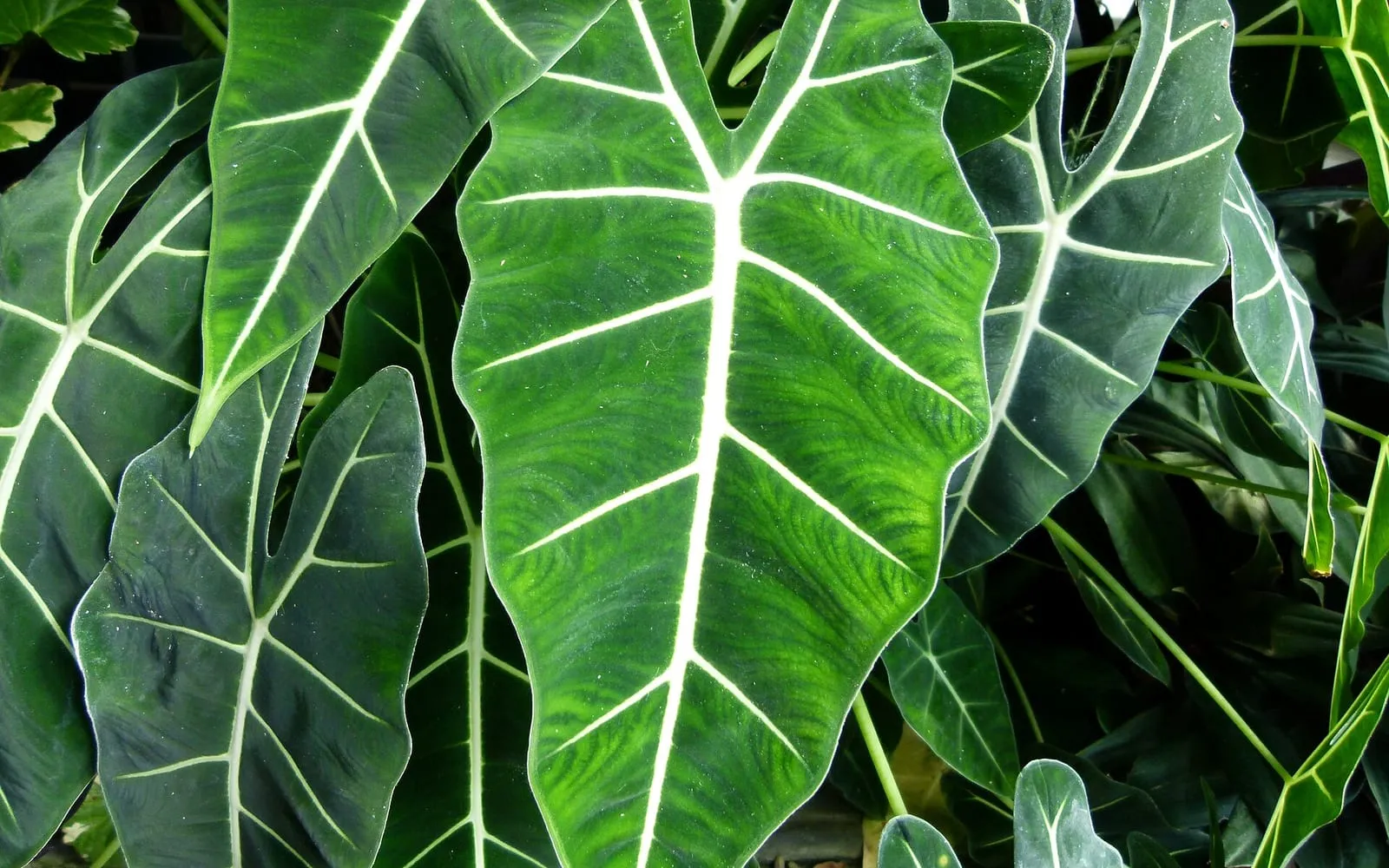
Green velvet is one of the jewel alocasias, a small aroid grown for the texture of its leaves instead of for size. Alocasia micholitziana carries arrow-shaped blades of very dark matte green, with a soft surface and sharply drawn white-to-silver veins that stand out against the dark leaf. The velvet-and-vein contrast is the main appeal, and the plant that shows it most strongly is the widely grown form sold as Frydek.
Unlike the giant elephant ears, this is a compact plant that keeps to a tidy clump of a handful of leaves. It grows from a small underground tuber, and that tuber explains much of its behaviour. Stressed by cold, drought or dwindling light, the plant can shed every leaf and survive from the tuber, then reshoot when conditions improve.
Being a true aroid, it holds the family’s irritant sap in every part, so keep it away from pets and children that might chew a leaf.
Appearance and character
Each leaf is a narrow, pointed arrowhead, held out from the centre on a slim upright stalk. The upper surface is dense, matte and velvety, a green so dark it can look almost black in low light, and the main veins run across it in crisp pale lines that catch the eye.
The plant stays small and clustered, rarely carrying more than a few leaves at once, and it tends to lose an old leaf as each new one appears instead of building a large crown. Below the surface sits the tuber that stores its reserves and lets it rest and regrow. Flowers are the plain arum type and rare indoors, and they are not grown for display.
Where it is from
Alocasia micholitziana comes from the Philippines, from warm, humid tropical forest where it grows on the shaded floor beneath a closed canopy. It lives in filtered light, in leaf-rich ground that stays moist yet drains, and in air that holds moisture through the year.
Indoors it needs warmth, gentle filtered light instead of sun, and above all humidity. The velvet leaves brown and crisp quickly in dry air. A centrally heated room is often too dry, so humidity is usually the deciding factor.
How it grows
The plant grows in warm, humid, brighter months and slows or rests in the cool, dark ones. In good conditions it pushes out fresh velvet leaves from the centre; in poor conditions, or after a shock, it may drop leaves and pause at the tuber. Both are normal parts of its cycle.
Grow it in a light, airy, free-draining mix, using bark, perlite and a little coir to open up peat-free compost so water moves through fast. Keep it warm, humid and evenly moist in growth, and repot in spring when the tuber and roots fill the pot. Heavy, sodden compost rots it quickly.
Increase it by lifting the tuber in spring and separating the small offset tubers that form around it. Pot these up in warm, humid conditions and keep them barely moist until they shoot, handling cut tissue with washed hands.
Through the seasons
Spring starts new growth from the plant and any resting tubers. Repot now, resume watering, and begin a light feed as new leaves appear.
Summer is peak growth. Keep the humidity high, the light filtered, and the mix evenly moist, and feed regularly while fresh velvet leaves keep coming.
Autumn slows the plant. Reduce feeding and let the mix dry a little more between waterings as light fades.
Winter is the riskiest season, and the plant may rest or drop leaves. Keep it warm and humid, water only lightly, and if only the tuber remains, keep the mix barely damp and wait.
Care difficulty
Kept in warm, humid conditions this is a manageable plant, but its needs are narrower than the tough elephant ears, and humidity and spider mites cause most problems. Meet the humidity and much of the difficulty disappears.
Its warning signs are easy to read. Brown, crisping leaf edges mean the air is too dry. A soft, rotting base means cold, waterlogged compost. Sudden leaf loss usually means shock, and often a return to the tuber instead of death. Fine pale speckling with faint webbing means spider mites, its worst pest.
Watering
Water when the top few centimetres of the mix have dried, wetting the whole rootball and letting every drop of surplus drain away. The plant likes even moisture in growth but rots quickly if the fine roots stay sodden, so free drainage matters as much as regular watering.
Cut back sharply in winter, and cut back further still if the plant rests as a tuber, keeping the mix only barely damp so the tuber neither shrivels nor rots. Soft water helps prevent pale marks on the veins and leaf edges where tap water is hard.
Warning signs, diseases and pests
Brown, dry leaf edges mean the plant needs more humidity. Group it with other plants, run a humidifier, or move it somewhere naturally damper, and keep it off dry radiator heat.
A soft, discoloured base with wilting leaves is root or tuber rot from cold, wet compost. Lift the plant, cut away any mush, and replant the firm tuber in fresh, free-draining mix, watering sparingly.
Spider mites are the main pest on this species, thriving in warm, dry air and showing as fine stippling and webbing on the velvet leaves. Raise the humidity, rinse the foliage, and treat early and repeatedly, since populations build fast. Mealybugs may also lodge in the leaf axils.
Growing environment
Bright, filtered light gives the best colour and leaf texture, while direct sun scorches the soft surface and deep shade thins the plant. An east-facing spot or a position back from a bright window suits it.
Humidity matters most. Keep it warm, well away from cold draughts and drying heat, and give it consistently moist air through a humidifier, a grouped planting or a damp gravel tray.
Feeding
Feed through spring and summer with a dilute balanced liquid fertiliser at about half strength, every few weeks while the plant is in active growth. Weak, regular feeding suits it, and healthy leaves darken with clear pale veins.
Stop feeding in autumn and give none in winter or while the plant rests. A freshly repotted plant needs no feed for the first weeks, living on the fresh mix.
Troubleshooting
Why are the leaf edges browning? The air is too dry for the velvet leaves. Raise the humidity and keep it away from heat sources.
All the leaves dropped. Is it dead? Often not. Under stress it can survive as an underground tuber. Keep the mix barely damp and warm, and it usually reshoots.
It keeps getting spider mites. What do I do? Dry, warm air encourages them. Lift the humidity, rinse the leaves, and treat early and repeatedly, since they are this plant’s main pest.
How do I propagate it? Lift the tuber in spring and separate the small offset tubers, potting them up in warm, humid conditions.
Is it safe around pets? No. Every part carries irritant crystals that burn the mouth if chewed, so keep it out of reach and read the toxicity note above.
Green Velvet problem guides
Not sure what is wrong? See the common houseplant pests guide.